Student journalism is not just an elective or an extracurricular. It is one of the most authentic, high-impact ways we can teach critical thinking, communication, and civic responsibility in schools.
In a time when students are surrounded by misinformation, viral headlines, and algorithm-driven content, journalism instruction gives them something essential: the ability to question, verify, and tell the truth responsibly.
Whether you teach journalism directly or incorporate media literacy into ELA or social studies, helping students understand why journalism matters is just as important as teaching them how to write.
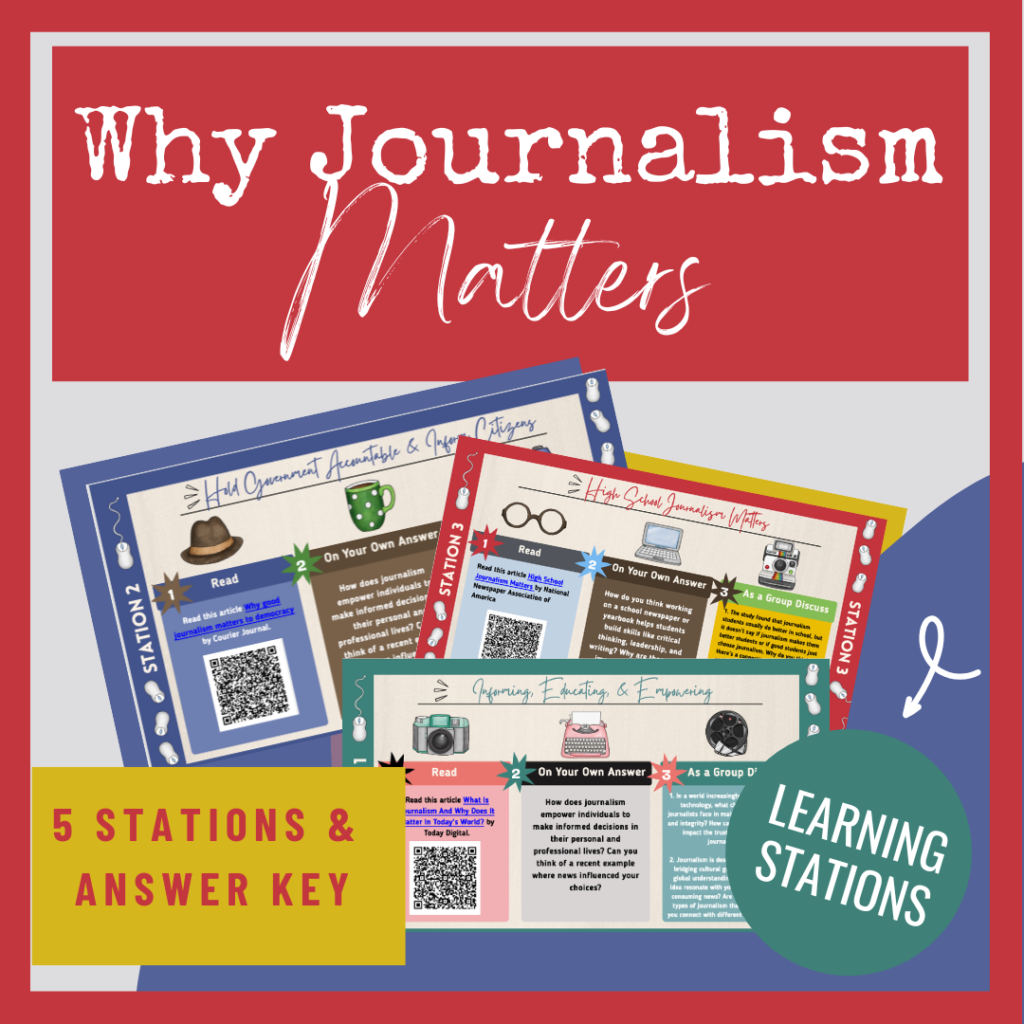
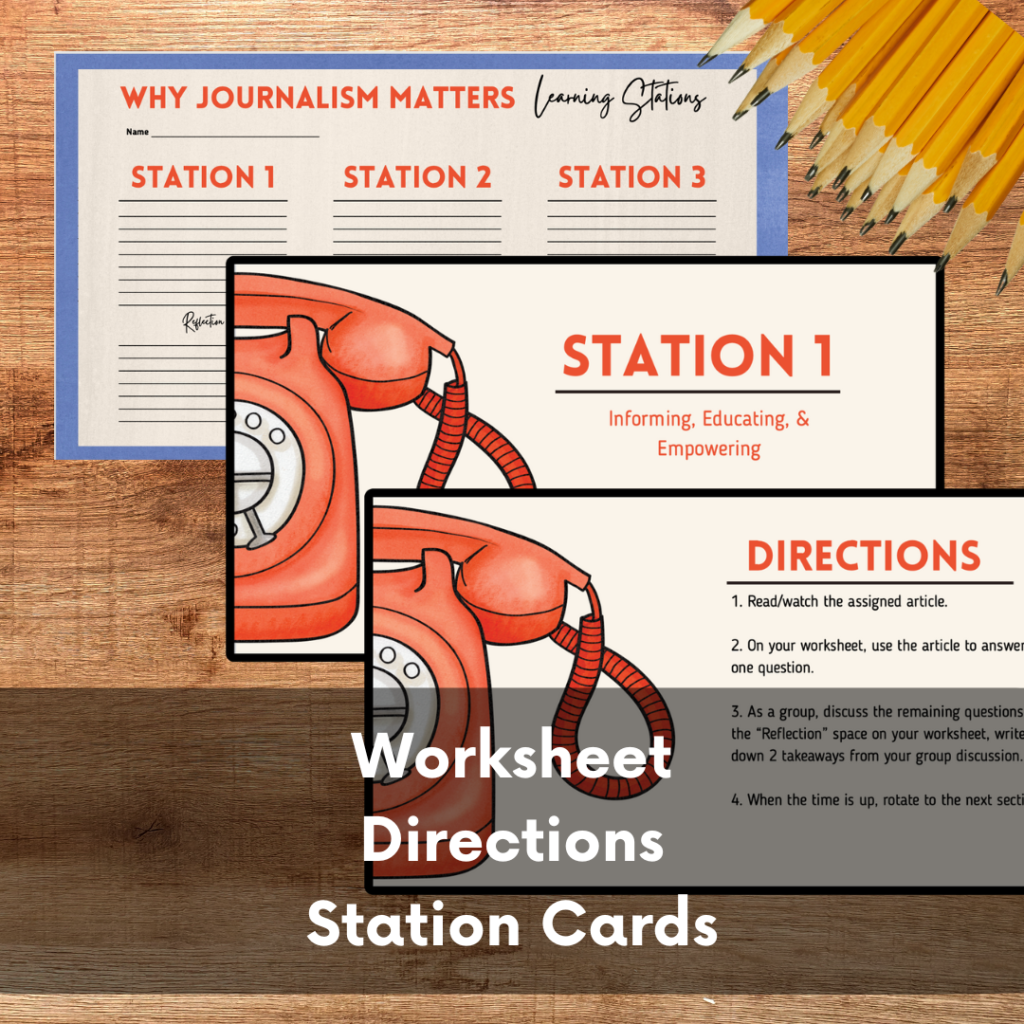
One of the most effective ways to do this is through learning stations, which allow students to explore journalism’s purpose, power, and impact in an active, student-centered way.
What Are Learning Stations?
What Are Learning Stations (and Why They Work So Well)?
Learning stations are structured activities set up around the classroom where students rotate through focused tasks independently or in small groups. Each station targets a different skill or concept, giving students multiple entry points into the content.
For journalism instruction, learning stations work especially well because they:
Encourage discussion and collaboration
Support differentiation and student choice
Break complex ideas into manageable pieces
Shift students from passive consumption to active inquiry
Instead of telling students why journalism matters, stations allow them to discover it themselves.
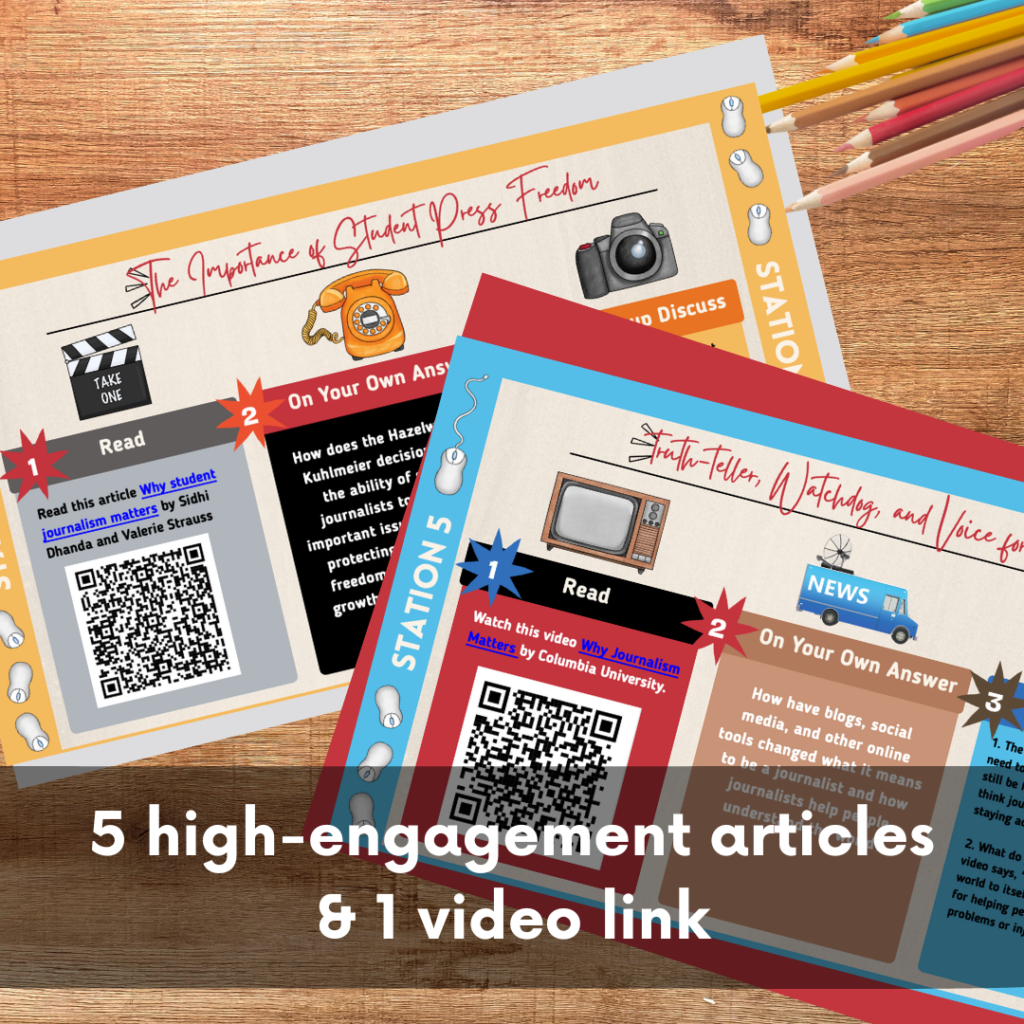
5 Reasons Student Journalism Matters (Through Learning Stations)
1. Journalism Builds Critical Thinkers, Not Just Writers
At its core, journalism teaches students how to ask better questions.
In a learning station focused on historical journalism, students might analyze landmark investigations like Watergate or the Pentagon Papers. Their task is not just to summarize what happened, but to examine why the reporting mattered and what changed because of it.
Through this process, students practice:
Evaluating sources
Identifying bias and perspective
Understanding cause and effect
These are skills that transfer far beyond the classroom.
2. Student Journalism Teaches Accountability and Power
One of the most eye-opening moments for students is realizing that journalism holds power accountable—even at the school level.
A station highlighting student-led investigations allows students to explore real examples of young journalists uncovering wrongdoing or injustice in their own communities. From exposing unethical practices to amplifying unheard voices, students see that journalism is not abstract. It is immediate and impactful.
This naturally leads to discussion questions like:
Who gets to tell stories?
Whose voices are missing?
What responsibilities come with publishing information?
Suddenly, journalism feels real.
3. Journalism Strengthens Media Literacy in a Digital World
Students scroll through more information in one day than previous generations encountered in weeks.
A station that compares professional journalism with student-written or informal media helps students recognize differences in structure, tone, sourcing, and purpose. When students analyze headlines, leads, and credibility side by side, they begin to understand how misinformation spreads—and how responsible journalism pushes back against it.
This station builds skills students desperately need:
Identifying credible sources
Distinguishing opinion from reporting
Understanding the ethics behind publication
4. Journalism Gives Students a Voice That Matters
Student journalism empowers students to speak up about issues that affect them.
In a creative station, students might write headlines and leads based on the same set of facts. Comparing their choices opens powerful conversations about framing, audience, and intent. Students learn that words matter—and that how a story is told can shape perception.
This reinforces:
Voice and agency
Purposeful writing
Ethical decision-making
Students are not just completing an assignment. They are practicing civic engagement.
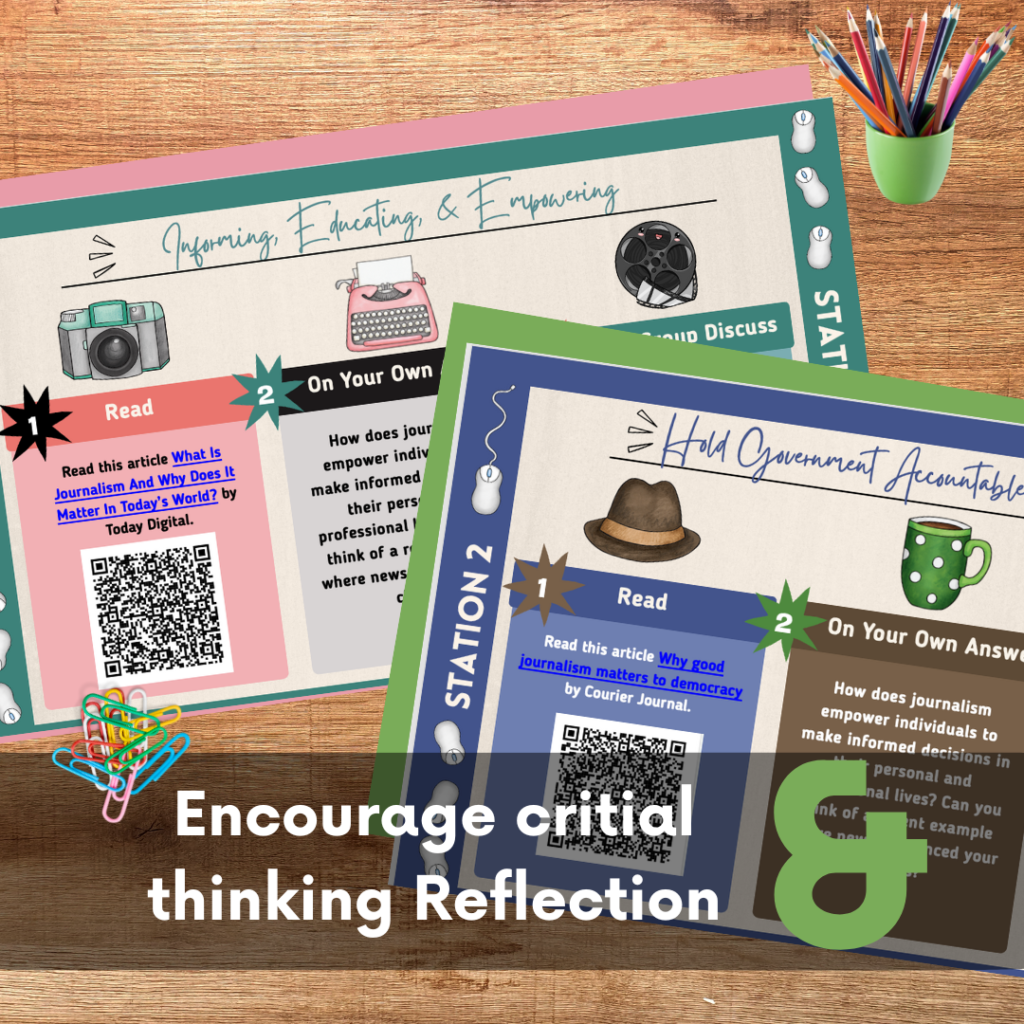
5. Journalism Supports Democracy and Informed Citizenship
Journalism is fundamental to democracy, and students need to understand that early.
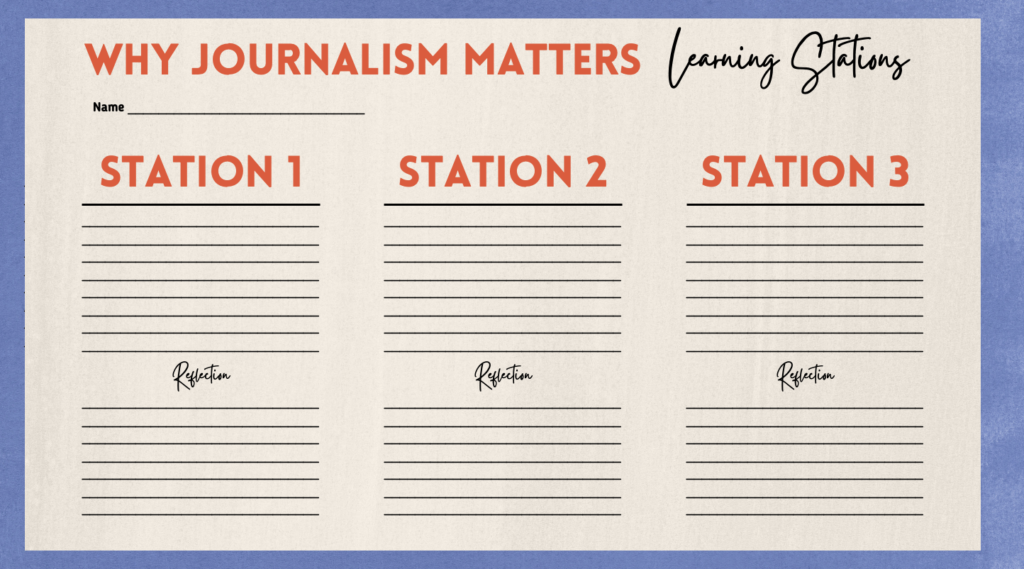
A reflection-based station using quotes from journalists like Walter Cronkite invites students to think philosophically about the role of the press. Writing short reflections helps students connect journalism to concepts like freedom of expression, transparency, and civic responsibility.
This is where journalism moves from content to character.
Ideas for Journalism-Themed Learning Stations
Here are some station ideas to explore the power of journalism with your students:
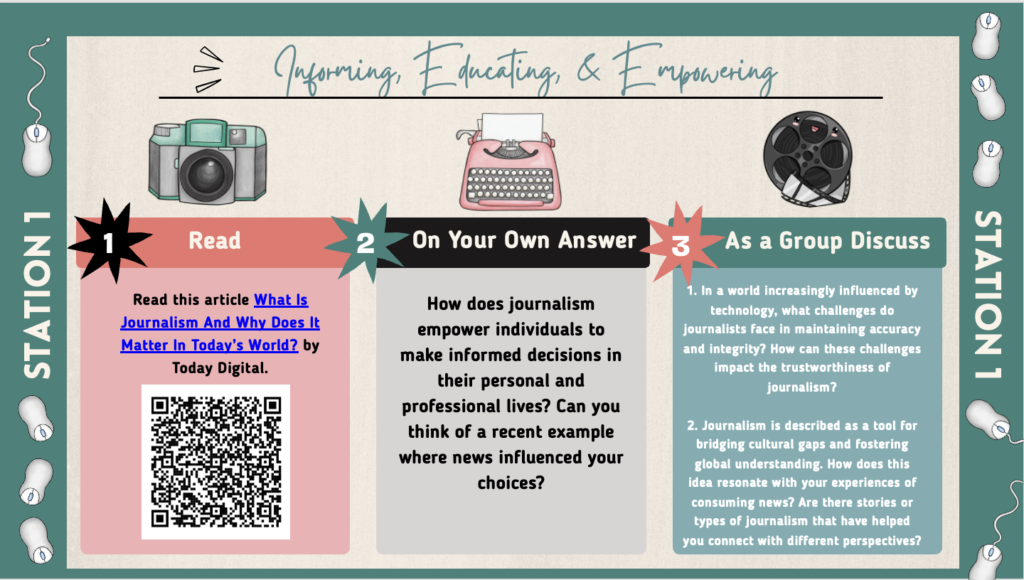
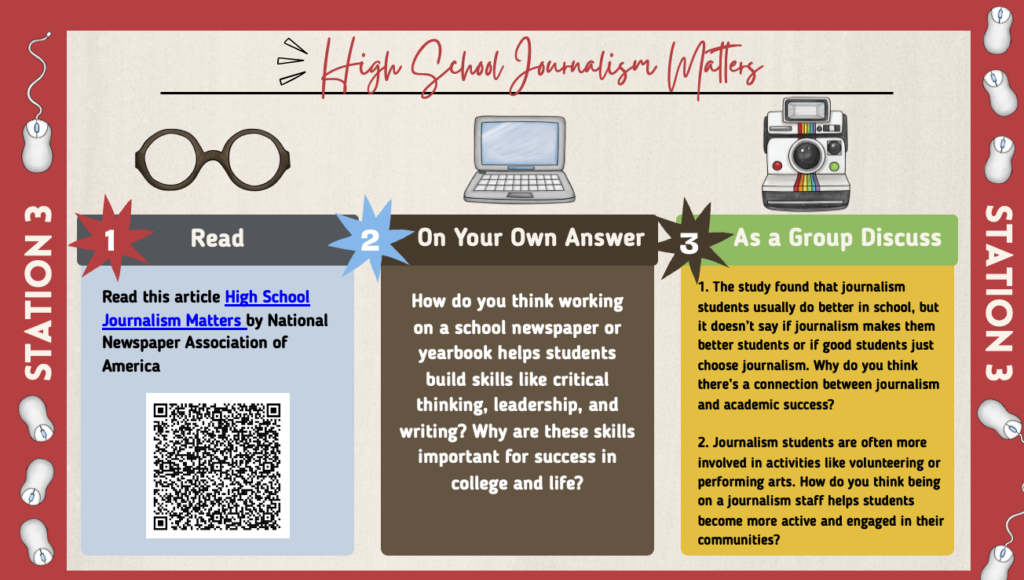
Station 1: Researching Journalism’s Role in Society
- Provide articles about landmark journalism moments (e.g., Watergate, Spotlight, or the Pentagon Papers).
- Ask students to identify how journalists held power accountable and why these stories mattered.
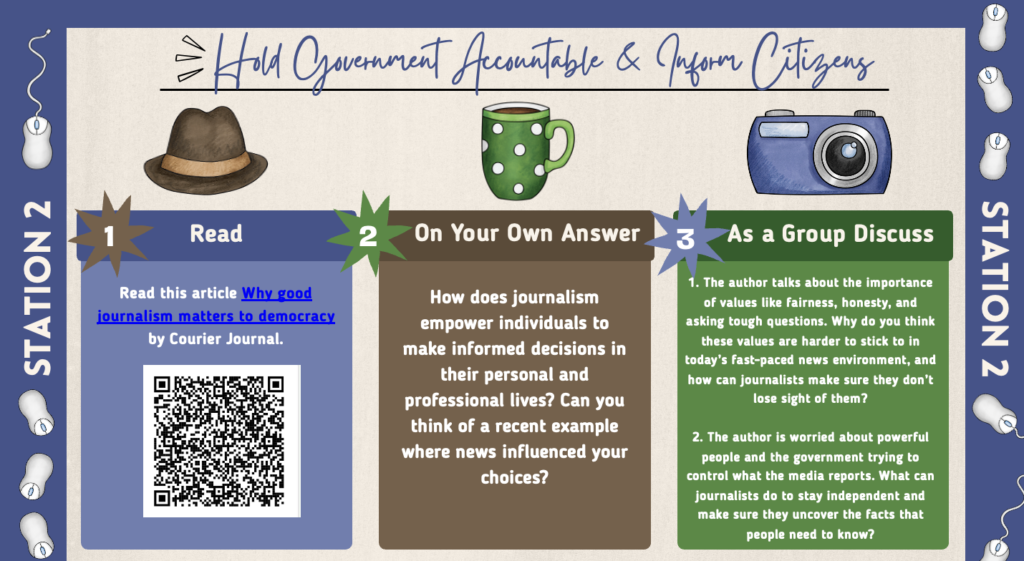
Station 2: The Impact of Student Journalism
- Share resources about student-led investigations, such as the Kansas high school team that exposed a principal’s fake degree.
- Encourage students to brainstorm topics they could investigate in their own school or community.
Station 3: Analyzing Modern Journalism
- Assign students to compare a professional news article and a student-written piece, focusing on structure, style, and purpose.
- Have them reflect on the challenges journalists face, such as censorship or misinformation.
Station 4: Creating Headlines and Stories
- Provide a set of facts about a fictional event and ask students to craft an attention-grabbing headline and a lead paragraph.
- Discuss how journalists make decisions about what information to highlight.
Station 5: The Philosophy of Journalism
- Offer quotes about journalism, such as “Journalism is what we need to make democracy work” (Walter Cronkite).
- Have students write a short reflection on why journalism is essential to society.
Why Teach the Value of Journalism?
Teaching journalism is not about turning every student into a reporter.
It is about helping students:
Navigate information critically
Communicate clearly and ethically
Understand their role in a democratic society
Recognize the power of truth
When students understand why journalism matters, they become better writers, thinkers, and citizens.
Journalism is more than a career path; it’s a cornerstone of democracy and an essential skill for informed citizenship. By teaching students about the power of journalism, you help them:
- Understand Media Literacy: In today’s digital age, students need the ability to discern credible sources and navigate the flood of information they encounter daily.
- Recognize the Role of Accountability: Journalism holds leaders and institutions responsible, ensuring transparency and justice in society.
- Appreciate the Freedom of Expression: Learning about press freedom empowers students to value their own voice and understand the importance of protecting it.
- Develop Critical Skills: Reporting, writing, and investigating teach students to think critically, communicate effectively, and collaborate with others.
Resources for Student Access to Journalism Articles
To give students direct access to meaningful articles, consider the following sources:
- Student Press Law Center (SPLC): Includes resources about student press freedom and examples of student journalism.
- PBS NewsHour Extra: Features student-friendly articles and videos on current events.
- The New York Times Learning Network: Offers free articles and prompts for students, often focusing on youth perspectives.
- The Pulitzer Center on Crisis Reporting: A repository of in-depth journalism with educational resources.
Inspiring Future Journalists
Learning stations give students the tools and opportunities to explore the value of journalism in an engaging, hands-on way. Whether they dream of a career in the media or simply become more informed citizens, your students will leave with a greater understanding of why journalism matters and how they can contribute to a society that values truth and accountability. By embracing the power of journalism in your classroom, you’re equipping your students to think critically, act boldly, and tell stories that make a difference.
Student journalism is not extra. It is essential.
When students investigate, question, write, and reflect, they learn that journalism is about responsibility, courage, and truth. Learning stations make these big ideas accessible, engaging, and meaningful.
Whether students pursue journalism or not, the skills they gain will follow them for life.
Check Out These Resources from My Fellow Teacher Authors
If you are looking to deepen conversations about student voice, media literacy, and the role of journalism in a democratic society, these resources from fellow teacher authors pair perfectly with journalism learning stations and inquiry-based instruction:
Teaching Media Literacy Without Overwhelm by Room 213
Practical strategies for helping students question sources, evaluate credibility, and think critically about the information they consume every day.Helping Students Understand Bias, Perspective, and Truth by Room 213
A thoughtful look at how to teach bias and point of view in ways that support respectful discussion and critical thinking.Media Literacy Activities for Secondary Students by Bespoke ELA
Engaging, discussion-driven activities that help students analyze news, headlines, and digital media.Using Real News Articles in the Classroom by Secondary Sara
Teacher-tested ideas for bringing current events and journalism into ELA instruction without losing focus or structure.Teaching Students About Press Freedom and Responsibility by the Student Press Law Center
Essential resources for helping students understand their rights, responsibilities, and the ethical foundations of journalism.Short Journalism Units That Build Critical Thinkers by Laura Randazzo
Accessible journalism lessons that emphasize inquiry, voice, and real-world relevance.