If you’re anything like me, you’re constantly on the lookout for innovative and creative ways to bring current events and informational texts into your classroom. It’s a challenging but rewarding endeavor, as engaging students with current events not only fosters their understanding of the world but also sharpens critical thinking, reading, and discussion skills. However, finding the right balance between engagement and manageability can be tough. Let’s explore the importance of teaching current events and a few practical ideas to make this task both meaningful and manageable for you and your students.
Why Teaching Current Events is Crucial
Why Teaching Current Events Still Matters
Teaching current events is not about filling time or staying trendy. It is about helping students understand the world they are living in right now. In a media landscape filled with fast headlines, misinformation, and algorithm-driven content, students need explicit practice slowing down, questioning sources, and thinking critically about what they read.
When students regularly engage with current events, they learn how to evaluate credibility, recognize bias, and understand multiple perspectives. These skills matter far beyond the classroom. They are foundational to civic engagement, media literacy, and responsible participation in society.
Current events are also powerful tools for close reading. News articles and informational texts naturally include complex sentence structures, nuanced tone, and real-world context. When students work with these texts, they practice identifying main ideas, analyzing claims, and supporting ideas with evidence in a way that feels relevant rather than forced.
Most importantly, teaching current events helps students see why literacy matters. The skills they build in your classroom directly translate to understanding the world around them. That connection is everything.
1. Building Informed Citizens: Teaching current events is more than just a way to fill time or stay up-to-date with the news. It’s about helping students become informed citizens who can think critically about the world around them. In an era of information overload, students need to learn how to discern reliable sources, understand different perspectives, and make informed opinions.
2. Enhancing Close Reading Skills: Incorporating current events into your classroom is also a fantastic way to strengthen students’ close reading skills. News articles, opinion pieces, and feature stories are rich with complex structures, varying tones, and diverse vocabulary. When students engage with these texts, they practice identifying main ideas, analyzing arguments, and understanding context—skills that are transferable to all areas of their education.
3. Real-World Applications: Lastly, using current events as a teaching tool helps students see the real-world relevance of what they’re learning. It bridges the gap between classroom lessons and the world outside, showing students that the skills they develop in school are directly applicable to understanding and engaging with the world they live in.

The Problem I Kept Running Into
For a long time, I relied heavily on written current events responses. Students would read an article and write about it, week after week. While this approach worked academically, it came with two major problems. First, I was drowning in grading. Second, students were only interacting deeply with one article at a time, which limited discussion and broader understanding.
I needed a better system. I wanted students reading, thinking, and discussing without creating an unsustainable workload for myself. That is when I started experimenting with low-prep, gamified discussion structures that prioritized collaboration and critical thinking over constant written output.
These three strategies became classroom favorites, and they are now staples in my current events routine.
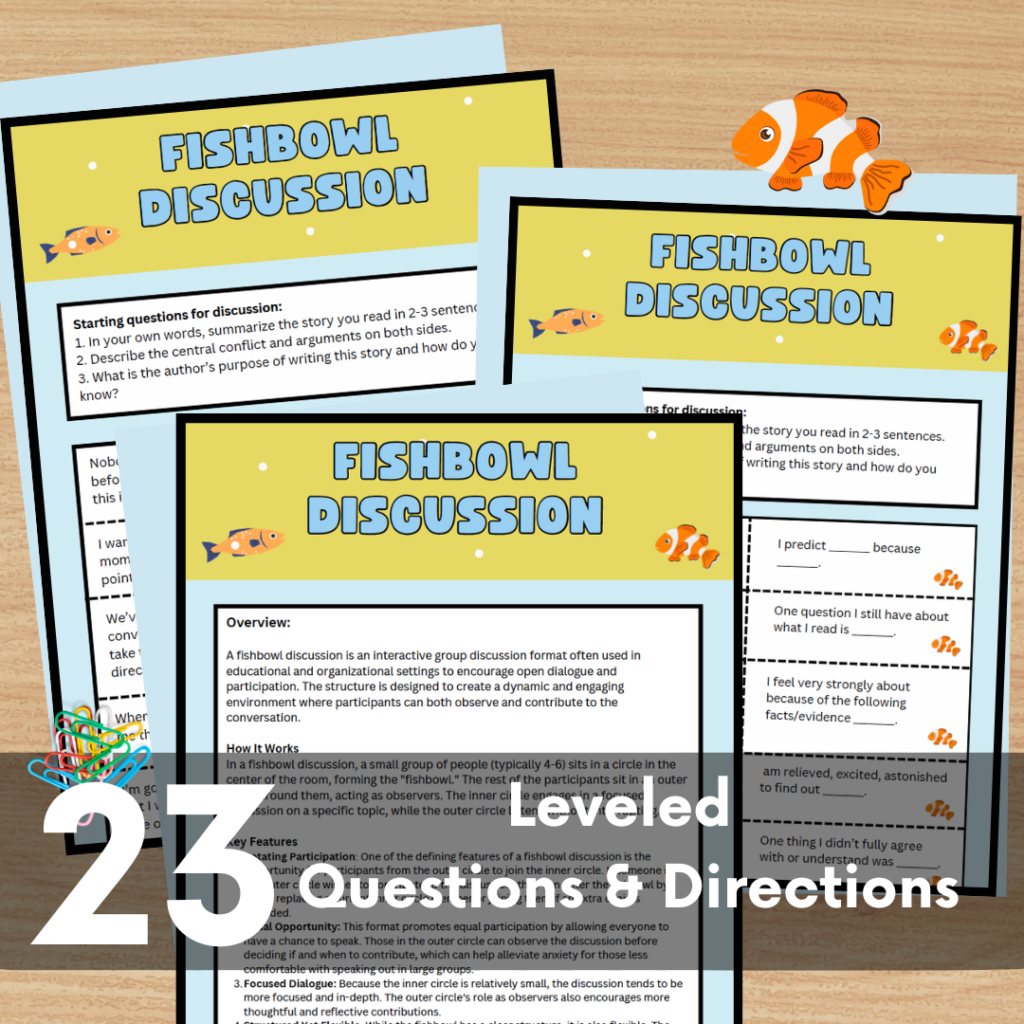
Fish Bowl Discussion
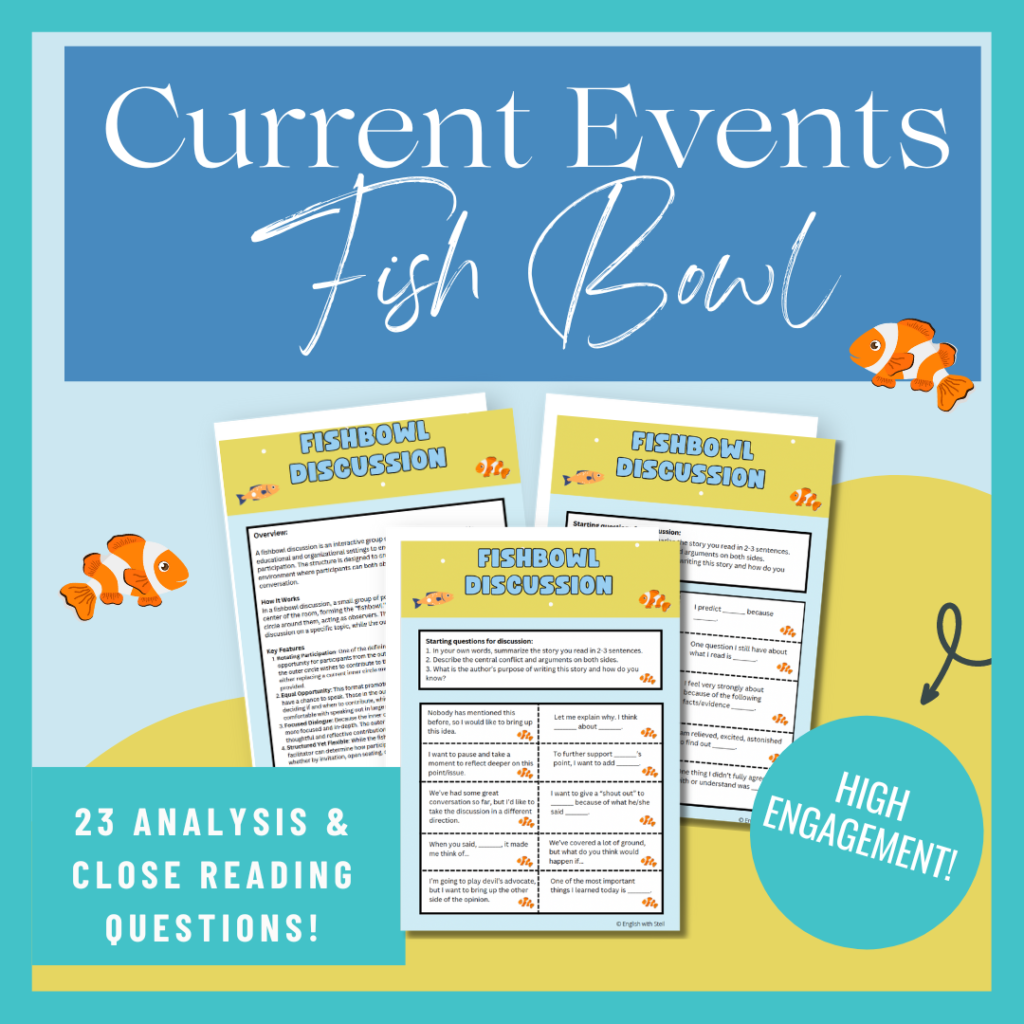
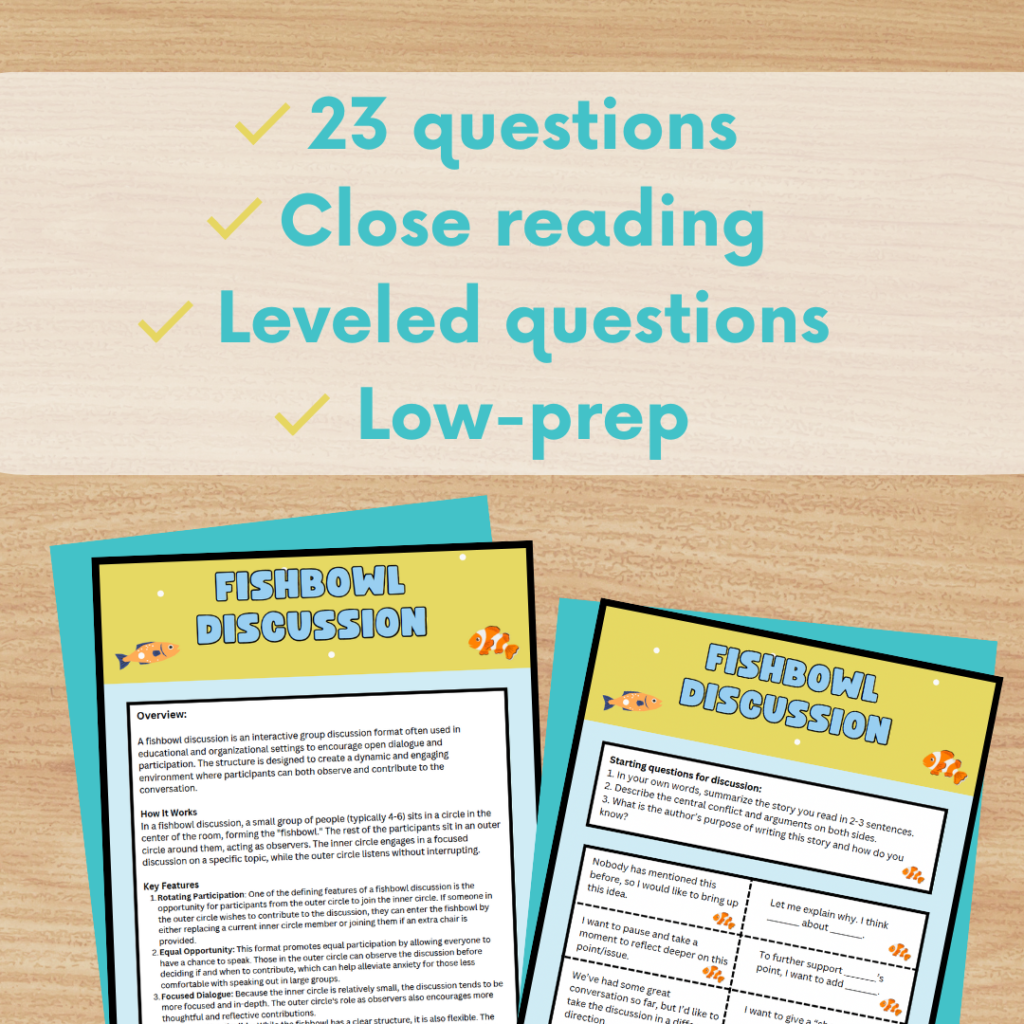
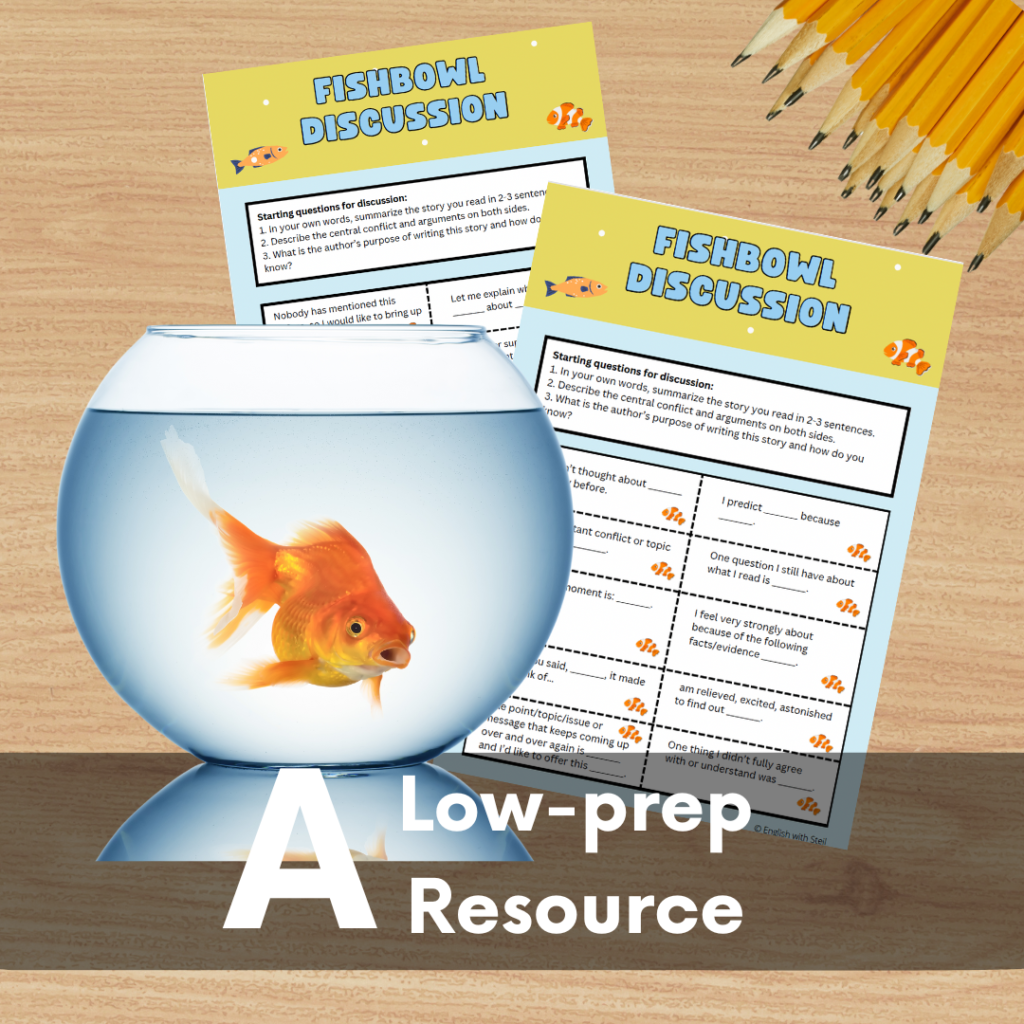
The Fish Bowl Discussion is one of my go-to strategies when I want students to engage deeply with a shared article while keeping grading manageable. This activity is rooted in the Socratic Seminar model, but with more structure and less prep.
Instead of asking students to come prepared with their own questions, I provide question stems that work with any news article. This saves time and ensures that discussions stay focused and meaningful.
How It Works
Students read the same article ahead of time. During class, questions are placed in a bowl. These include opening questions to get conversation started and open-ended analysis questions that encourage deeper thinking. Students draw a question and discuss it in small groups, building on one another’s ideas and responding thoughtfully.
This structure keeps all students engaged, supports close reading, and allows for rich discussion without requiring lengthy written responses. It also works beautifully for journalism, ELA, and social studies classrooms.
How it Works:
- Setup: Print and cut out 32 questions, placing them in a bowl. These include 3 opening questions to initiate an open-ended discussion and 20 open-ended critical analysis questions that can be applied to any news story.
- Execution: Students select a question from the bowl and discuss it in a small group, allowing them to explore different perspectives and build on each other’s ideas.
This activity is not only engaging but also enhances students’ reading comprehension and discussion skills, making it a valuable addition to your teaching toolkit.
Current Events Jenga:
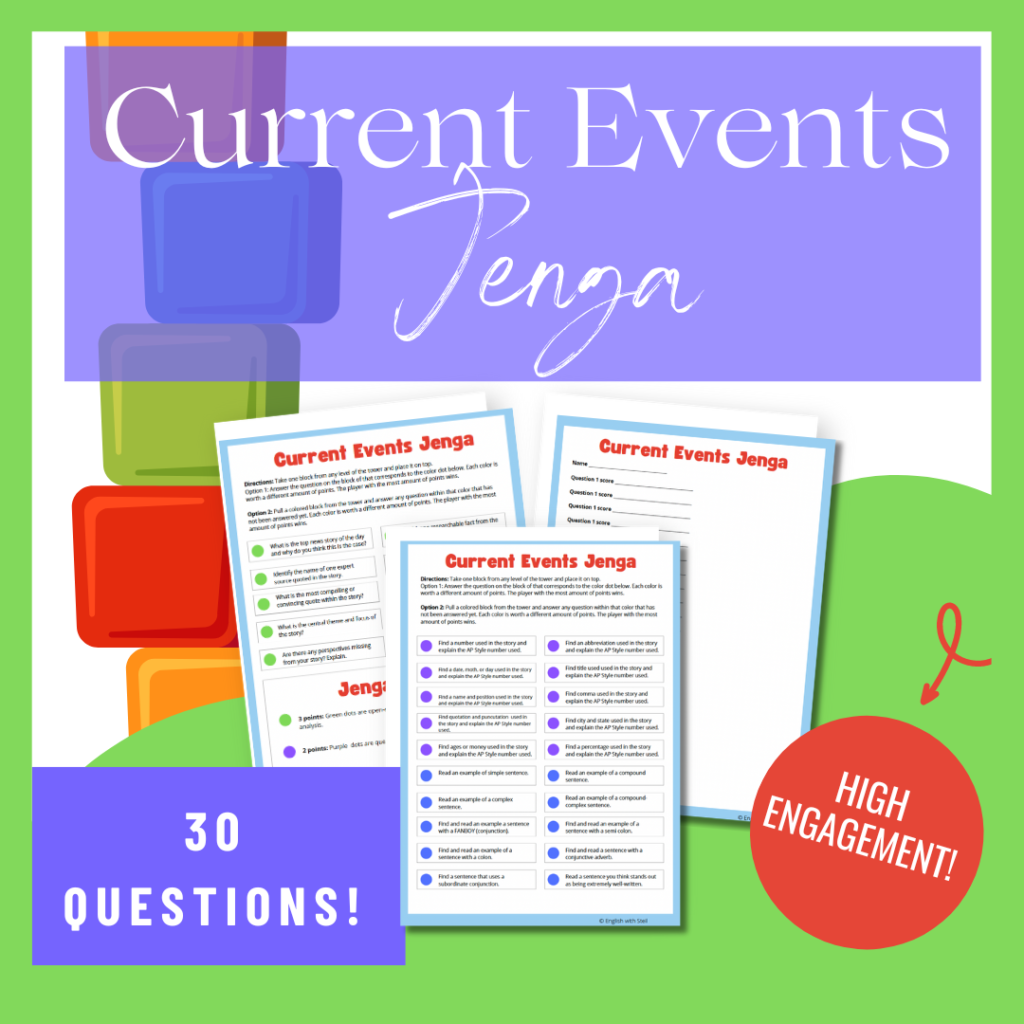
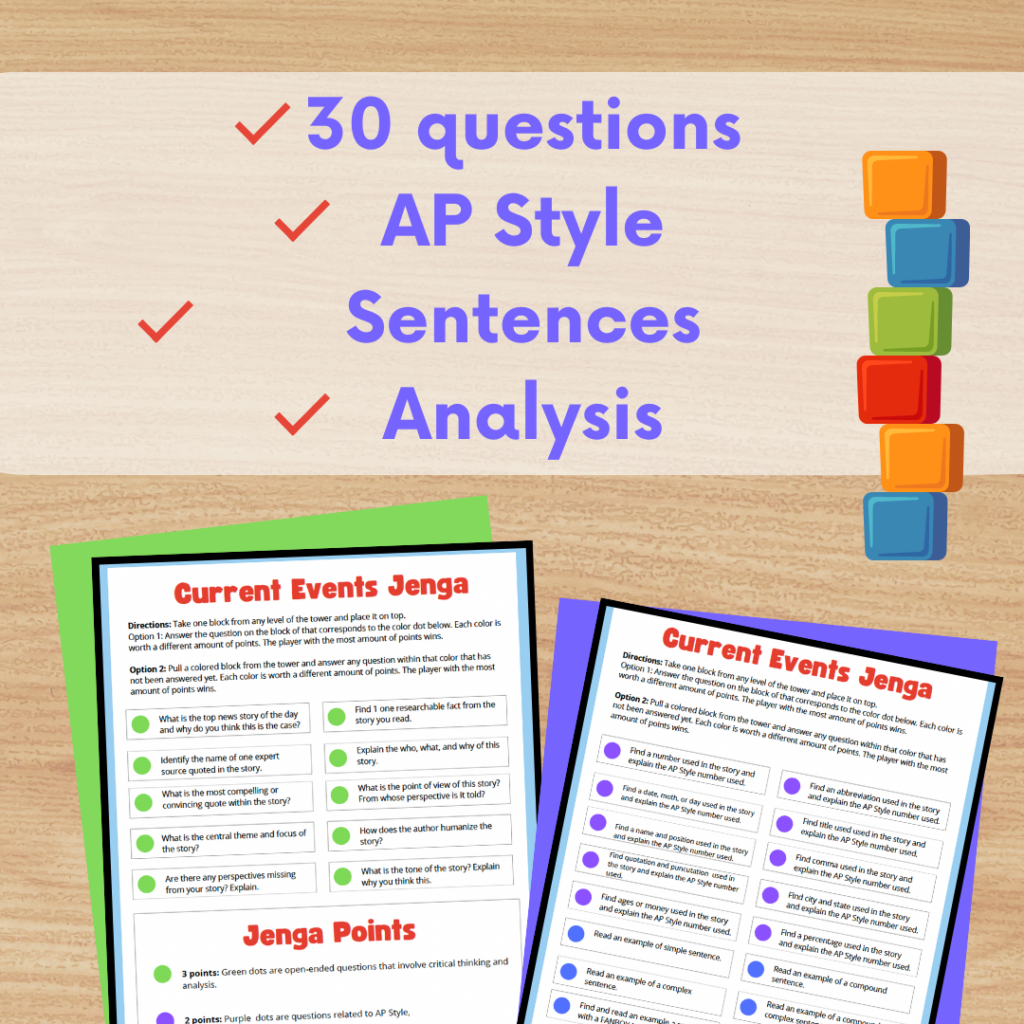
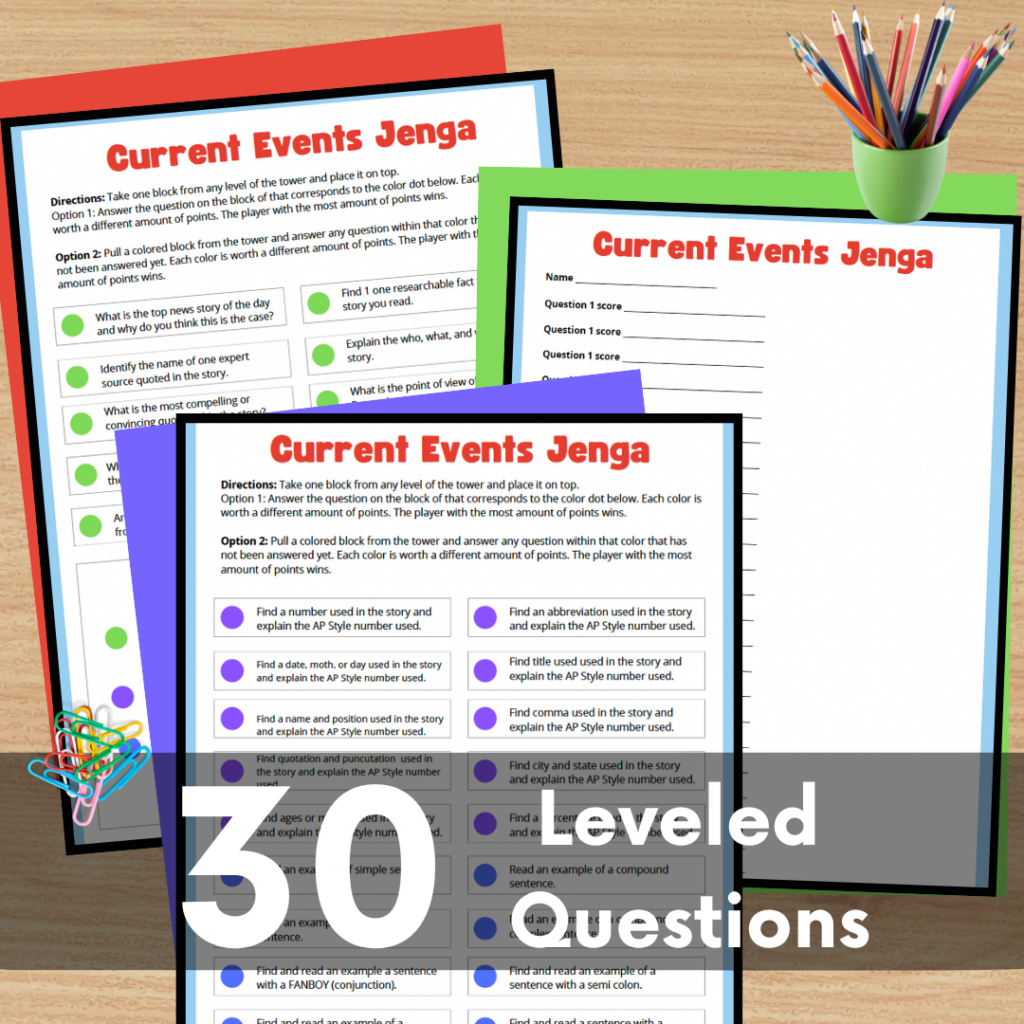
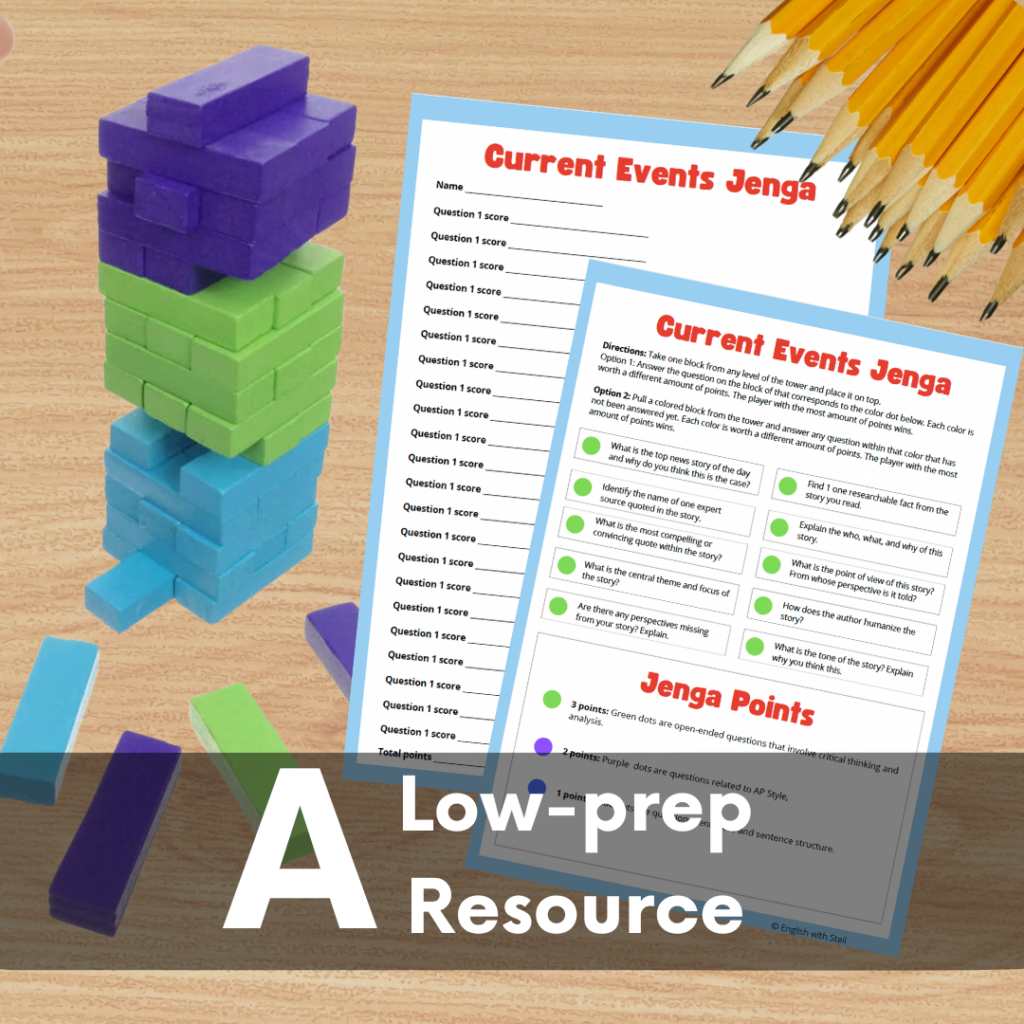
This fun, interactive Jenga game transforms your students’ engagement with news into a collaborative, hands-on activity that builds both reading and writing skills. I use three different types of questions for the activity. I include some basic knowledge questions for sentence construction and AP Style. These are worth fewer points than the open-ended critical thinking questions. This helps reinforce syntax and how grammar and mechanics contribute the overall effectiveness of an article. There are also higher-level thinking questions that encourage deeper reflection and discussion.
How it Works:
- Setup: Prepare 30 questions, color-coded and printed for easy reference. These questions are divided into three categories: 10 related to AP Style Guide rules, 10 on sentence construction, and 10 on close reading analysis. Each question corresponds to a Jenga piece.
- Execution: As students pull a piece from the Jenga tower, they must answer the corresponding question before placing the piece back. This gamified approach not only keeps students engaged but also reinforces their understanding of journalistic standards and improves their analytical skills.
Current Events Soccer
For a more dynamic and physically engaging activity, try Current Events Soccer. This game combines physical activity with critical thinking, making it a hit with students who enjoy kinesthetic learning. This is one of my student’s favorite ways to discuss current events. It still allows for individual reading, but also allows for a lot of movement and engagement. This can be done by having all students read the same article or different articles.
How it Works:
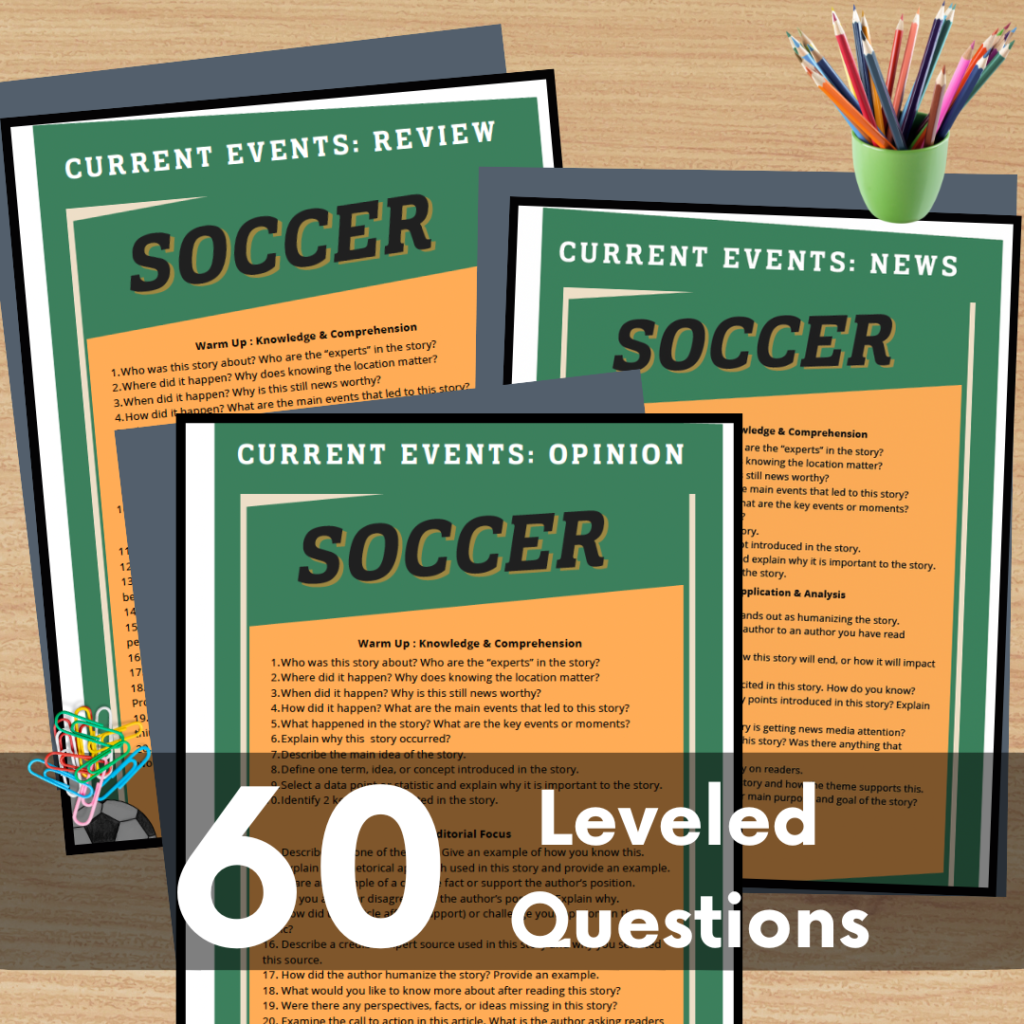
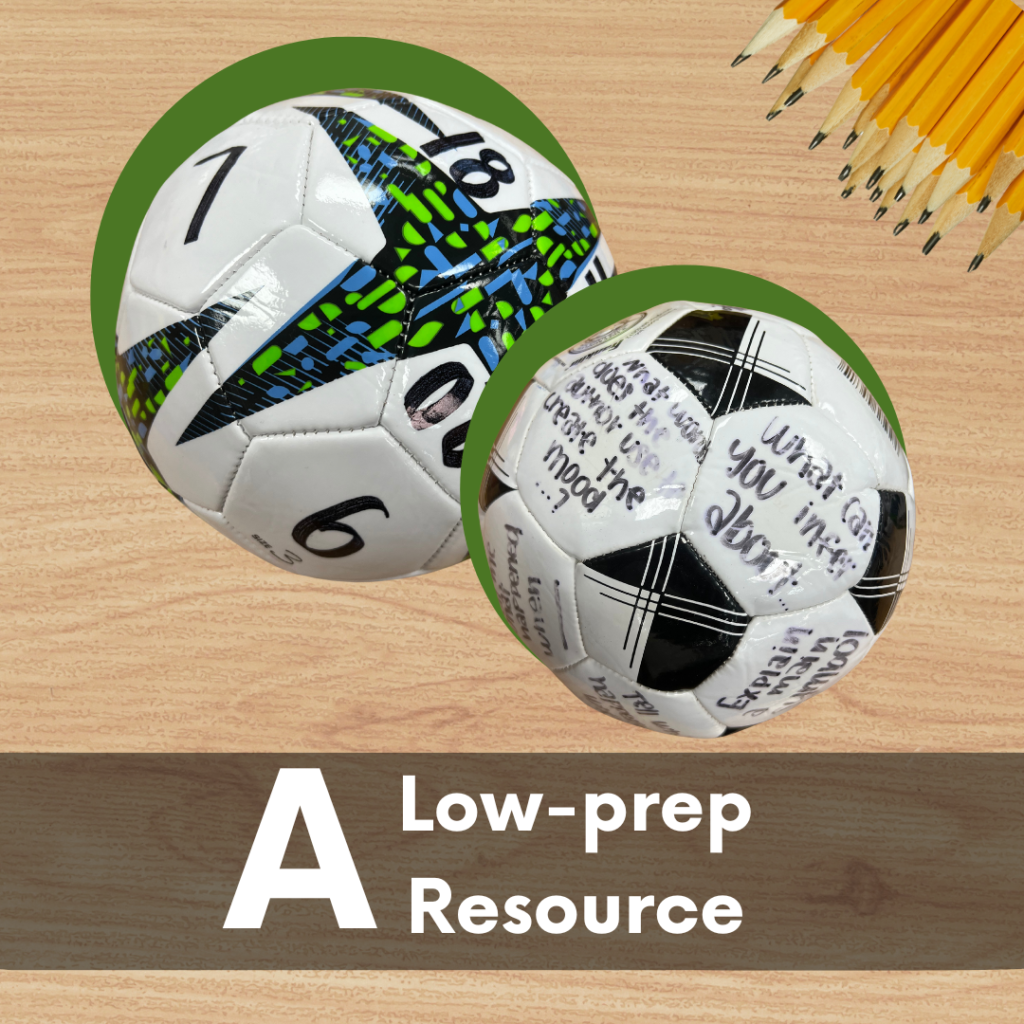
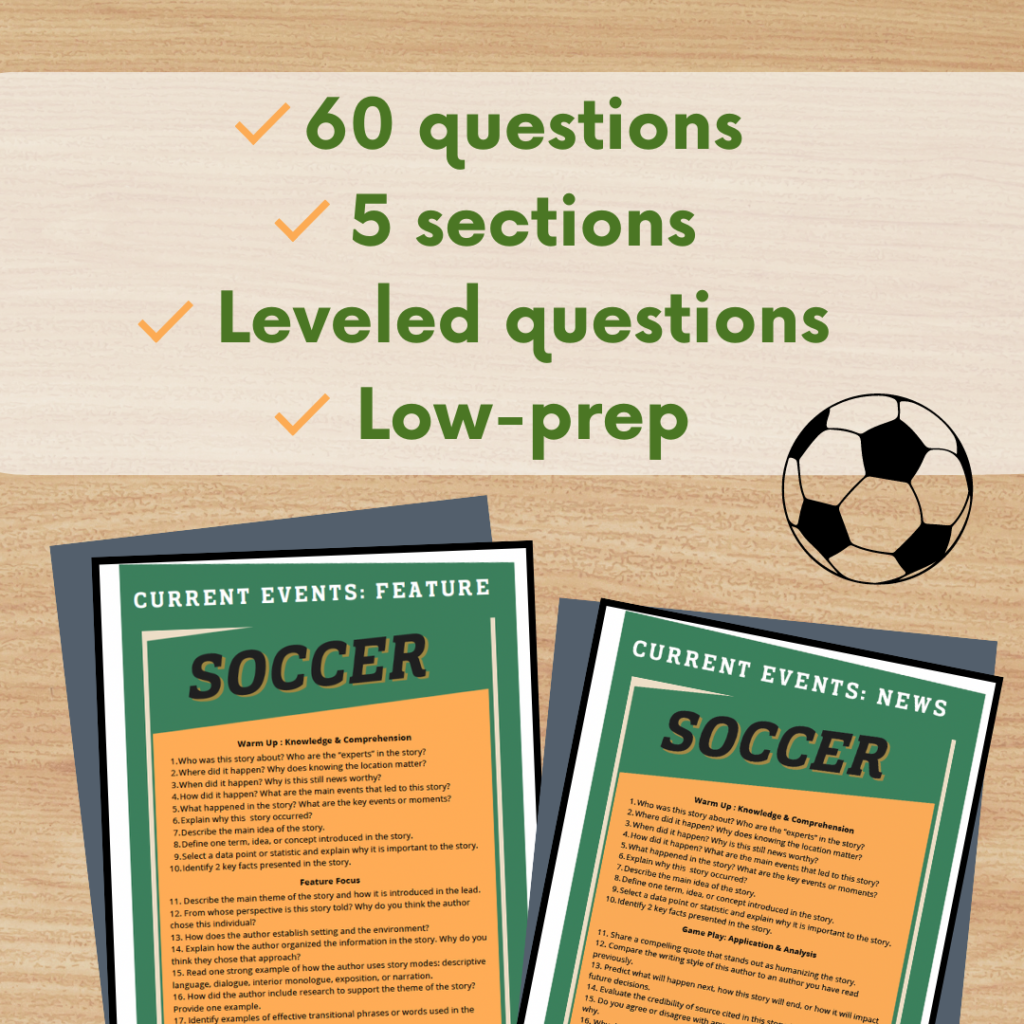
- Setup: Write core questions on different sections of a soccer ball, focusing on various genres like news, features, arts reviews, sports, and opinion pieces. Prepare 60 leveled, open-ended questions, with 10 for each genre.
- Execution: Students kick the soccer ball and answer the question that lands face-up. They can then use their list of questions to expand upon the core questions, either individually or in groups. This activity not only builds teamwork but also helps students explore different types of news stories and genres.
Making Current Events Manageable
While these activities are designed to be low-prep and high-impact, it’s essential to remain flexible and adaptive to your students’ needs. Allowing students to choose topics they’re passionate about, offering varying levels of challenge, and incorporating multimedia resources can further enhance engagement and learning outcomes.
By incorporating these creative strategies into your classroom, you can help students develop critical real-world skills, foster a deeper understanding of current events, and enjoy the learning process. These activities not only make the subject matter more engaging but also build essential skills that will serve your students long after they leave your classroom.
So, the next time you’re planning your lessons, consider trying out one of these ideas. Your students will appreciate the variety, and you’ll find that teaching current events can be both manageable and incredibly rewarding.
Final Thoughts
Teaching current events does not have to mean endless grading or surface-level engagement. With intentional structures and a little creativity, it can become one of the most meaningful parts of your curriculum.
If you are looking to boost engagement, build media literacy, and protect your time, these gamified strategies are a powerful place to start. Your students will appreciate the variety, and you may just find yourself enjoying current events instruction again.
Check Out These Resources for More Current Events Ideas
If you are looking to strengthen media literacy, discussion skills, and ethical analysis alongside current events, these resources pair beautifully with gamified structures.
Media literacy and current events support
PBS NewsHour Classroom Student-friendly articles, discussion guides, and lesson ideas for current events.
The New York Times Learning Network Free student-accessible articles, prompts, and media literacy resources.
News Literacy Project Excellent tools for teaching credibility, bias, and misinformation.
Discussion and inquiry structures
Facing History and Ourselves
Strong discussion frameworks and ethical inquiry strategies.Learning for Justice Resources that support respectful dialogue and multiple perspectives.

