

If I am being honest with myself, sentence structure used to be one of my least favorite units to teach. Not because it is unimportant, but because it felt more technical and less creative than other parts of language arts. I remember planning those lessons and thinking, How am I going to make this stick without boring everyone, including myself?
What eventually changed everything was realizing that sentence instruction did not need to look like endless worksheets or isolated grammar drills. Once I started approaching sentences as something students could build, play with, and experiment with, the energy in the room shifted. Students became more confident writers, and I stopped dreading the unit altogether.
Sentence structure can be taught in ways that are engaging, accessible, and even fun. It just takes a few intentional shifts.
Types of Sentences: The Building Blocks
First, let’s break down the basic types of sentences. Understanding these will give your students a strong foundation to build on.
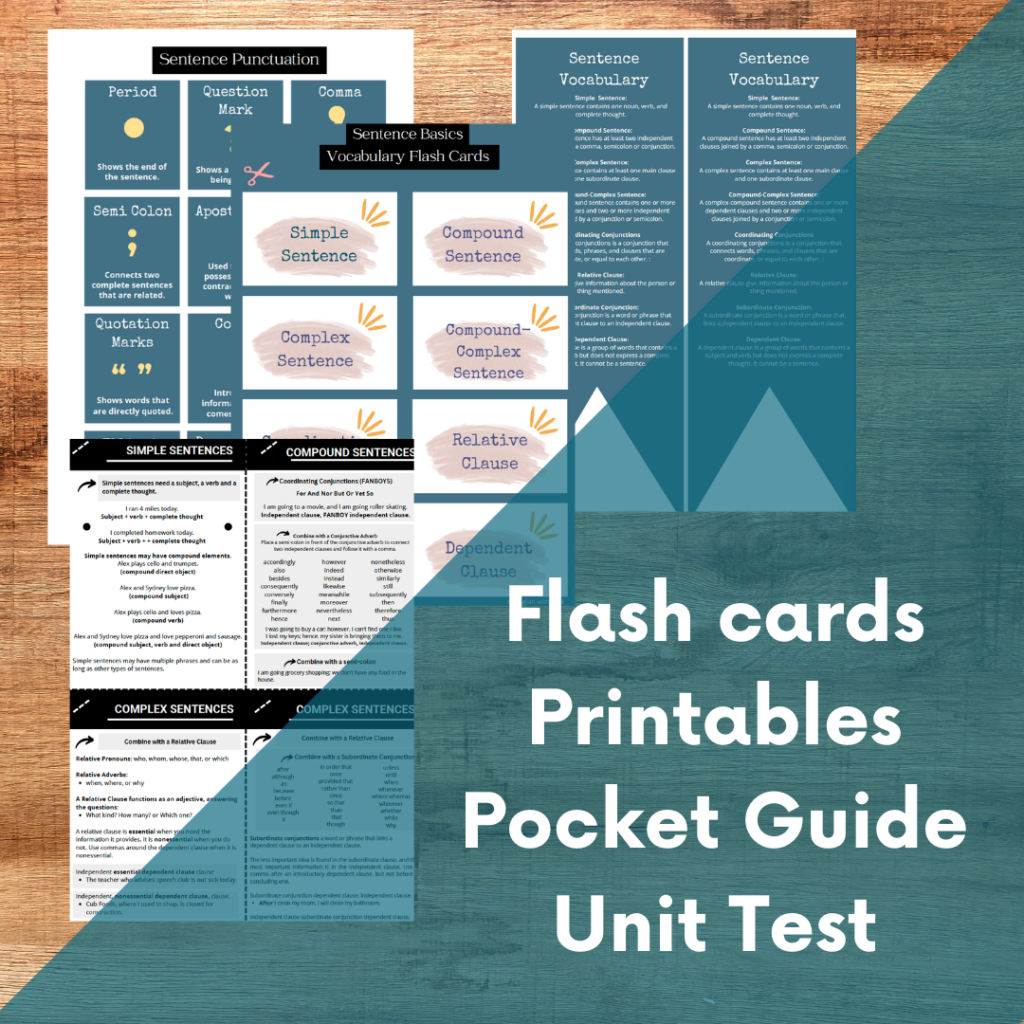
- Simple Sentences: These contain one independent clause (a subject and a verb). Example: “The cat slept.”
- Compound Sentences: These contain two or more independent clauses joined by a conjunction (for, and, nor, but, or, yet, so) or a semicolon. Example: “The cat slept, and the dog barked.”
- Complex Sentences: These contain one independent clause and at least one dependent clause. Example: “The cat slept because it was tired.”
- Compound-Complex Sentences: These contain two or more independent clauses and at least one dependent clause. Example: “The cat slept because it was tired, and the dog barked at the mailman.”
Sentence Types as Building Blocks, Not Definitions to Memorize
Before students can manipulate sentences, they need a shared understanding of how sentences work. I have found that students grasp sentence types more easily when they see them as building blocks rather than labels they are expected to memorize.
Simple sentences give students a starting point. One subject. One verb. Clear and complete. From there, compound sentences feel like an extension rather than a leap, especially when students see how conjunctions connect ideas they already understand. Complex and compound complex sentences become far less intimidating when they are introduced as ways to add meaning, cause, and depth to ideas students already know how to express.
When students view sentence types as tools rather than rules, they are far more willing to experiment with them in their writing.
Tips for Teaching Sentence Structure
Start With What Students Already Know
One of the biggest mistakes I used to make was assuming students were ready for sentence construction before they had a solid grasp of parts of speech. Now, I slow down and make sure students are truly comfortable identifying nouns and verbs before we move on. This does not require anything fancy. Short identification activities, quick warm-ups, and collaborative practice go a long way.
Once students can reliably find the subject and predicate in a sentence, sentence construction becomes much less mysterious. They begin to see patterns, and those patterns give them confidence. Confidence changes everything.
Make Sentence Structure Visual and Concrete
Sentence structure becomes much more accessible when students can see it. Visual strategies have consistently helped my students understand how sentences fit together, especially those who struggle with abstract explanations.
Color-coding sentence parts allows students to physically see how ideas connect. Sentence diagrams, when used sparingly and intentionally, can clarify structure without overwhelming students. These visuals act as scaffolds, giving students a reference point they can return to as they write.
Over time, students rely less on the visuals, but early on, those supports make a noticeable difference.
Practice With Purpose, Not Just Repetition
Practice matters, but the type of practice matters even more. Instead of relying solely on worksheets, I build sentence practice into our daily routine. Short sentence-writing moments, quick revisions, and collaborative sentence-building activities keep the focus on application rather than perfection.
Daily sentence practice also helps students internalize structure naturally. They begin to recognize when a sentence sounds incomplete or awkward, and that awareness transfers into their longer writing assignments.
1. Start with the Basics:
- Nouns and Verbs: Ensure students understand nouns and verbs before moving on to sentence construction. Use simple exercises to identify and categorize nouns and verbs in sentences.
- Subjects and Predicates: Teach students to identify the subject and predicate in a sentence. This helps them understand how sentences are formed.
2. Use Visual Aids:
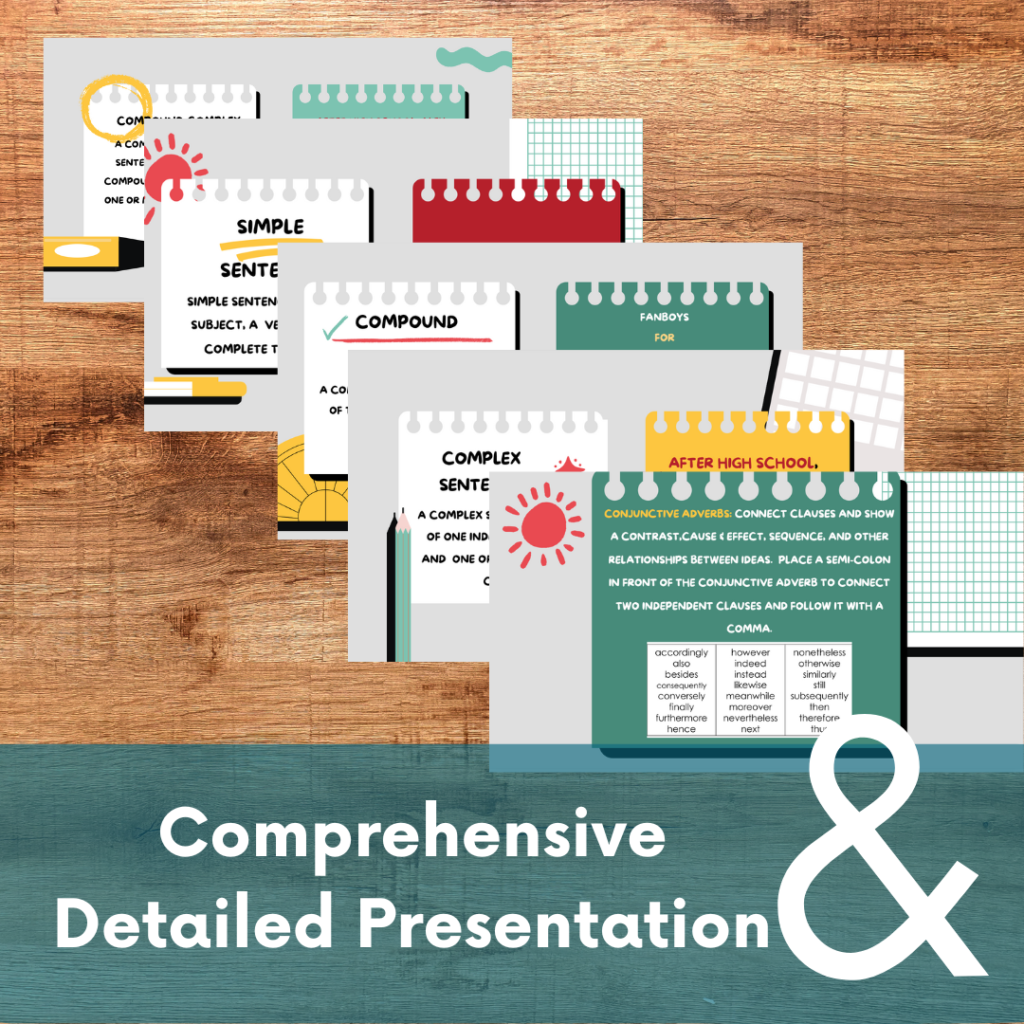
- Sentence Diagrams: Visual representations can help students grasp the structure of different sentence types. Use sentence diagrams to break down and illustrate the components of sentences.
- Color Coding: Color-code different parts of a sentence (subject, verb, object, etc.) to make it visually clear. This is especially helpful for visual learners.
3. Practice, Practice, Practice:
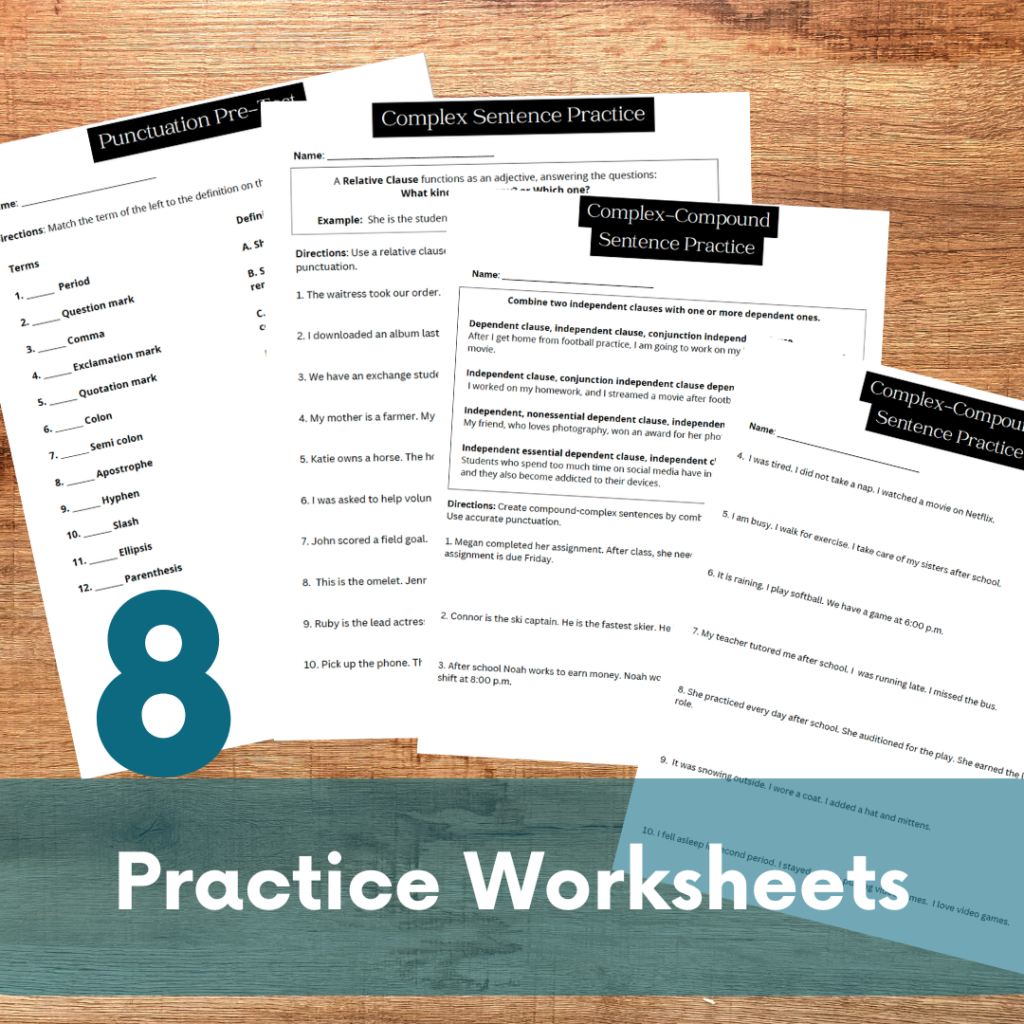
- Worksheets: Provide plenty of practice worksheets with exercises on identifying and constructing different types of sentences.
- Daily Sentence Writing: Incorporate a daily sentence-writing exercise into your routine. Give students prompts to write simple, compound, complex, and compound-complex sentences.
Fun Ideas for Teaching Sentences in the Classroom
Classroom Activities That Made Sentence Structure Stick
Some of the most successful sentence lessons I have taught involved movement, collaboration, and problem-solving. Sentence construction games using index cards allowed students to physically manipulate parts of a sentence, which helped them understand order and structure more intuitively. Sentence puzzles gave students the chance to fix broken sentences, turning grammar into a challenge rather than a chore.
An interactive sentence wall became a go-to resource in my classroom. Students could rearrange sentence parts, test different structures, and see how meaning changed based on word placement. Sentence stacking using blocks or LEGO bricks worked especially well for students who needed a tactile approach.
Sentence starters also became a quiet favorite. They lowered the barrier for hesitant writers while still pushing students to experiment with more complex structures. Over time, students began creating their own sentence starters, which was a clear sign they understood how sentences worked.
Using Technology as a Support, Not a Substitute
Digital tools can be helpful when used intentionally. Interactive sentence construction activities give students immediate feedback and allow them to practice independently or in small groups. I found these tools especially useful during stations or intervention blocks, where students could work at their own pace without feeling singled out.
Technology worked best when it supported what we were already doing in class, not when it replaced instruction altogether.
1. Sentence Construction Game:
- Materials: Index cards, markers.
- How to Play: Write different parts of sentences (subjects, verbs, objects, clauses, conjunctions) on separate index cards. Divide the class into small groups and give each group a set of cards. Have them create as many sentences as possible using the cards. Award points for different types of sentences to make it competitive and fun.
2. Sentence Puzzles:
- Materials: Sentence strips, scissors.
- How to Play: Write sentences on strips of paper and cut them into individual words or phrases. Mix them up and have students work in pairs or small groups to reconstruct the sentences. This activity helps students understand sentence order and structure.
3. Interactive Sentence Wall:
- Materials: Bulletin board, sentence components on cards.
- How to Use: Create an interactive sentence wall in your classroom where students can physically move parts of sentences around to create different sentence types. Change the components regularly to keep it fresh and challenging.
4. Sentence Stacking:
- Materials: Blocks or LEGO bricks, markers.
- How to Play: Write words or parts of sentences on blocks. Have students stack the blocks to form different types of sentences. This tactile activity is especially great for younger students.
5. Sentence Starters:
- Materials: Sentence starter prompts.
- How to Use: Provide students with sentence starters that they must complete. This encourages creative thinking and helps them practice constructing different types of sentences. For example, “Although it was raining, …” or “The teacher smiled when …”
6. Digital Sentence Construction:
- Materials: Tablets or computers, sentence construction apps or online tools.
- How to Use: Utilize educational technology to engage students. There are many online tools and apps that offer interactive sentence construction exercises and games.
What I Learned About Teaching Sentences
The biggest shift for me was realizing that sentence instruction does not need to feel rigid or isolated. When students build sentences, move them, revise them, and talk about them, grammar becomes part of writing rather than something separate from it.
Once that clicked, sentence structure stopped being something we “got through” and became something students actually used.
Final Thoughts
Teaching sentence structure does not have to feel technical, dry, or disconnected from real writing. With visual supports, hands-on activities, and consistent practice, students can develop a strong understanding of how sentences work and why they matter.
When students feel confident building sentences, their writing improves across the board. And when that happens, teaching grammar becomes far more rewarding for everyone involved.
Check Out These Resources from My Fellow Teacher Authors
If you are looking to deepen sentence instruction without relying on worksheets, these teacher-created resources and blog posts pair beautifully with hands-on, practical grammar instruction.
Sentence Structure & Mentor Sentences
Secondary Sara
Choosing an Order of Topics in Grammar Instruction
Sara breaks down how to sequence grammar instruction in a way that actually builds understanding instead of confusion. This is a great read if you are rethinking how sentence structure fits into the bigger grammar picture.
Bespoke Classroom
How to Get Started with Mentor Sentences
This post offers a clear, approachable entry point into mentor sentences, especially for teachers who want grammar instruction to live inside authentic writing instead of isolated practice.
Final Thoughts
Teaching sentence construction doesn’t have to be dry or boring. By incorporating these tips and fun activities into your lessons, you can help your students build a strong foundation in sentence structure while keeping them engaged and excited about learning. Remember, the key is to make it interactive, visual, and hands-on.
So, let’s get those sentences rolling and watch our students become confident, skilled writers!
Happy teaching and happy constructing!
Check out the following resources from my teacher colleagues:
Choosing an Order of Topics in Grammar Instruction by Secondary Sara
How to get Started with Mentor Sentences by BeSpoke Classroom

