
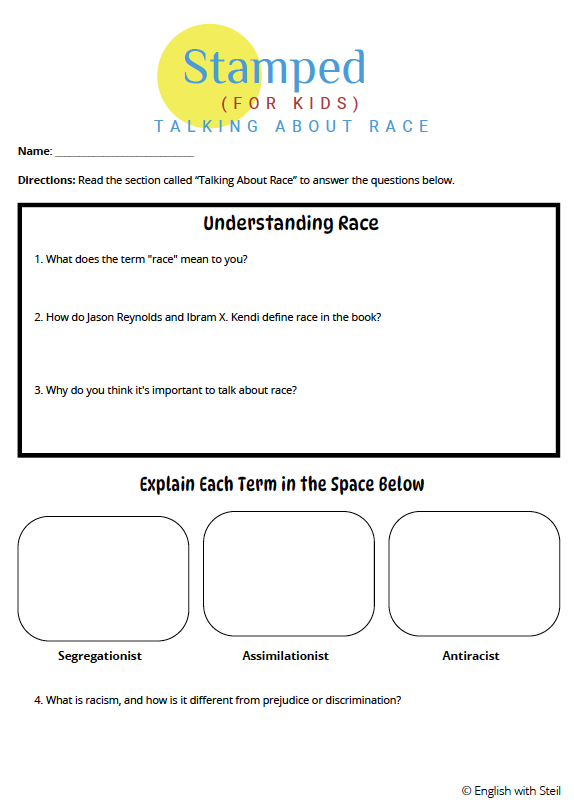
As educators, we carry the responsibility of shaping not just informed students, but compassionate and critical thinkers. Stamped (for Kids) by Jason Reynolds and Ibram X. Kendi is a powerful tool to help fulfill this mission. Teaching this book is more than just covering history; it’s about empowering students to understand and challenge racism, both in the past and in the present.
Why Teach Stamped (for Kids)?
At its core, Stamped (for Kids) provides students with an entry point to discussing race and racism in a way that is age-appropriate, thought-provoking, and highly relevant. The book simplifies complex historical events and ideas without watering them down, making it an excellent resource for helping students draw connections between the past and the present.
Stamped (for Kids) by Jason Reynolds and Ibram X. Kendi takes complex ideas about race, history, and power and presents them in a way that is accessible without being watered down. That balance is what makes this book so effective with upper elementary and middle school students. It does not lecture students or talk over them. Instead, it invites them into the conversation.
As students read, they start noticing patterns in history and begin connecting those ideas to the world they live in today. They ask deeper questions, challenge assumptions, and recognize that history is not something frozen in the past. It is something that continues to shape systems, opportunities, and lived experiences right now.
Stamped (for Kids) offers a unique opportunity to discuss race and racism in a way that is accessible and engaging for younger students. The book breaks down complex ideas and historical events into language that students can understand without oversimplifying the issues. It connects the dots between history and the present day, making it clear that the struggles against racism are ongoing and relevant.
Teaching this book helps students develop critical thinking skills as they explore the origins of racist ideas and how they have been used to justify inequality. It also encourages empathy, by helping students understand the experiences of those who have been marginalized throughout history. Moreover, it aligns with many educational standards, including social studies and literacy, making it a valuable addition to your curriculum.
As educators, we don’t just teach facts, we shape critical thinkers, compassionate individuals, and future change-makers. Teaching Stamped (for Kids) by Jason Reynolds and Ibram X. Kendi is more than just covering history; it’s about empowering students to recognize, understand, and challenge racism, both in the past and the present.
This book is an accessible, engaging, and eye-opening tool that helps students navigate complex discussions about race, history, and social justice. If you’re looking for ways to incorporate this powerful book into your classroom, this guide will give you practical strategies, engaging discussion ideas, and creative projects that will make your lessons meaningful and impactful.
Naming the Hesitation Teachers Feel
You might be wondering if this book is too heavy for your students or if discussions will feel uncomfortable or awkward. You may worry about not having the “right” answers or about navigating conversations that feel emotionally charged. Those concerns are valid, and they are shared by many thoughtful educators.
What I have learned from teaching this text is that students do not expect teachers to have perfect answers. What they need is a classroom environment where questions are welcomed, mistakes are treated as learning opportunities, and curiosity is encouraged. When students feel safe to wonder out loud, meaningful discussion follows naturally.
What Students Gain From Reading Stamped (for Kids)
One of the biggest strengths of Stamped (for Kids) is how it makes history feel relevant instead of distant. Many traditional history texts present racism as something that existed long ago and was eventually resolved. This book challenges that narrative by showing how racist ideas were created, spread, and reused across time, and how those ideas continue to shape society today. Students begin to understand that history is not finished, and that realization is powerful.
The book also builds critical thinking skills without feeling like a lecture. Students are encouraged to question who benefits from certain ideas, why some stories are centered while others are ignored, and how systems influence opportunity long before individual choices come into play. Rather than memorizing facts, students learn how to analyze narratives and think critically about information they encounter everywhere.
Just as importantly, Stamped (for Kids) helps build empathy through understanding rather than guilt. Students encounter real people, real decisions, and real consequences. They begin to see how policies and beliefs impact everyday lives and how those impacts accumulate over time. This kind of empathy sticks
Top Reasons This Book Belongs in Your Classroom
✅ It Makes History Engaging and Relevant
Many history books present racism as something that happened a long time ago, but Stamped (for Kids) shows how these ideas evolved over time and still affect society today. The book connects historical events to current racial issues, making it easier for students to understand why history still matters in their daily lives.
✅ It Fosters Critical Thinking
This book challenges students to think critically about race, bias, and stereotypes. It helps them question how racist ideas spread, who benefits from them, and how they can be challenged—valuable skills they will carry into adulthood.
✅ It Builds Empathy
Understanding history is not just about dates and events; it’s about people’s lived experiences. This book allows students to see history through different perspectives, helping them develop empathy for those who have been affected by racist policies and ideas.
✅ It Helps Students Recognize Their Own Role in History
One of the most powerful aspects of Stamped (for Kids) is that it doesn’t just tell students about the past—it encourages them to think about how they can help shape the future. It inspires activism, advocacy, and a sense of responsibility.
How to Teach Stamped (for Kids): Engaging Strategies for the Classroom
Teaching about racism can feel intimidating, but with the right approach, you can create a supportive and thought-provoking environment where students feel safe to ask questions, express ideas, and grow as learners.
How to Teach Stamped (for Kids) Without Overwhelm
A strong unit starts with setting the tone. Before opening the book, it helps to establish clear discussion norms that emphasize listening, curiosity, and respect. Let students know that it is okay to ask questions, acknowledge uncertainty, and learn together. Building trust first makes everything else easier.
Beginning with students’ prior knowledge is another effective strategy. Simple reflection questions such as what racism means to them, where they think racist ideas come from, and whether they believe history still affects life today help students surface their thinking. This is not about right answers, but about awareness and growth.
Teaching the book in smaller chunks also matters. Rather than assigning large sections at once, pausing after each chapter for brief reflection keeps students engaged without feeling overwhelmed. Asking students to name one new idea, one lingering question, or one connection to the present encourages thoughtful processing and keeps discussions grounded.
Creative responses can also make a big difference. Not every reaction needs to be an essay. Timelines, letters to historical figures, podcasts, visual representations, and small group discussions all give students ways to process learning in meaningful and accessible ways. Creative options lower anxiety and deepen understanding.
Connecting the Book to Students’ Lives Today
One of the most impactful aspects of teaching Stamped (for Kids) is connecting the text to current events. When students research topics such as voting rights, media representation, education inequality, or modern civil rights movements, history suddenly feels alive. Students begin to see that the ideas discussed in the book are not abstract or outdated. They are part of the world students are navigating right now.
These connections help students recognize that they are not passive observers of history. They are active participants in shaping what comes next.
A Permission Slip for Teachers
You are allowed to pause when conversations feel heavy. You are allowed to say you do not know and invite students to think alongside you. You are allowed to teach this book imperfectly. Teaching Stamped (for Kids) is not about delivering flawless lessons. It is about modeling curiosity, reflection, and the courage to engage with difficult ideas.
That modeling matters just as much as the content itself.
1. Create a Safe Space for Honest Conversations
Before you begin, establish classroom norms that encourage respectful dialogue. Many students may feel nervous discussing race, so it’s important to create an open, judgment-free environment.
Teaching Tip:
- Set ground rules like “Listen to understand, not to respond” and “It’s okay to not have all the answers”.
- Use anonymous surveys to gauge students’ comfort levels with discussing race before and after reading the book.
2. Start with a Pre-Reading Discussion: What Do We Already Know?
Kick off your Stamped (for Kids) unit with a pre-reading discussion or writing prompt to assess students’ prior knowledge and attitudes about race and history.
Discussion Prompts:
- What does racism mean to you?
- How do you think racist ideas spread?
- Do you believe racism still exists today? Why or why not?
- What do you already know about the history of race in America?
This exercise helps you understand where your students are coming from and gives them a foundation to build on as they read.
3. Use Chapter-by-Chapter Discussions to Encourage Critical Thinking
Rather than assigning the book all at once, break it into sections and hold structured discussions.
Teaching Tip:
After each chapter, ask students to:
- Summarize what they learned.
- Identify the main idea.
- Ask a question they still have.
- Make a connection to their own lives or current events.
This helps reinforce comprehension and ensures that students engage with the text on a deeper level.
4. Bring History to Life with Multimedia & Primary Sources
Stamped (for Kids) introduces students to important historical figures and events. To deepen their understanding, pair the book with real-world resources.
Ideas for Historical Context Exploration:
- Watch short documentaries or TED Talks on topics like slavery, segregation, and the Civil Rights Movement.
- Analyze primary sources like speeches, newspaper articles, and letters from key historical figures.
- Invite guest speakers from civil rights organizations or local history groups to discuss racial history and activism.
Making history visual and interactive makes it more engaging and memorable for students.
5. Encourage Creative Expression Through Projects
Let students process what they’ve learned through creative activities.
Project Ideas:
- Create a “Racist Ideas Timeline”: Have students map out how racist ideas evolved over time.
- Write a Letter to a Historical Figure: Students can write a letter to someone in the book, either asking questions or responding to their actions.
- Illustrate a Key Moment: Encourage artistic students to create visual representations of the events in the book.
- Record a Podcast Episode: Let students discuss themes from the book in a podcast format.
Creative projects help students connect with the material in a personal and meaningful way.
6. Connect the Book to Current Events
Stamped (for Kids) is not just about history—it’s about how history impacts today’s world. Help students draw connections between the past and the present.
Teaching Tip:
Have students research:
- The Black Lives Matter movement
- Modern-day voter suppression laws
- Immigration and racial discrimination
- The racial wealth gap
By linking history to real-life issues, students see that racism is not just something of the past—it’s something they can actively work against today.
7. Use Empathy-Building Activities to Foster Deeper Understanding
Empathy is a crucial part of understanding race and racism. Help students step into someone else’s shoes through perspective-taking exercises.
Ideas for Empathy Activities:
- Role-Playing Scenarios: Have students reenact moments from history to better understand different perspectives.
- Journaling Prompts: “How would you feel if you were in Cándido’s or América’s position?”
- “Walk in Their Shoes” Reflection: Assign students to write from the perspective of a historical figure in the book.
These activities help students move beyond abstract ideas and truly feel the impact of racial injustice.
Strategies and Ideas for Teaching
Start with Open Dialogue: Before diving into the book, create a safe space for students to discuss what they already know about race and racism. This can be done through a class discussion or anonymous surveys. It’s important to establish that all questions and feelings are valid, and that this is a learning journey for everyone.
Chapter-by-Chapter Discussions: Break the book into manageable sections and discuss each chapter in detail. Encourage students to ask questions and express their thoughts. This can be done through guided reading sessions, where you read a chapter together and pause to discuss key points.
Historical Context Exploration: Stamped (for Kids) references many historical events and figures. Supplement your lessons with multimedia resources like documentaries, primary source documents, and guest speakers. This will help students build a deeper understanding of the historical context and see the real-world impact of the ideas discussed in the book.
Creative Projects: Encourage students to express their learning through creative projects. This could include writing a reflective essay, creating a visual art piece, or even developing a short play or skit based on a chapter. Creative expression allows students to process the material in a personal and meaningful way.
Connecting to Current Events: Help students draw connections between the book and current events. This can be done through classroom discussions, journaling prompts, or research projects. By linking past and present, students can better understand the ongoing nature of the fight against racism.
Empathy Building Activities: Use role-playing or perspective-taking exercises to help students empathize with those who have been affected by racist ideas and policies. These activities can be powerful in helping students internalize the importance of standing up against injustice.
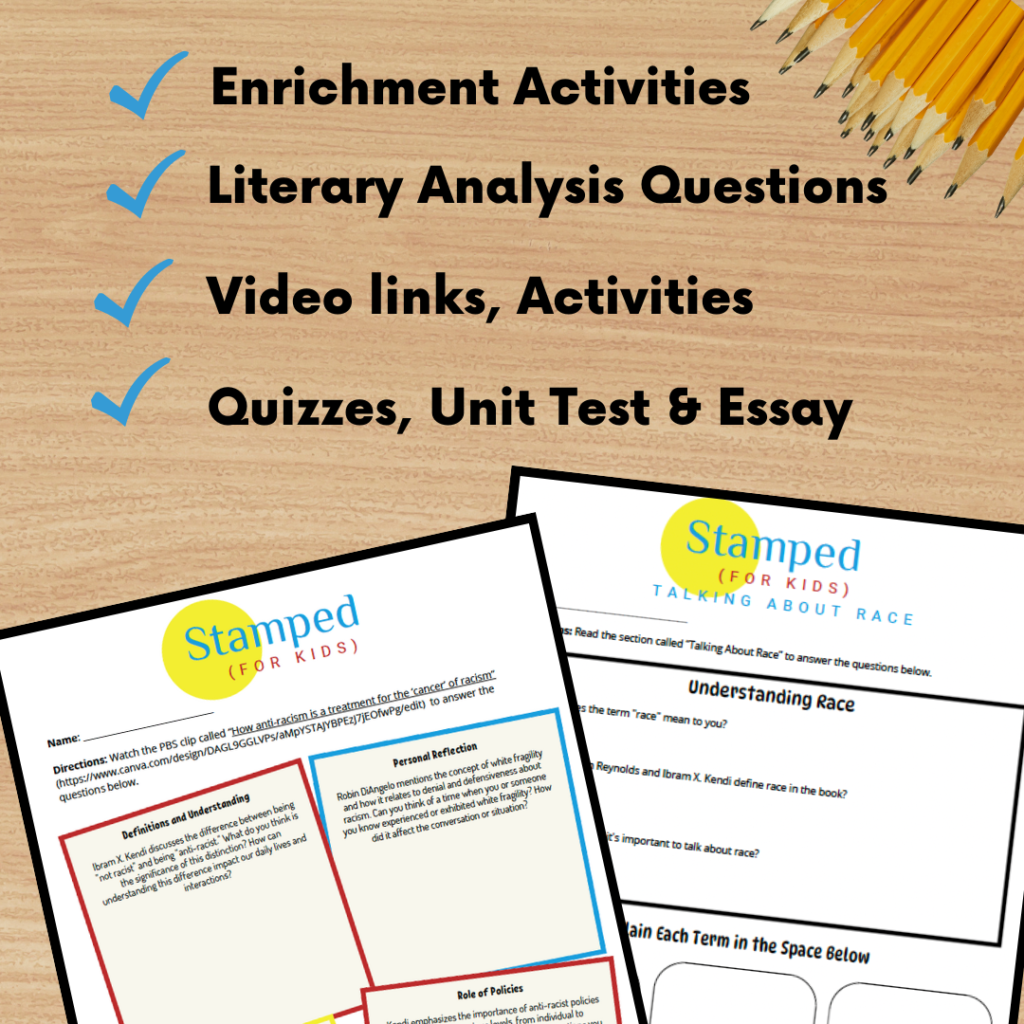
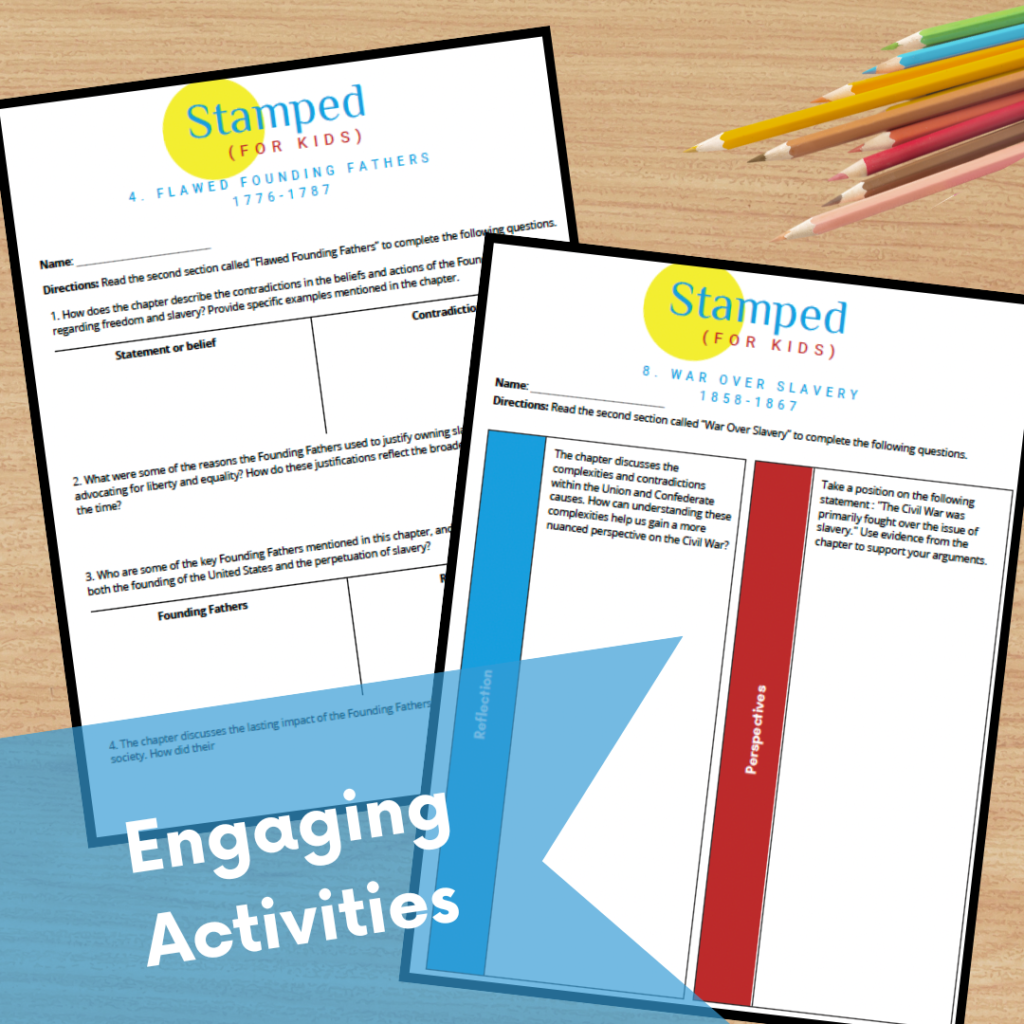
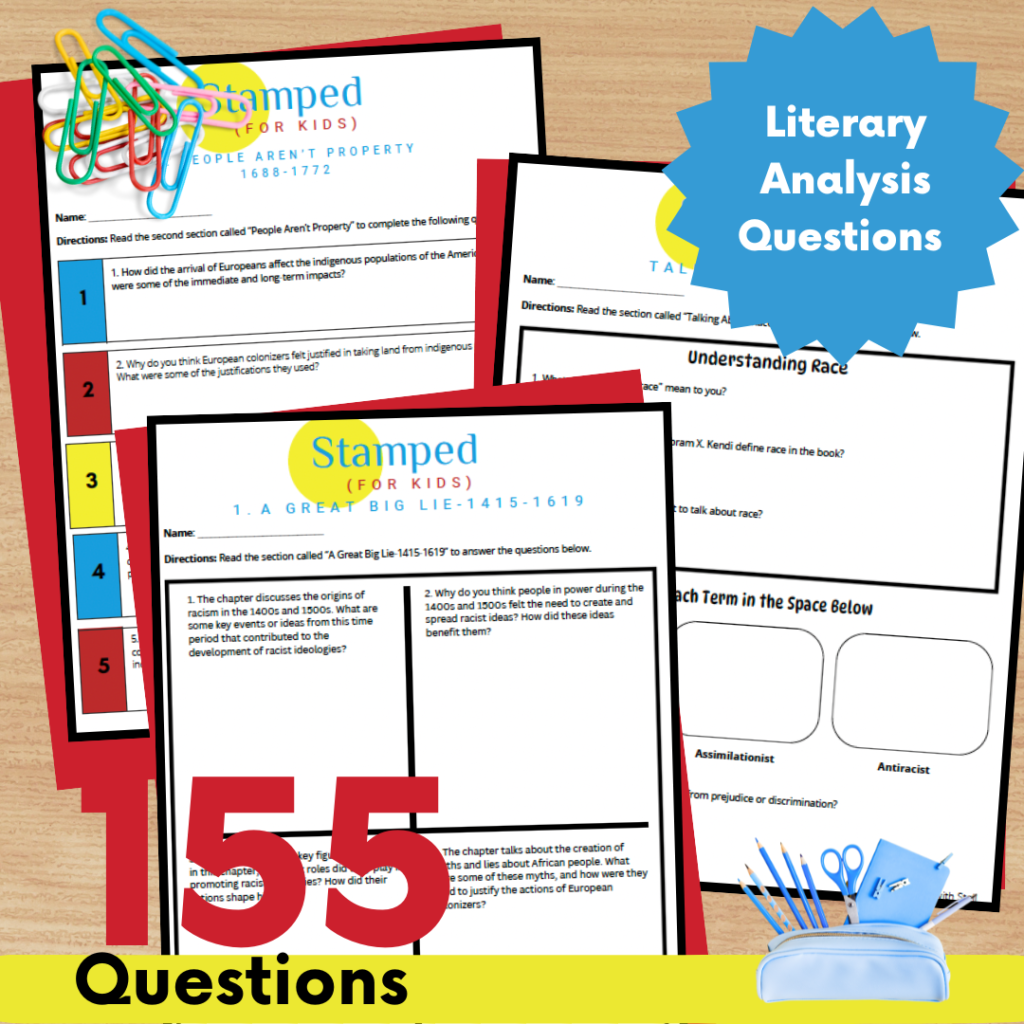
Key Ideas Students Will Learn
Teaching Stamped (for Kids) will introduce students to several crucial concepts:
The Evolution of Racist Ideas: Students will learn how racist ideas have developed over time, often in response to social, political, and economic changes. They will see how these ideas were used to justify slavery, segregation, and other forms of inequality.
The Impact of Individuals: The book highlights how individuals, both famous and ordinary, have played a role in promoting or challenging racist ideas. This helps students understand that everyone has the power to make a difference.
The Power of Narratives: Students will explore how stories and narratives can be used to perpetuate stereotypes or challenge them. This is a critical literacy skill that will serve them well in all areas of life.
Empathy and Justice: At its core, Stamped (for Kids) is about fostering empathy and a sense of justice. Students will be encouraged to think about what fairness and equality mean and how they can contribute to a more just society.
Key Takeaways from Stamped (for Kids)
By the end of this unit, students will have a deeper understanding of:
✔ The evolution of racist ideas and how they’ve shaped history.
✔ How individuals (both historical figures and everyday people) influence social change.
✔ How narratives and media shape perceptions of race.
✔ How they can be active participants in fighting against racism.
Final Thoughts: Why Teaching Stamped (for Kids) Matters
Teaching Stamped (for Kids) is not about providing easy answers. It is about helping students understand where ideas come from, how those ideas shape systems, and why questioning narratives matters. When students learn to recognize patterns in history and challenge them thoughtfully, they begin to see their own role in shaping a more just future.
That work is challenging, meaningful, and worth it.
Are you ready to teach Stamped (for Kids) in your classroom? What strategies have worked for you? Let’s share ideas in the comments below!
Check Out These Resources To Support This Text
If you are teaching Stamped (for Kids) and want support with discussion moves, lesson ideas, and age appropriate ways to teach about racism and justice, these resources are worth bookmarking.
Teaching tools for anti racism and social justice
Learning for Justice (formerly Teaching Tolerance) Classroom lessons, student friendly texts, and practical guidance for building an inclusive environment before you dive into hard topics.
Facing History and Ourselves Excellent discussion structures and lesson collections that help students connect history to identity, choices, and community responsibility.
Zinn Education Project Lessons and primary sources that support honest history and help students examine whose stories are centered and why.
Primary sources and historical context that students can actually understand
Smithsonian National Museum of African American History and Culture Clear exhibits and collections that help students build background knowledge with dignity and accuracy.
Library of Congress Teacher Resources Primary sources and teaching guides that work well for timelines, inquiry stations, and document based discussions.
National Archives DocsTeach Ready made activities using primary sources that help students practice analysis without feeling overwhelmed.
Practical, teacher friendly support for conversations that get heavy
Edutopia Social Emotional Learning resource Helpful for setting norms, building reflection routines, and supporting students who are processing big ideas.
SPLC classroom resources Solid background reading and classroom materials that can support instruction on bias, identity, and justice.
Conclusion
Teaching Stamped (for Kids) is a powerful way to help students understand the complexities of race and racism in America. It’s an opportunity to foster empathy, critical thinking, and a commitment to justice. By using thoughtful strategies and engaging activities, you can guide your students through this challenging but essential topic, preparing them to be informed and compassionate citizens.
Incorporating Stamped (for Kids) into your curriculum isn’t just about teaching history; it’s about helping your students understand the world they live in and empowering them to make it better. As educators, there is no greater goal.
Check out resources from my fellow teacher authors
Getting Started in Anti-Racist Self-Education (for Teachers) by Secondary Sara

