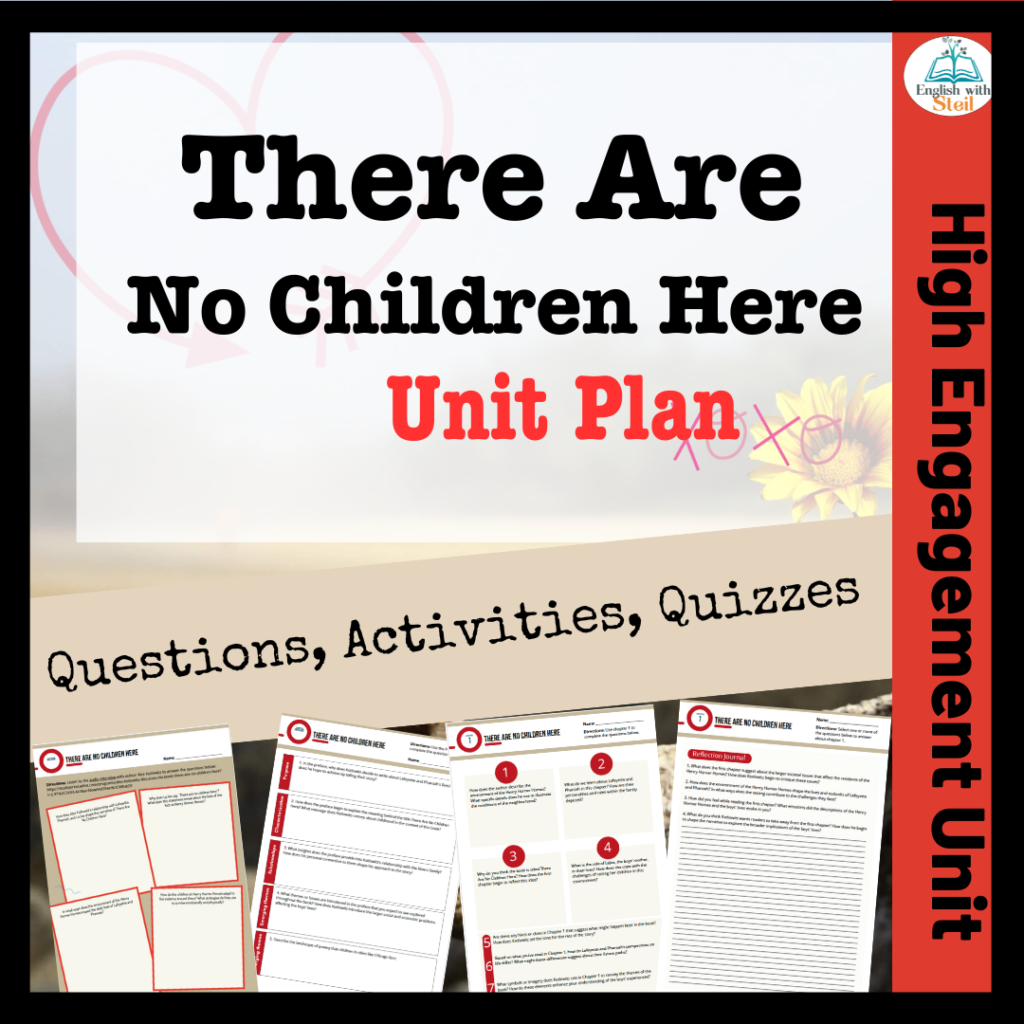
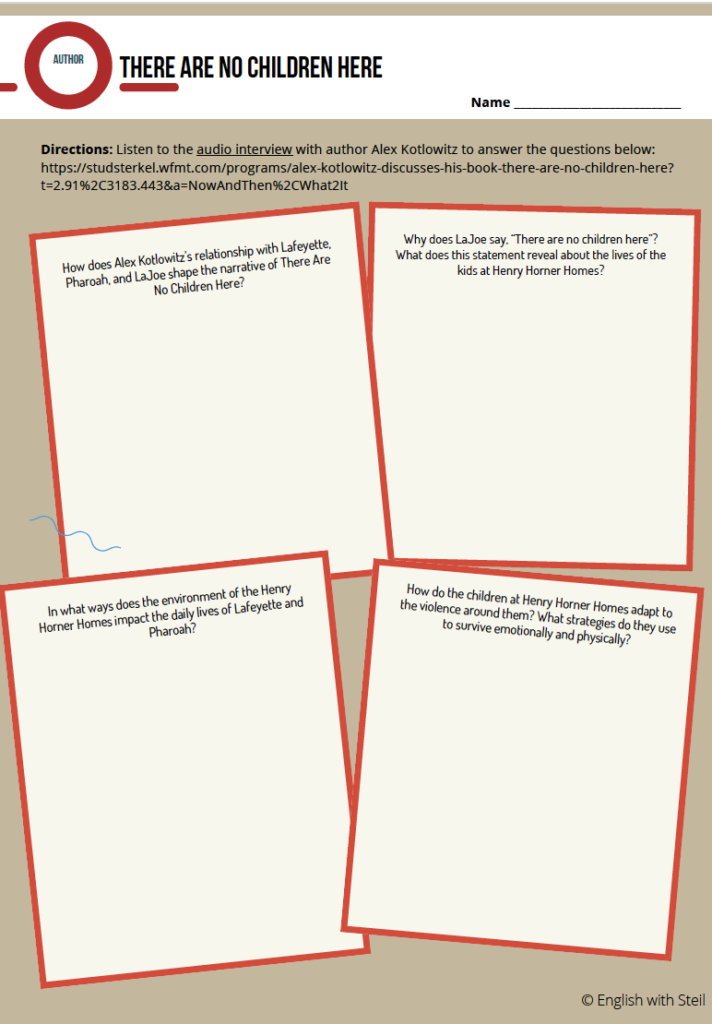
As educators, we constantly seek literature that not only engages students but also broadens their understanding of the world. Alex Kotlowitz’s There Are No Children Here is one of those rare nonfiction books that does both. This deeply moving work of investigative journalism follows the lives of two young brothers, Lafeyette and Pharoah Rivers, as they grow up in Chicago’s Henry Horner Homes, a public housing project plagued by violence, poverty, and systemic neglect.
But this book is not just about hardship, it’s about resilience, dreams, and the power of storytelling. Through Kotlowitz’s detailed reporting and human-centered narrative, students step into the reality of urban poverty in America, developing empathy and critical thinking skills along the way.
If you’re looking for a compelling, discussion-rich book to add to your curriculum, There Are No Children Here is an essential choice. We want books that challenge assumptions, build empathy, and help students better understand the world beyond their own experiences. There Are No Children Here by Alex Kotlowitz is one of those rare nonfiction texts that does all of that and more.
This powerful work of investigative journalism follows brothers Lafeyette and Pharoah Rivers as they grow up in Chicago’s Henry Horner Homes, navigating violence, poverty, and systemic neglect. Kotlowitz’s reporting is immersive and compassionate, allowing students to see how structural inequality impacts real lives. This is not a book about statistics or distant problems. It is about children, families, dreams, and survival.
If you are looking for a discussion-rich, standards-aligned nonfiction text that sparks meaningful conversation and critical thinking, There Are No Children Here is an essential addition to your curriculum.
Key Themes to Explore in There Are No Children Here
This is not a text filled with statistics or abstract arguments. Instead, it invites students into the daily realities of two boys whose childhood is shaped by forces far beyond their control. As students read, they begin to understand how environment, access, and systemic barriers influence opportunity in ways that are often invisible to those who have not experienced them. For classrooms focused on discussion, inquiry, and real-world connections, There Are No Children Here offers an incredibly rich foundation.
Teaching nonfiction like this matters now more than ever. In a media landscape dominated by short-form content and oversimplified narratives, long-form investigative journalism teaches students how to slow down, analyze complexity, and engage thoughtfully with real human stories. This text helps students develop media literacy by examining author purpose, perspective, and ethical responsibility. It also strengthens critical reading and writing skills while encouraging students to think deeply about social structures and lived experience.
One of the most meaningful themes students explore in this book is resilience. Despite the instability surrounding them, Lafeyette and Pharoah demonstrate strength, adaptability, and hope in ways that feel both inspiring and heartbreaking. Their resilience is not portrayed as heroic or exceptional, but as necessary for survival. This invites powerful classroom conversations about what resilience looks like when choices are limited and safety is never guaranteed.
Another central theme students grapple with is the idea of the American Dream. Pharoah dreams of success and escape, yet systemic poverty repeatedly interferes with those aspirations. Students are challenged to examine how opportunity is shaped by access and to question whether hard work alone is enough when systems are stacked against individuals from the start. These discussions naturally lead into conversations about equity, privilege, and how society defines success.
Perhaps the most emotionally impactful theme is the loss of childhood innocence. The boys are forced to grow up quickly as violence and instability replace safety and play. Students often react strongly to moments where childhood curiosity collides with harsh reality, and these scenes open the door to thoughtful reflection about how environment shapes development. Many students leave these discussions with a deeper understanding of how circumstances can accelerate maturity in ways no child should experience.
1. Resilience in the Face of Adversity
Despite their circumstances, Lafeyette and Pharoah show incredible resilience. Their struggles are not just about survival—they are about finding moments of joy, hope, and determination.
💡 Discussion Prompt:
- What are some ways the boys demonstrate resilience?
- How do community, family, and personal strength help people navigate hardship?
2. The American Dream—Real or Myth?
Pharoah dreams of being successful and escaping his environment, but the reality of systemic poverty makes this incredibly difficult.
💡 Activity Idea:
- Have students compare Pharoah’s dreams to the classic idea of the American Dream.
- Ask: What does “success” mean for different people in different circumstances?
3. The Loss of Childhood Innocence
Lafeyette and Pharoah are forced to grow up too quickly due to their environment. The violence, drugs, and instabilityaround them strip away their childhood.
💡 Discussion Prompt:
- What are some moments in the book that highlight lost innocence?
- How does environment shape a child’s ability to be carefree?
Engaging Classroom Activities for Teaching There Are No Children Here
1. Thematic Journals
- Have students keep a journal where they reflect on resilience, inequality, and dreams in the book.
- Ask them to connect the themes to current events or their own experiences.
2. Socratic Seminars and Debates
- Organize class debates on questions like:
- Should the government be responsible for fixing housing inequality?
- Is violence in urban communities a systemic issue or a personal choice?
- Have students support their arguments with evidence from the book and outside research.
3. Research Projects on Urban Poverty
- Assign students to research the history of public housing, redlining, or education inequality in the U.S.
- Have them present their findings through multimedia projects, photo essays, or podcasts.
4. Fiction vs. Nonfiction Comparative Analysis
- Pair There Are No Children Here with a novel like The Outsiders or To Kill a Mockingbird.
- Compare how fiction and nonfiction address social issues.
- Ask: Which is more powerful in creating change—true stories or fictional ones?
5. Film Adaptation Analysis
- Show the film adaptation of There Are No Children Here and have students compare it to the book.
- Discuss: What was changed or left out, and how does that impact the story’s message?



Important Themes to Explore
There Are No Children Here touches on several themes that are as relevant today as they were when the book was published in 1991. These themes provide rich ground for classroom discussion and critical thinking:
Resilience in the Face of Adversity: Kotlowitz’s portrayal of Lafeyette and Pharoah’s lives highlights the incredible resilience of children growing up in harsh environments. Despite the violence, instability, and poverty surrounding them, the boys demonstrate moments of hope, courage, and tenacity.
Dreams and Dreams Deferred: Throughout the book, the characters—especially Pharoah—harbor dreams of escaping their circumstances, but the reality of systemic poverty often dims those dreams. The novel prompts students to think about the importance of dreams and how societal structures can hinder or support the pursuit of those aspirations.
Loss of Childhood Innocence: One of the most heartbreaking aspects of the book is the premature loss of innocence experienced by the children in the Henry Horner Homes. Kotlowitz poignantly captures how violence and trauma strip away the carefree nature of childhood, leaving these boys with adult responsibilities at a young age.
Systemic Inequality: The novel paints a vivid picture of the ways systemic failures—whether in housing, education, or policing—contribute to the struggles of low-income communities. By exploring these themes, students can better understand how institutions shape the lives of individuals, especially those in marginalized communities.
Investigative Journalism as a Teaching Tool
One of the most remarkable aspects of There Are No Children Here is the way Kotlowitz immerses himself in the lives of the Rivers family. As an investigative journalist, he didn’t just report from a distance—he spent a year living with and observing the family, building trust, and telling their story with compassion and integrity. This type of journalism opens a window into the human side of systemic issues, something that raw statistics or news reports can’t always capture.
Teaching this book offers a fantastic opportunity to introduce students to the role of investigative journalism. Discuss with your class how Kotlowitz gathered his information, the ethical considerations he faced, and how his reporting helped bring attention to issues of public housing and urban poverty. It’s a great way to show students the impact that journalism can have on public policy and awareness.
Key Themes That Spark Deep Classroom Discussion
One of the most compelling themes students explore in this text is resilience. Lafeyette and Pharoah demonstrate strength not because their circumstances improve, but because they adapt to survive. Their resilience is quiet, necessary, and shaped by limitation, which challenges students to rethink what perseverance really looks like when choices are constrained.
Another theme that consistently resonates with students is the idea of the American Dream. Pharoah’s dreams of success and escape mirror the hopes many students hold, yet systemic poverty repeatedly interferes. This opens the door for honest conversations about equity, access, and how opportunity is shaped long before effort ever enters the equation.
The loss of childhood innocence is perhaps the most emotionally impactful theme. Students are often struck by how quickly the boys are forced to mature due to violence and instability. These moments lead to meaningful reflection on how environment shapes childhood and why safety and stability are not universally guaranteed.
Finally, systemic inequality runs beneath every chapter. Students begin to see how housing policy, education systems, policing, and economic structures intersect to shape daily life. This understanding helps them move beyond individual blame and toward a broader awareness of how systems function.
Using Investigative Journalism as an Instructional Lens
One of the greatest strengths of There Are No Children Here is its value as a mentor text for investigative journalism. Kotlowitz spent over a year embedded with the Rivers family, building trust and reporting with care and integrity. This gives teachers a natural opportunity to discuss journalistic ethics, representation, and responsibility.
Students can examine how Kotlowitz balances observation with empathy, and how ethical storytelling requires patience, accountability, and respect. These conversations are especially powerful in journalism, English, and social studies classrooms where students are learning how stories are told and why that matters.



Ideas for Teaching There Are No Children Here
To make the most of There Are No Children Here in your classroom, consider the following teaching strategies:
Thematic Journals: Encourage students to keep a journal as they read, focusing on themes like resilience, the impact of poverty, and lost childhood. Ask them to reflect on these themes in their own lives or in the world around them.
Research Projects: Have students investigate a current issue related to poverty, education, or public housing in their own communities. This can help students connect the themes of the book to present-day realities, fostering a deeper understanding of how these issues persist.
Debates and Socratic Seminars: Hold a class debate or seminar on topics such as the role of government in public housing, the ethics of journalism, or the impact of violence on youth. This allows students to engage critically with the material and consider different perspectives.
Comparative Analysis with Fiction: Pair There Are No Children Here with a fictional work that deals with similar themes, such as To Kill a Mockingbird or The Outsiders. Students can compare how fiction and nonfiction address issues like poverty and injustice, and how each genre brings different strengths to the conversation.
Creative Projects: Allow students to create multimedia projects that express their response to the book’s themes. They could make short films, podcasts, or photo essays that capture the challenges faced by communities like Henry Horner or those in their own cities.
- Film: Show students the movie version of There are No Children Here and have students compare and contrast the work in two different mediums.
Instructional Ideas That Work in Real Classrooms
This text thrives in discussion-based classrooms. Reflective journaling allows students to process themes privately while making connections to current events and personal experiences. Many teachers find that these journals become some of the most thoughtful writing students produce all year.
Socratic seminars and structured discussions help students wrestle with big questions about government responsibility, violence, and inequality. Because the text is rooted in real experiences, students tend to engage with sincerity and depth rather than performative answers.
Research projects extend learning beyond the book by encouraging students to investigate issues such as public housing, redlining, education inequality, or urban poverty in their own communities. When paired with multimedia presentations, podcasts, or photo essays, students begin to see journalism as a tool for awareness and change.
Comparing There Are No Children Here with fiction like The Outsiders or To Kill a Mockingbird helps students analyze how nonfiction and fiction approach social issues differently. Many students discover that true stories often carry a different kind of emotional weight and urgency.
Tips for Creating a Safe and Thoughtful Learning Environment
Because this book addresses violence, trauma, and systemic injustice, intentional classroom norms matter. Establishing discussion expectations early helps students engage respectfully and thoughtfully. Offering options for written reflection ensures that students who are less comfortable speaking still have space to process and respond.
Providing historical and social context before reading also helps students avoid oversimplification. When students understand the broader systems at play, discussions become more nuanced and empathetic rather than judgmental.
Why Students Remember This Book Long After the Unit Ends
Teachers often report that There Are No Children Here stays with students long after the final page. The boys feel real. Their dreams feel familiar. Their struggles feel unfair. That emotional connection is what makes this text so impactful.
By teaching this book, you are not just covering a nonfiction standard. You are helping students develop empathy, question assumptions, and recognize the power of ethical storytelling. You are showing them that journalism can give voice to lives that deserve to be seen and understood.
Teaching There Are No Children Here isn’t just about reading a book—it’s about helping students engage with real-world issues, develop critical thinking skills, and cultivate empathy.
By exploring systemic poverty, resilience, and the role of journalism, students gain a deeper understanding of the world and their own place in it. This book challenges them to think beyond their own experiences and become more socially conscious and compassionate individuals.
Final Thoughts: Why This Text Belongs in Your Curriculum
Teaching There Are No Children Here is not about offering easy answers. It is about helping students sit with complexity, think critically about systems, and engage compassionately with perspectives different from their own. When taught with care, this book becomes a cornerstone text that supports literacy, social awareness, and student voice.
If you are looking for a nonfiction text that challenges, engages, and truly matters, There Are No Children Here belongs in your classroom.
Check Out These Resources from My Fellow Teacher Authors
If you are teaching There Are No Children Here or exploring social justice, nonfiction, and investigative journalism with students, these teacher-created resources can help deepen discussion and support thoughtful instruction:
Teaching Social Justice Through Nonfiction by The Daring English Teacher
Practical strategies for guiding students through complex social issues using nonfiction texts, discussion, and writing.How to Teach Trauma-Informed ELA Lessons by Cult of Pedagogy
A clear, compassionate look at creating safe learning environments when texts address violence, poverty, and systemic injustice.Investigative Journalism Units for Secondary Students by JEA Curriculum Initiative
Journalism-focused lessons that help students analyze ethical reporting, author perspective, and long-form storytelling.Socratic Seminars That Actually Work by Secondary Sara
Step-by-step guidance for facilitating respectful, evidence-based discussions around difficult topics.Teaching Nonfiction That Builds Empathy by Write on With Miss G
Strategies for helping students connect emotionally and critically to real-world texts.Using Memoir and Journalism to Teach Equity by Bespoke ELA
Student-centered approaches to teaching memoir and investigative journalism with a focus on voice, equity, and ethics.