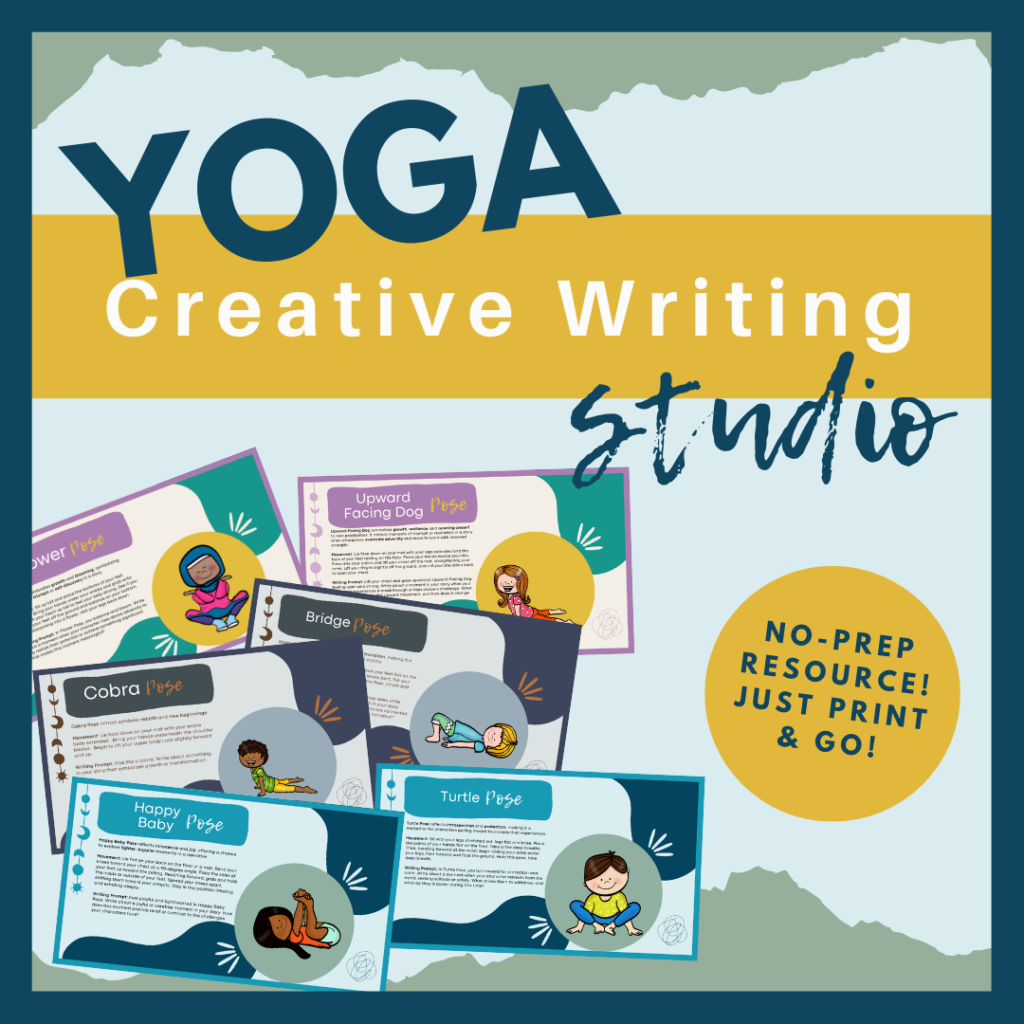

If you teach English, you know this feeling.
You look out at your class during a long reading or writing block and see it immediately. Slumped shoulders. Wandering eyes. That unmistakable mix of mental fatigue and physical restlessness.
English class asks students to sit. A lot.
And even when the lesson is strong, the stillness can work against us.
I started asking myself a simple question:
What would happen if students could move while they thought?
That question led me to Literary Yoga.
This idea hit me when I realized that just as yoga connects breath and movement, we can connect literary elements to yoga poses. The result? A fun, interactive way to reinforce critical thinking skills without your students even realizing they’re learning. I started experimenting with this concept in my own classroom, and it quickly became a game-changer. So grab your coffee (or tea), and let me share how you can transform your ELA lessons with a little movement magic!
Why Movement in ELA Matters
Movement is not a break from learning. It supports it.
When students move, even briefly, focus improves. Memory strengthens. Creativity increases. That matters in a classroom built on reading, writing, and sustained thinking.
The challenge, of course, is figuring out how to add movement without turning English class into chaos or losing instructional time.
That is where Literary Yoga fits.
By pairing simple yoga-inspired poses with writing and discussion prompts, students engage both their bodies and their thinking. Abstract ideas become more concrete. Reflection feels more natural. And the energy in the room shifts in a good way.
What Is Literary Yoga?
Literary Yoga connects movement to meaning.
Just as yoga links breath and motion, Literary Yoga links physical poses to literary skills like character development, conflict, theme, and reflection. The poses are simple. No experience required. No mats needed.
The goal is not perfect form. The goal is focus, presence, and deeper thinking.


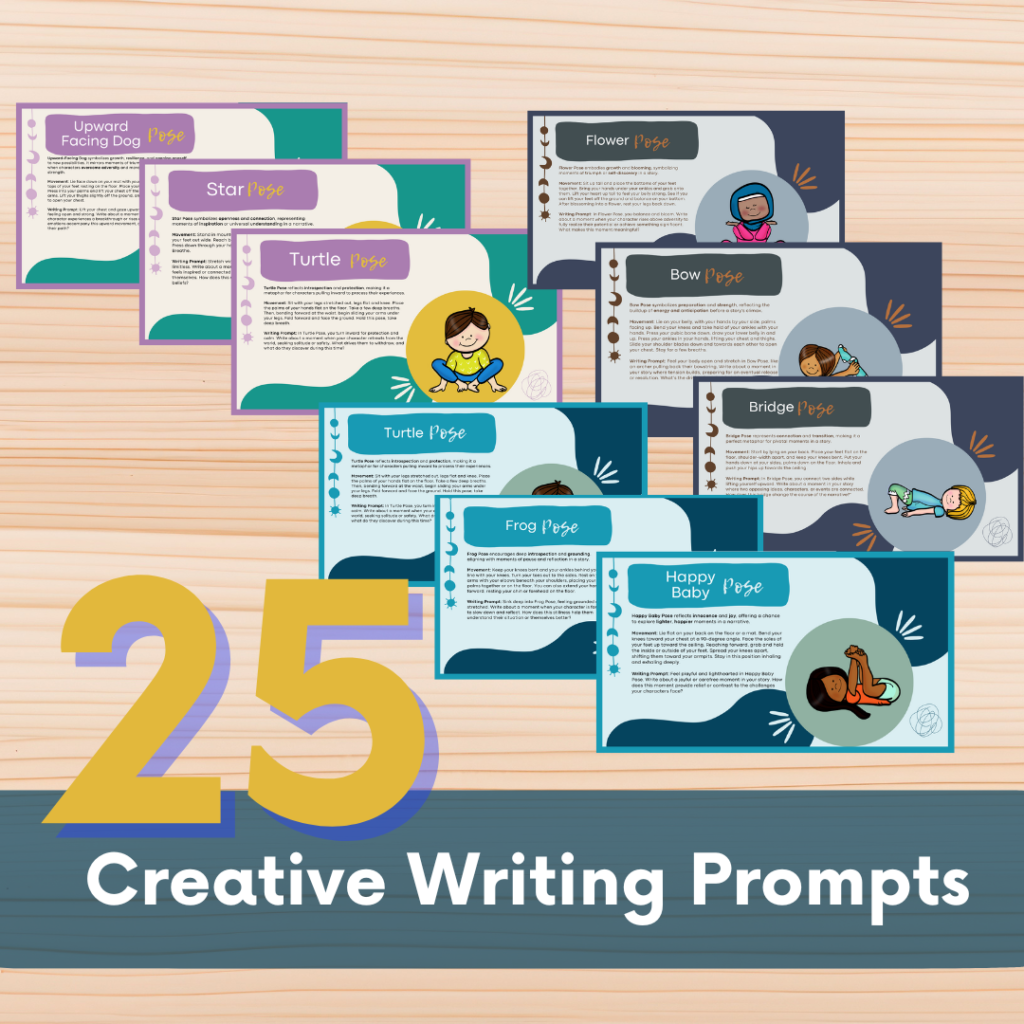
10 Literary Yoga Poses to Try in Your Classroom
Mountain Pose for Generating Ideas:
Stand tall and confident. Ask students to brainstorm ideas as solid as a mountain.
Prompt: “Write about a moment when you felt grounded and strong.”Tree Pose for Character Development:
Balance on one leg like a tree. Explore your character’s roots (backstory) and branches (actions).
Prompt: “How do your character’s roots influence their actions?”Bridge Pose for Connecting Plot Points:
Build a bridge between key events in your story.
Prompt: “Write about a moment that connects two crucial plot points.”Low Lunge Twist for Conflict:
Twist to represent different perspectives in a conflict.
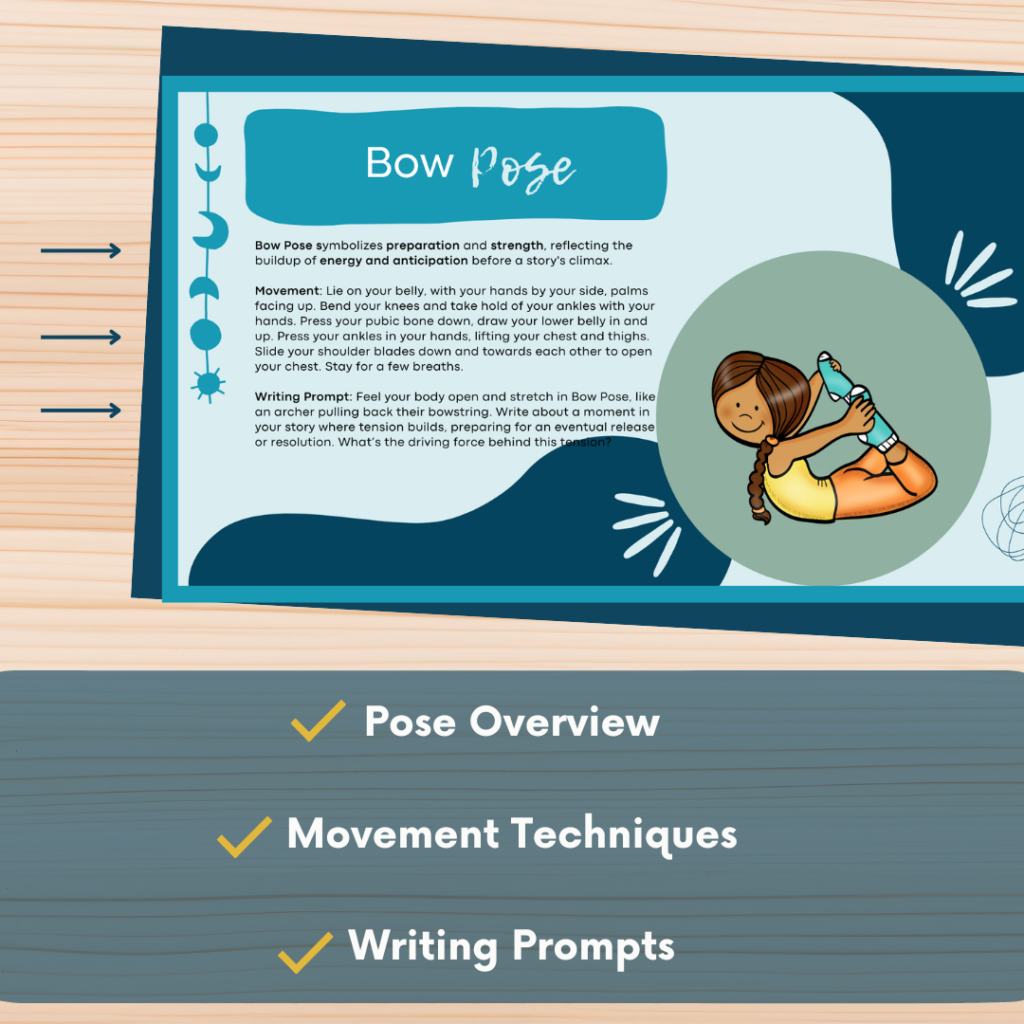
Prompt: “Write about a moment when your character faced a crossroads.”Bow Pose for Rising Action:
Feel the tension build like a bowstring being pulled back.
Prompt: “Describe a moment when tension builds in your story.”Butterfly Pose for Transformation:
Open and stretch like a butterfly’s wings.
Prompt: “Write about how your character transforms by the end of the story.”Happy Baby Pose for Lighthearted Moments:
Find playfulness in your story.
Prompt: “Write about a joyful memory that your character cherishes.”Frog Pose for Reflection:
Sink deep and reflect.
Prompt: “Write about a moment when your character was forced to slow down and think.”Star Pose for Inspiration:
Stretch wide and explore limitless possibilities.
Prompt: “Write about a moment when your character feels inspired.”Upward-Facing Dog for Breakthroughs:
Lift your chest and gaze upward to symbolize growth and resilience.
Prompt: “Write about a breakthrough your character experiences.”
How to Incorporate Literary Yoga in Your Classroom
Literary Yoga works best when it stays simple.
Brain breaks with purpose
Use one pose and one prompt to reset focus during longer blocks.
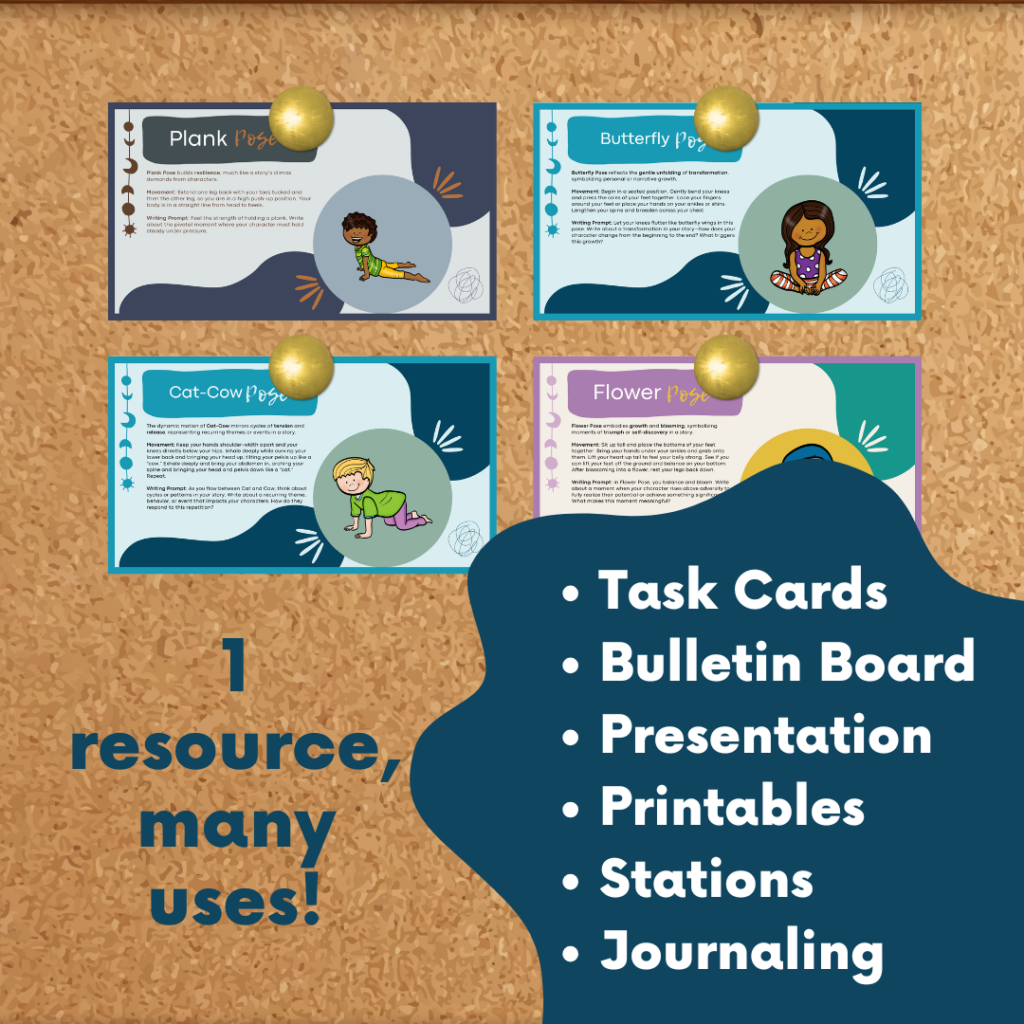
Learning stations
Set up stations with pose cards and prompts for small-group rotations.
Mindfulness and SEL
Pair reflective poses with journaling to help students process emotions.
Flexible energy
Keep it light and playful when needed, or calm and quiet for deeper reflection. Both work.
- Brain Breaks with Purpose: Quick yoga-inspired prompts get students moving while sneaking in literary analysis. Win-win!
Learning Stations: Print out task cards with yoga poses and writing prompts for small group rotations.
- SEL and Mindfulness: Use calming poses like Child’s Pose for reflection writing prompts to help students process emotions.
Why Teachers Love This Approach
No special equipment required
Works seated or standing
Easy to adapt for virtual or in-person learning
Supports SEL and trauma-informed practices
Helps restless students refocus without disruption
Most importantly, it makes literary analysis feel human instead of heavy.
Classroom Vibes: Lighthearted or Chill?
The beauty of Literary Yoga is that it’s flexible (pun totally intended). Want to keep it light? Laugh through some of the poses with your students. Need a more introspective vibe? Dim the lights, play soft music, and use poses like Turtle Pose for reflective writing.
Why You’ll Love This Approach:
- No yoga mats required.
- Poses can be done seated or standing.
- Works for both in-person and virtual classrooms.
- Perfect for SEL, trauma-informed practices, and keeping wiggly students engaged.
Final Thoughts (Because We’re Teachers and We Overthink Everything)
Literary Yoga is not about doing more. It is about teaching smarter.
When students can move, breathe, and think at the same time, learning feels more natural. Writing becomes less intimidating. Reflection feels safer. And English class becomes a space where students are allowed to be fully present.
You do not need to overhaul your curriculum. You just need to invite a little movement in.
Your students will feel the difference. So will you.
Check Out These Resources from My Fellow Teacher Authors
If you are interested in bringing more movement, mindfulness, and student-centered engagement into your English classroom, these posts from fellow teacher-authors offer thoughtful strategies that pair beautifully with Literary Yoga:
Using Movement to Support Learning in ELA by Secondary Sara
A practical look at how purposeful movement can increase focus, comprehension, and participation without disrupting learning.Literary Analysis Doesn’t Have to Be Sedentary by Laura Randazzo
Great ideas for helping students think deeply about texts while breaking away from traditional sit-and-get instruction.Mindfulness Activities for the Secondary Classroom by Bespoke ELA
Thoughtful strategies for incorporating reflection, calm, and emotional awareness into daily instruction.SEL Strategies That Actually Fit into Academic Classes by Secondary Sara
A helpful reminder that social-emotional learning does not have to be separate from content—it can live inside it.Creative Writing Activities That Help Students Slow Down and Reflect by Bespoke ELA
Perfect for teachers looking to pair movement or mindfulness with low-pressure writing and reflection.