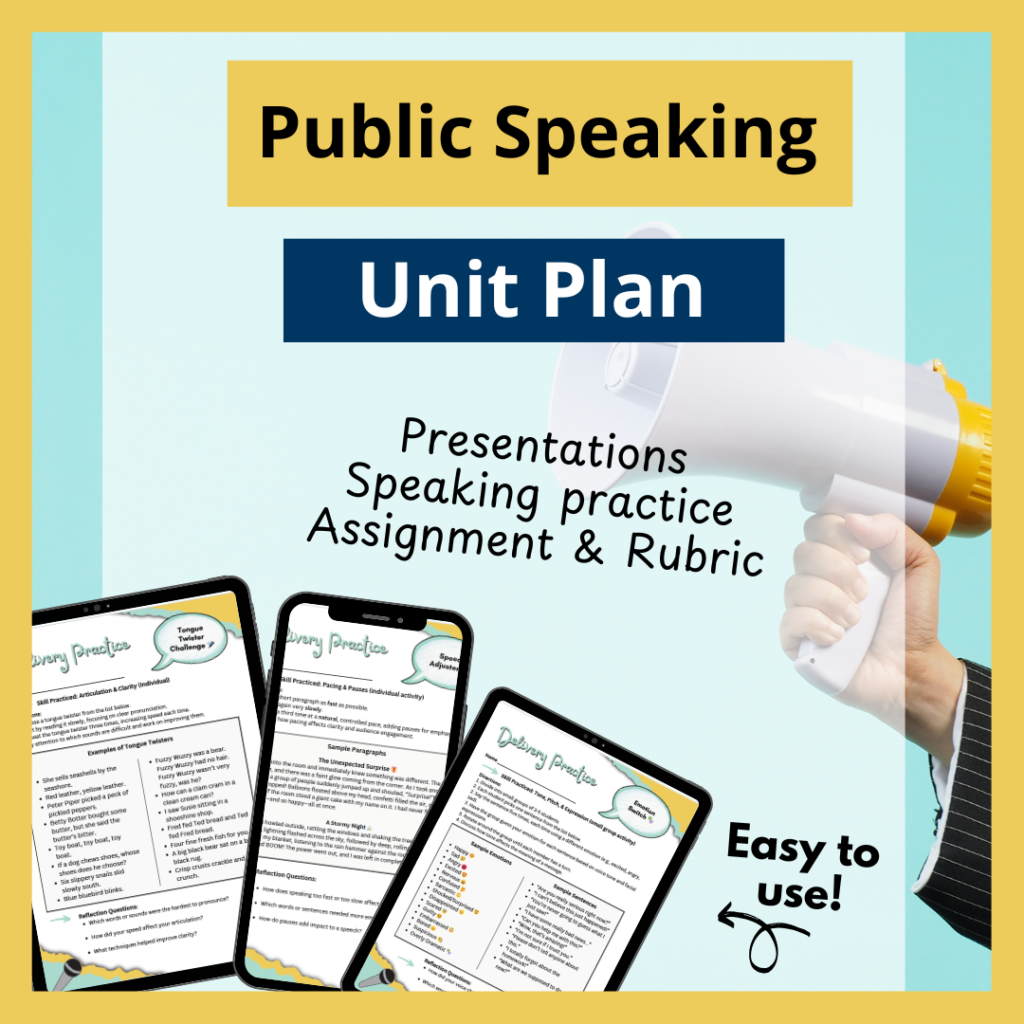

Teaching public speaking can feel intimidating for everyone involved.
Students worry about being judged, messing up, or freezing in front of their peers. And if we’re being honest, teachers often feel the pressure too. We want to support our students, build confidence, and teach real communication skills, but we also know how quickly a public speaking unit can turn into stress, avoidance, or surface-level performances.
Still, helping students find their voices matters.
Whether students are presenting projects, participating in discussions, advocating for ideas, or preparing for life beyond school, public speaking is one of the most transferable skills we teach. The challenge is making it feel doable instead of overwhelming.
Over time, I’ve learned that the key is not starting with speeches. It’s starting with safety, structure, and small wins.
Start by Getting Students Talking Without Pressure
Before students ever stand up to give a speech, they need low-stakes opportunities to speak out loud. Icebreakers are not about filling time. They are about normalizing the act of talking in front of others.
Simple activities like Two Truths and a Lie or short Would You Rather prompts give students something familiar to talk about without worrying about being “right.” These moments build comfort and lower anxiety. They also create natural openings to discuss body language, eye contact, and tone in a way that feels conversational rather than instructional.
When students realize that speaking does not automatically lead to embarrassment, they are far more willing to try.
Teach the Basics Clearly and Quickly
Public speaking does not need to start with a long lecture on rhetoric.
Students benefit most from a simple framework they can return to again and again. A clear introduction, a focused body, and a purposeful conclusion give them structure without overload. Pair that with straightforward expectations about clarity and audience awareness, and you have already removed much of the mystery.
One of my favorite early activities is a one-minute speech on something students genuinely care about. Music, sports, favorite snacks, shows, or hobbies all work. The topic matters less than the experience. Students practice organization, voice, and pacing without the added pressure of academic content.
Confidence grows when the task feels manageable.
Keep Speaking Opportunities Short at First
Students do not need to start with long speeches.
Short, creative prompts allow students to build confidence while practicing core skills. Activities like imagining what they would do as president, pitching a random object as a product, or describing a fictional superpower keep the tone light while reinforcing structure and persuasion.
The goal at this stage is not polish. It is participation.
When students experience success early, they stop seeing public speaking as something to fear and start seeing it as something they can handle.
Teach Body Language as a Skill, Not a Critique
Students often underestimate how much communication happens without words.
Dedicating time to posture, gestures, and eye contact helps students understand how their physical presence affects their message. Framing body language as a tool rather than a flaw makes feedback easier to accept.
Recording short speeches and letting students reflect on their own delivery can be incredibly powerful. When students notice their habits themselves, growth feels constructive instead of corrective.
Address Nerves Directly and Honestly
Almost every student feels nervous about public speaking, and pretending otherwise does not help.
Simple breathing techniques, visualization strategies, and positive peer feedback go a long way. Teaching students how to regulate their nerves gives them control instead of fear. Building in routines where peers identify strengths before offering suggestions helps create a supportive environment.
Sharing stories about well-known speakers who struggled early can also be reassuring. Students need to know that confidence is built, not inherited.
Introduce Persuasion Once Students Feel Ready
Once students are comfortable speaking, persuasive speeches offer a natural next step.
Teaching students to focus on three strong reasons, use credible facts, and incorporate emotional appeal gives them tools they can apply across subjects. Letting them argue for issues that matter to them increases engagement and authenticity.
Persuasion works best when students feel ownership over their ideas.


Here are some powerful and classroom-friendly famous speeches that you can use as models in your public speaking unit. These speeches cover a range of themes: courage, justice, equality, leadership, and change—and offer great examples of rhetorical devices, persuasive techniques, and effective delivery.
1. “I Have a Dream” by Martin Luther King Jr. (1963)
- Why Use It: A masterclass in repetition, metaphors, and emotional appeal. It’s also a powerful example of advocating for justice and equality.
- Key Moments to Highlight:
- Use of anaphora (“I have a dream…”).
- Vivid imagery to paint a picture of equality.
- Classroom Activity: Have students write their own “I have a dream” speech about an issue they care about.
2. “The Gettysburg Address” by Abraham Lincoln (1863)
- Why Use It: Short but incredibly impactful. A great example of brevity and purposeful language.
- Key Moments to Highlight:
- Use of parallelism (“government of the people, by the people, for the people”).
- Focus on unity and sacrifice.
- Classroom Activity: Challenge students to write a powerful 2-minute speech on a modern issue.
3. “Their Finest Hour” by Winston Churchill (1940)
- Why Use It: A strong example of pathos (emotional appeal) and rallying a nation during adversity.
- Key Moments to Highlight:
- Building momentum and urgency.
- Use of repetition for emphasis (“We shall fight…”).
- Classroom Activity: Have students write a speech to inspire classmates facing a tough situation.
4. “The Man in the Arena” by Theodore Roosevelt (1910)
- Why Use It: Focuses on courage, resilience, and taking risks—perfect for encouraging students to step outside their comfort zones.
- Key Moments to Highlight:
- Metaphors and vivid descriptions of bravery.
- Classroom Activity: Ask students to write about a time they stepped into the “arena.”
5. Malala Yousafzai’s UN Speech (2013)
- Why Use It: A powerful example of personal storytelling combined with a call to action for education rights.
- Key Moments to Highlight:
- Use of ethos (credibility) through her personal story.
- Strong call to action for global leaders.
- Classroom Activity: Have students write a speech on an issue they feel strongly about, using personal stories to build credibility.
6. “We Choose to Go to the Moon” by John F. Kennedy (1962)
- Why Use It: An inspiring example of vision and optimism in leadership.
- Key Moments to Highlight:
- Use of rhetorical questions and visionary language.
- Classroom Activity: Have students write a speech on achieving something difficult, using similar motivational techniques.
7. Steve Jobs’ Stanford Commencement Address (2005)
- Why Use It: A blend of personal anecdotes and life lessons—perfect for modeling how to mix storytelling with advice.
- Key Moments to Highlight:
- The “three stories” structure.
- Encouragement to “stay hungry, stay foolish.”
- Classroom Activity: Have students write a speech giving advice to next year’s incoming class.
8. Emma Watson’s “HeForShe” UN Speech (2014)
- Why Use It: A great example of using ethos (credibility) and pathos (emotional appeal) to advocate for gender equality.
- Key Moments to Highlight:
- Use of inclusive language to appeal to both men and women.
- Personal experiences to build credibility.
- Classroom Activity: Have students write a persuasive speech advocating for a cause they care about.
9. “What to the Slave is the Fourth of July?” by Frederick Douglass (1852)
- Why Use It: A powerful example of logos (logical appeal) and confronting uncomfortable truths.
- Key Moments to Highlight:
- Use of rhetorical questions to provoke thought.
- Building a case with logic and evidence.
- Classroom Activity: Have students write a speech analyzing a tradition or belief critically.
10. Greta Thunberg’s Climate Change Speech at the UN (2019)
- Why Use It: A current and relevant example of a young person using emotional and logical appeals effectively.
- Key Moments to Highlight:
- Direct, powerful statements (“How dare you!”).
- Use of statistics and facts to support arguments.
- Classroom Activity: Have students write a speech on an environmental issue, using facts to build their argument.
11. “Ain’t I a Woman?” by Sojourner Truth (1851)
- Why Use It: Short, impactful, and a great example of repetition and challenging societal norms.
- Key Moments to Highlight:
- Repetition of “Ain’t I a woman?” for emphasis.
- Classroom Activity: Have students write a speech using a powerful question as a repeating anchor.
12. Barack Obama’s “Yes We Can” Speech (2008)
- Why Use It: An inspiring example of hopeful rhetoric and repetition to build momentum.
- Key Moments to Highlight:
- Use of anaphora (“Yes we can”).
- Uplifting tone and focus on collective action.
- Classroom Activity: Have students write a motivational speech using a repeated phrase for emphasis.
13. “Farewell Address” by George Washington (1796)
- Why Use It: A classic example of advice and foresight in leadership.
- Key Moments to Highlight:
- Use of warnings about political division.
- Classroom Activity: Have students write a “farewell address” to their class with lessons and warnings for the future.
14. Oprah Winfrey’s Golden Globes Speech (2018)
- Why Use It: Combines storytelling, emotional appeal, and a powerful call to action.
- Key Moments to Highlight:
- Personal storytelling to build credibility.
- Clear, powerful call to action.
- Classroom Activity: Have students write a speech honoring someone they admire.
15. Ronald Reagan’s “Challenger” Speech (1986)
- Why Use It: A strong example of consoling a nation while inspiring resilience.
- Key Moments to Highlight:
- Balancing empathy and optimism.
- Use of metaphors to honor the astronauts.
- Classroom Activity: Have students write a speech to console or uplift their peers after a tough situation.
Use Technology to Support Practice
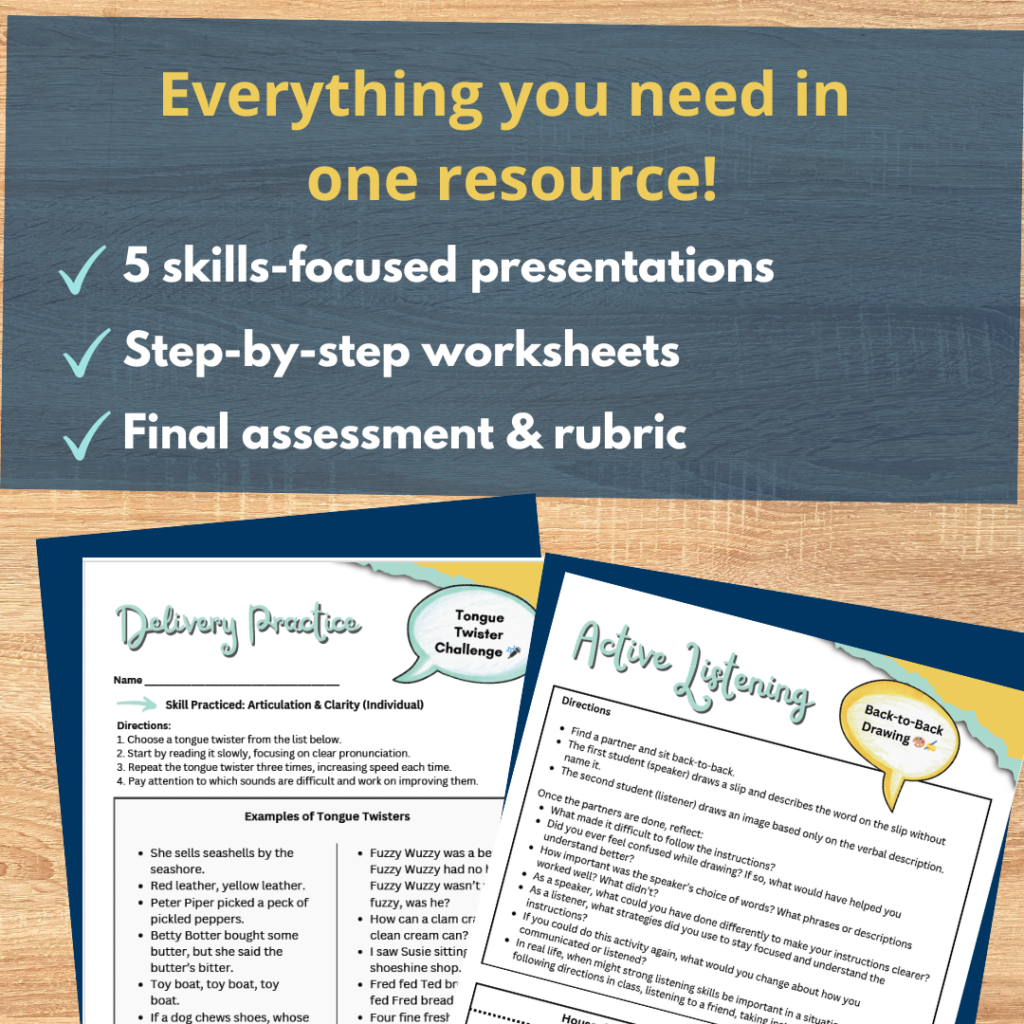
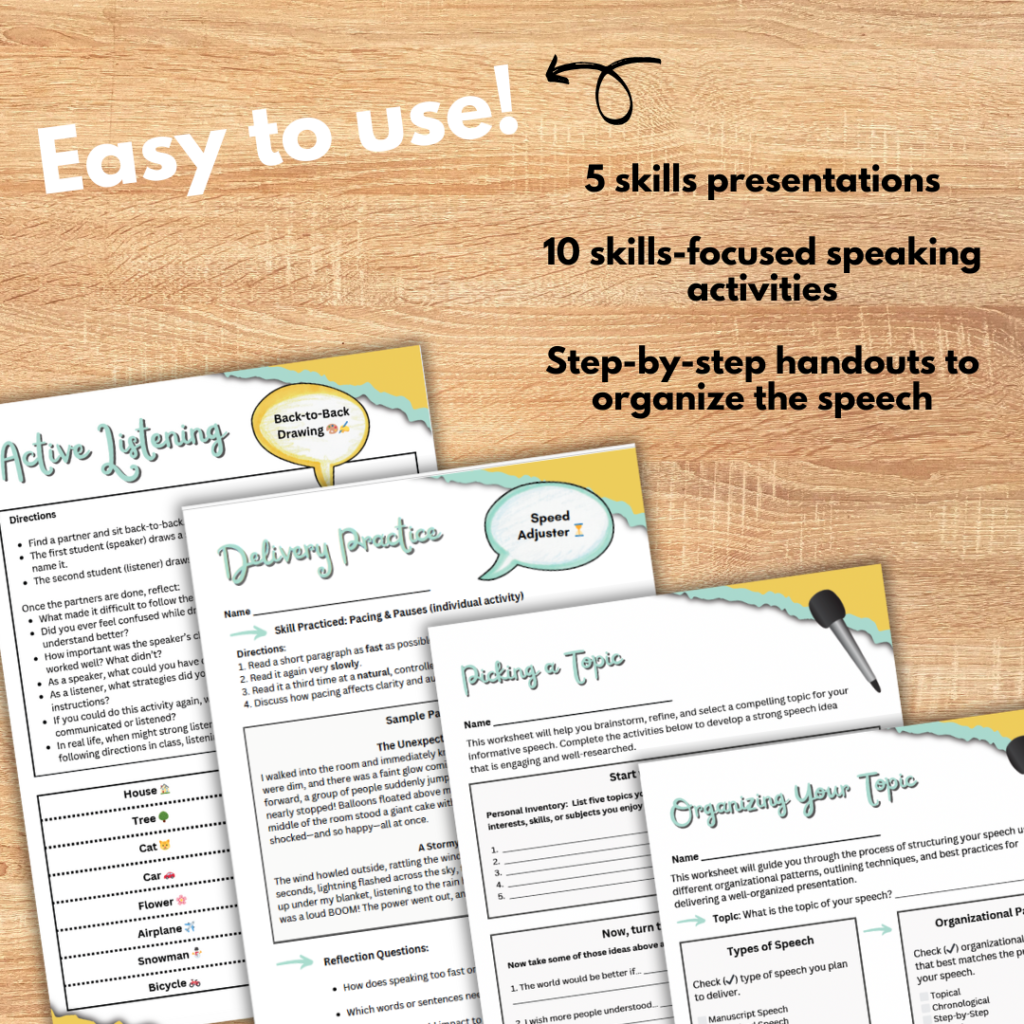
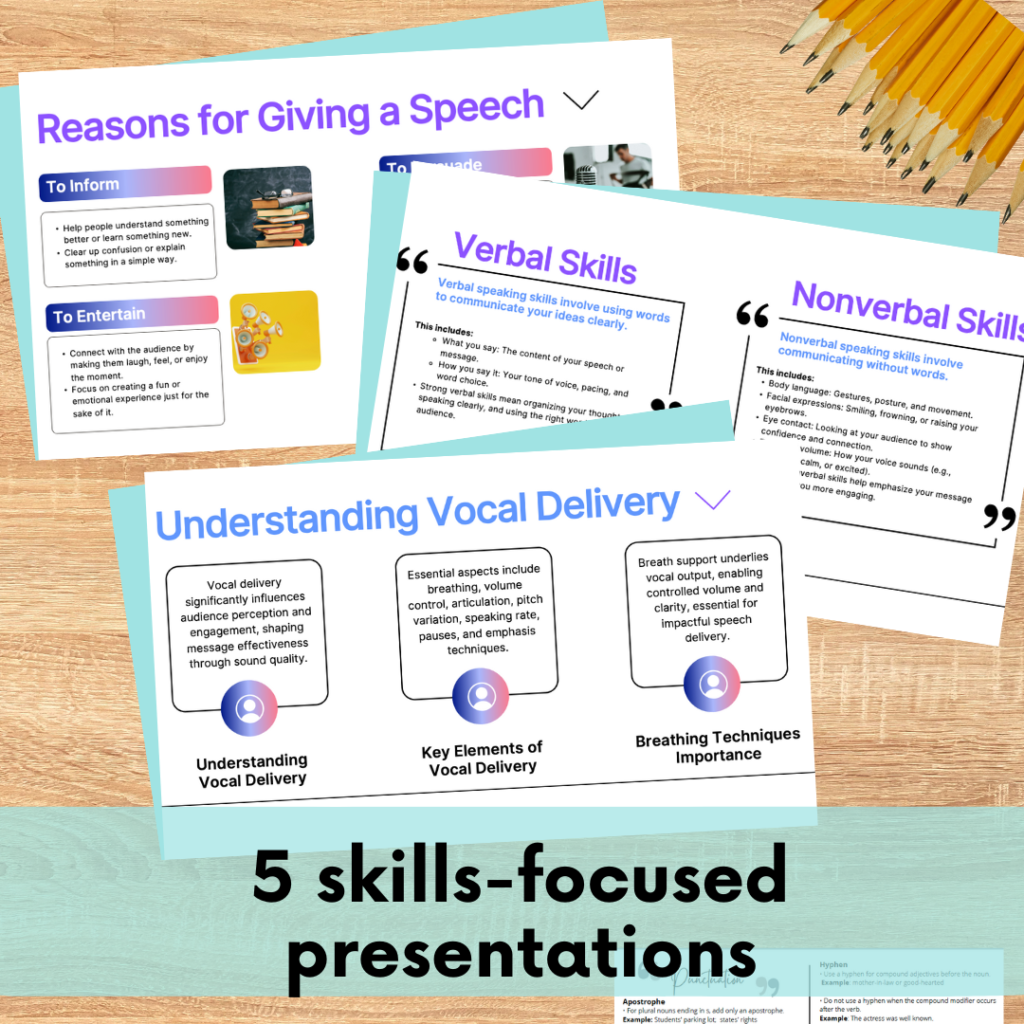
Technology can reduce anxiety and increase access.
Tools like video recording platforms allow students to practice without an immediate audience. Teleprompter apps help with pacing and fluency. Speech analysis tools offer concrete feedback on filler words and delivery habits.
These tools support growth without replacing instruction.
Model Effective Speaking with Real Examples
Studying strong speeches gives students a clear vision of what effective communication looks like.
Using a variety of speeches allows students to see different styles, structures, and rhetorical techniques in action. From historical addresses to modern advocacy speeches, these examples show students how repetition, storytelling, evidence, and tone work together.
After modeling a few speeches, allowing students to choose one that resonates with them increases buy-in. When students analyze techniques they admire and then apply them to their own writing, learning becomes purposeful.
A Final Thought
Teaching public speaking does not require turning your classroom into a stage.
It requires creating an environment where students feel safe, supported, and capable of growth. When speaking starts small, feels intentional, and builds gradually, students begin to see their voices as something worth sharing.
Public speaking is not about perfection. It is about communication, confidence, and connection.
And when students realize they can stand up and be heard, that skill follows them far beyond your classroom.
Check Out These Resources from My Fellow Teacher Authors
If you are building a public speaking unit and want more ways to support student confidence, structure speaking tasks, and reduce anxiety, these posts from fellow teacher-authors pair perfectly with this approach:
Teaching Public Speaking Without the Panic by Secondary Sara
Practical strategies for easing students into speaking tasks with low-pressure activities and clear scaffolding.How to Teach Presentations Without the Groans by Laura Randazzo
A realistic look at helping students prepare, practice, and present without turning presentations into a dreaded classroom event.Public Speaking Activities for Middle and High School by Bespoke ELA
A collection of engaging, student-friendly speaking activities that build skills gradually and intentionally.Using Sentence Starters to Support Student Speaking by Secondary Sara
A smart way to help students organize their thoughts and speak more confidently during discussions and presentations.Teaching Rhetoric Through Real Speeches by Laura Randazzo
Great ideas for using famous speeches to model structure, persuasive techniques, and effective delivery.