There is a moment every year when a student asks a question that stops me mid-sentence.
“Why does this matter if no one reads newspapers anymore?”
It is an honest question. And it is usually asked by a student who scrolls headlines daily, watches short-form news clips, and shares stories without always knowing where they came from.
That question is exactly why I continue to teach newspaper writing.
Because teaching journalism is not really about newspapers. It is about helping students understand how information is constructed, how stories shape public perception, and how words carry responsibility.
Why Teach Newspaper Writing?
Teaching newspaper writing is more than just helping students put pen to paper. It’s about fostering critical thinking, enhancing communication skills, and encouraging a deeper understanding of the world around them. Here’s why I believe teaching newspaper writing is essential:
- Develops Critical Thinking: Analyzing news stories helps students learn to distinguish fact from opinion, evaluate sources, and understand the importance of accuracy and credibility.
- Enhances Communication Skills: Writing news articles improves students’ ability to articulate ideas clearly and concisely. It also teaches them how to engage an audience effectively.
- Encourages Active Citizenship: Understanding how news is created and disseminated empowers students to become informed and active participants in their communities.
- Promotes Ethical Awareness: Discussing the ethics of journalism helps students appreciate the responsibilities that come with freedom of the press.
Why Newspaper Writing Is Harder Than It Looks
From the outside, news writing looks simple. Short paragraphs. Straightforward language. Just the facts.
But students quickly discover that it requires some of the most complex thinking they have ever done as writers.
They have to decide what matters and what does not.
They have to verify information instead of repeating it.
They have to think about audience, ethics, and clarity all at once.
Without structure, students often feel overwhelmed before they even begin.
That is why I approach newspaper writing as a process of intentional planning, not just a writing assignment.
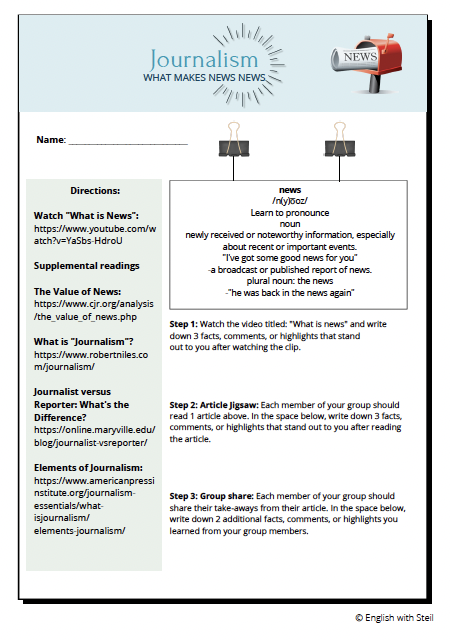
If students are new to journalism, I like to start with a simple conversation around what actually makes something news. Before we ever write, we look at real examples, sort headlines, and talk through why certain stories matter more than others. If you want a ready-to-use way to introduce that thinking, I put together a short “What Makes News” freebie that helps students start seeing stories through a journalist’s lens.
Breaking the Work Into Stations That Build Understanding
Instead of teaching everything at once, I organize newspaper writing around stations that isolate the core decisions journalists make. Each station slows students down and gives them space to think before they write.
At the what makes news station, students explore real headlines and ask why some stories are covered while others are not. This is where conversations about relevance, proximity, timeliness, and impact naturally emerge.
The story ideas station helps students brainstorm with purpose. Rather than listing random topics, students evaluate ideas through a journalistic lens. Is this newsworthy? Who does it affect? Why now?
At the research station, students practice finding and evaluating sources. They learn quickly that strong stories depend on credibility, not just convenience.
The interview station shifts students from information gatherers to listeners. Role-playing interviews helps them practice asking follow-up questions and capturing meaningful quotes. This is often where students begin to see journalism as human-centered work.
Understanding Structure Without Killing Creativity
Once students understand their topic and reporting, we move into structure.
At the anatomy of a news story station, students examine leads, nut graphs, body paragraphs, and conclusions. Instead of memorizing parts, they analyze how structure supports clarity.
The lead writing station focuses on writing openings that inform and engage without exaggeration. Students experiment with different lead types and discuss which works best for their story.
Headlines get their own space too. At the headline station, students practice writing clear, accurate headlines that reflect the story without misleading readers.
Adding Visual Storytelling and Ethics
Journalism does not stop at words.
At the photography and captions station, students learn how images and captions add context rather than decoration. They analyze what makes a photo effective and how captions provide clarity.
The press law and ethics station is one of the most important. Students explore freedom of the press, accuracy, bias, and responsibility. These conversations are especially powerful because they connect directly to what students see online every day.
Tips and Tricks for Teaching Newspaper Writing
1. Start with the Basics
Begin with a discussion on “What is News?” Use engaging activities to explore different types of news stories and what makes them relevant. This sets a strong foundation for the unit.
2. Incorporate Real-World Examples
Use current news stories to illustrate key concepts. Analyzing contemporary articles can make lessons more relatable and interesting for students.
3. Emphasize the Writing Process
Break down the writing process into manageable steps. Focus on brainstorming, drafting, revising, and editing. Provide clear guidelines and plenty of practice opportunities.
4. Develop Interview Skills
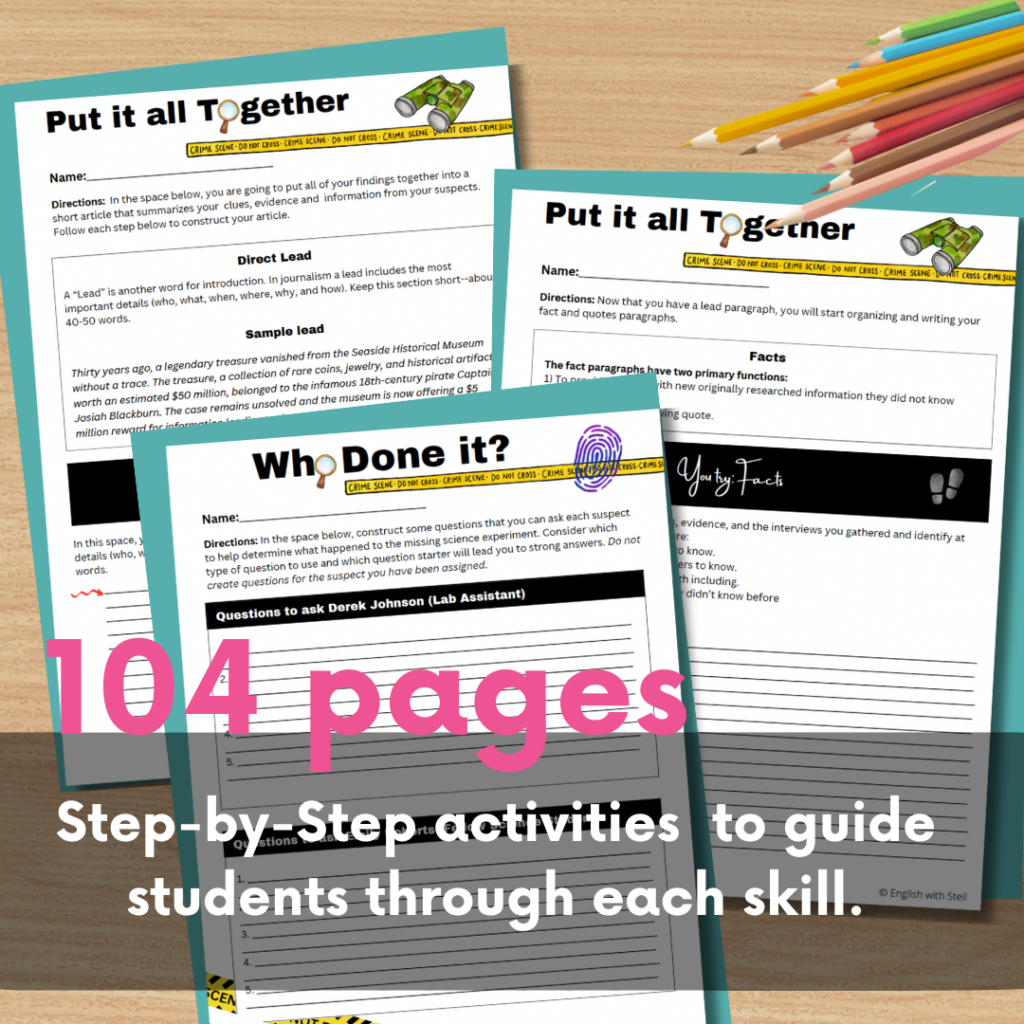
Teach students how to conduct effective interviews. Role-playing activities can be fun and educational, helping students build confidence and improve their questioning techniques.
5. Use Visual Aids
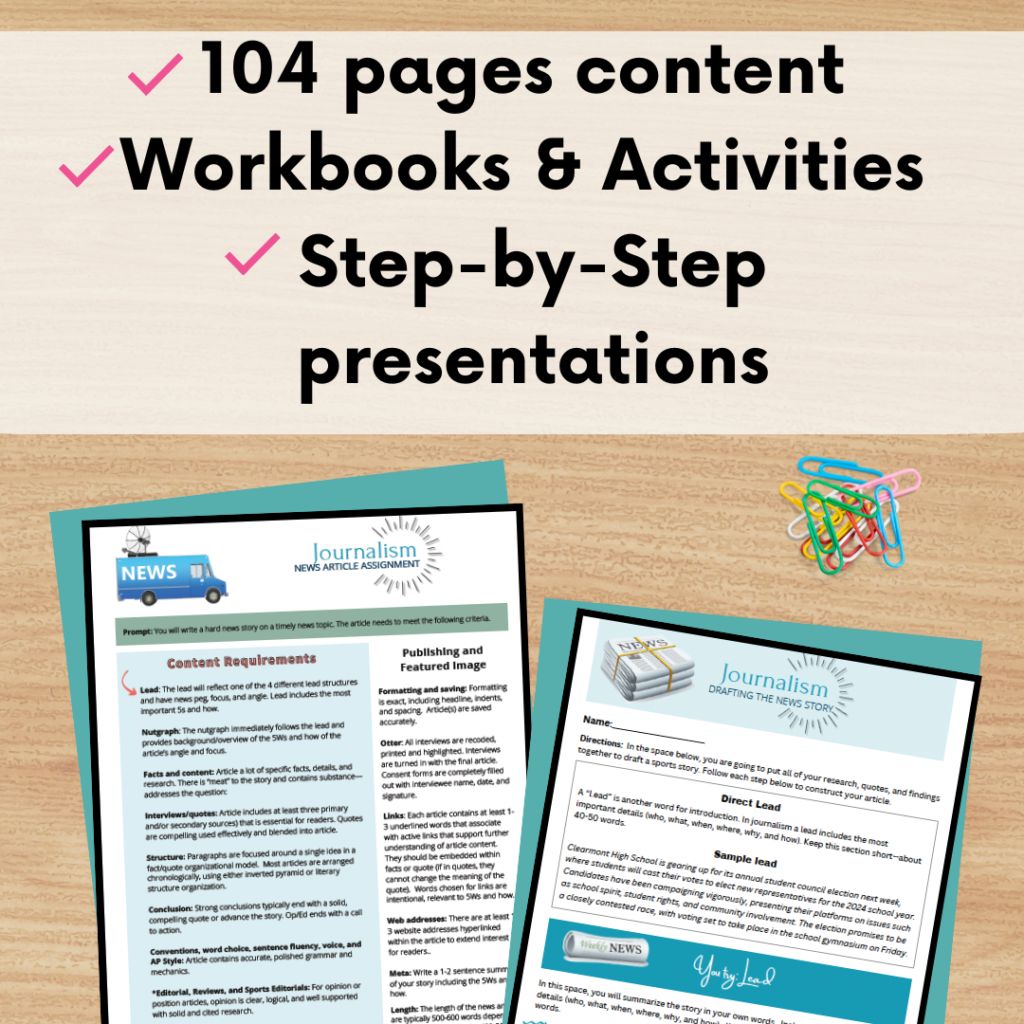
PowerPoint presentations, handouts, and templates can make learning more interactive and visually appealing. These tools can also help reinforce key concepts and provide clear examples.
6. Promote Teamwork
Encourage collaboration through group activities and peer reviews. Teamwork can help students learn from each other and develop their social skills.
7. Incorporate Technology
Teach students how to publish their articles on platforms like WordPress. This not only makes the learning process more relevant but also provides them with valuable digital literacy skills.
Bringing Everything Together
The final stations are where confidence builds.
Students draft their stories using everything they have planned. Editing and revising become purposeful because students understand what they are trying to accomplish. Peer feedback feels more meaningful because everyone is working from shared expectations.
By the time students publish, they do not just feel finished. They feel informed.
Why This Approach Works
What I notice most is the shift in student mindset.
Students stop asking, “Is this good enough?”
They start asking, “Is this accurate?” and “Does this matter?”
They see journalism as a craft that requires care, not speed. And they begin to understand their role as storytellers who shape how others see the world.
A Note If You Want to Try This Approach
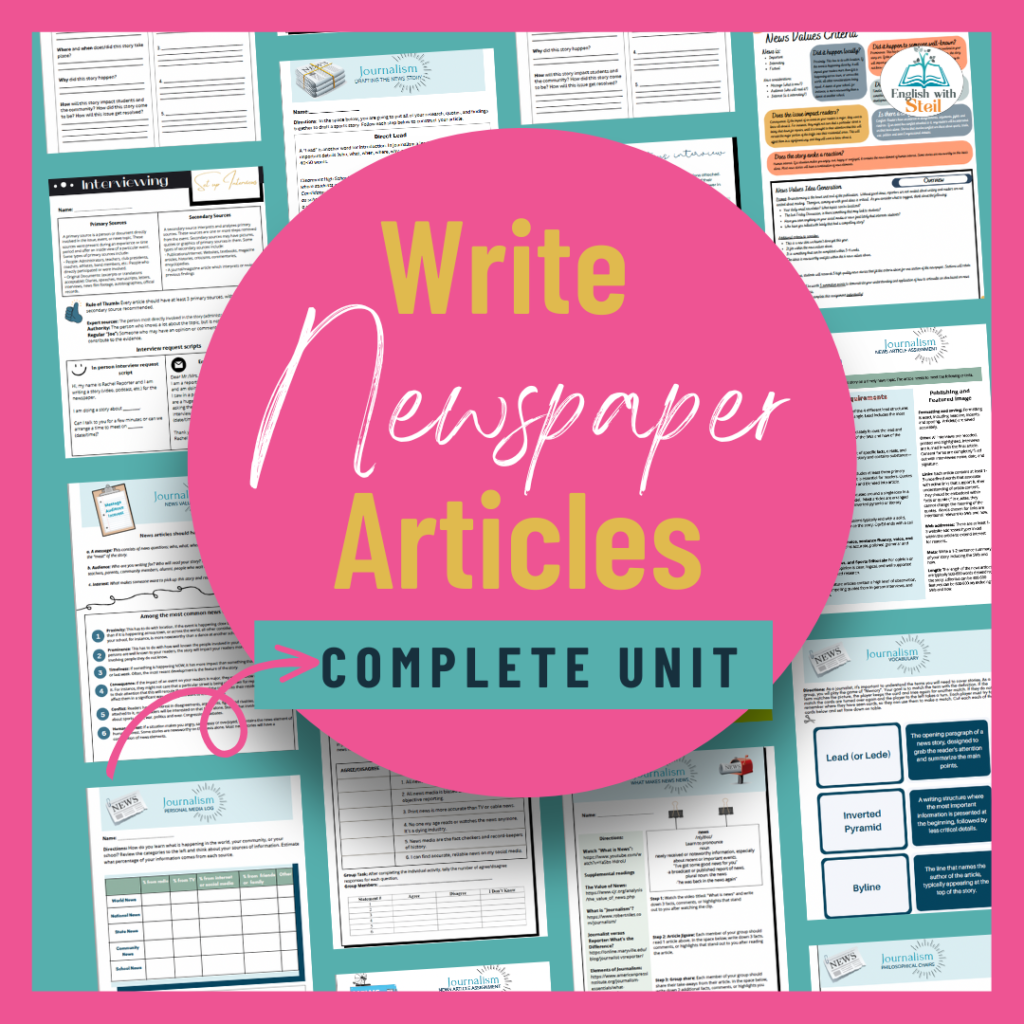
If you are interested in teaching newspaper writing this way but want support organizing the process, I use a complete unit that guides students through planning, reporting, writing, and publishing step by step. It is flexible enough to adapt to your classroom and helps students focus on thinking rather than guessing what comes next.
Take what works, adjust what you need, and make it your own.
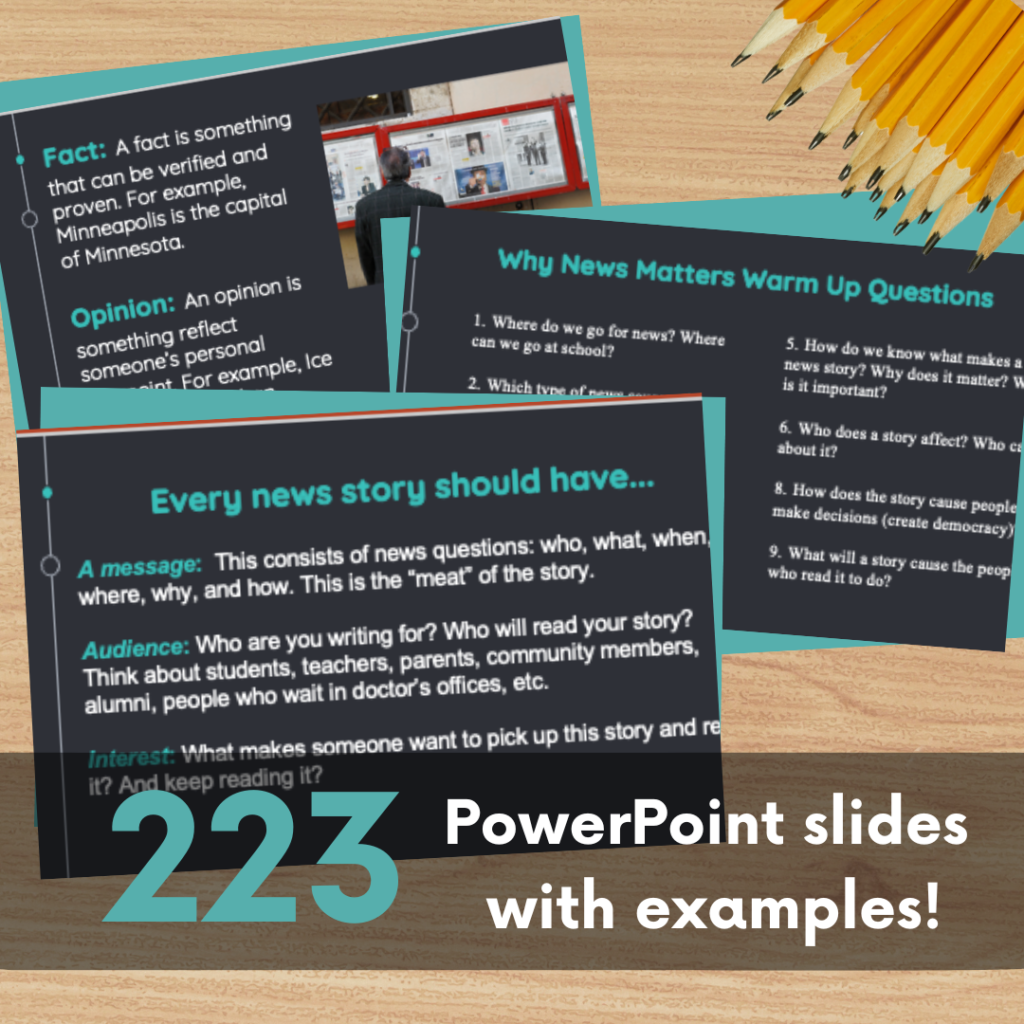
Steps to Teach Newspaper Writing with Ease
Step 1: Introduction to Newswriting & Team Building
Start the unit with an introduction to newswriting and team-building activities. This helps students understand the basics of journalism and fosters a collaborative classroom environment.
Step 2: Generating Story Ideas
Guide students in brainstorming and generating story ideas. Discuss what makes a story newsworthy and relevant to their audience.
Step 3: Preparing for the News Story
Teach students how to research their topics and prepare for writing. This includes finding credible sources and gathering necessary information.
Step 4: Interviewing
Conduct lessons on effective interviewing techniques. Provide practice opportunities through role-playing exercises.
Step 5: Anatomy of the News Story
Break down the structure of a news story. Discuss the importance of the lead, body, and conclusion, and how each part contributes to the overall piece.
Step 6: Writing the Lead
Focus on writing strong leads. Provide examples and practice activities to help students master this crucial skill.
Step 7: Drafting the News Story
Guide students through drafting their news stories. Emphasize the importance of clarity, conciseness, and coherence.
Step 8: Writing Headlines
Teach students how to write compelling headlines that capture the essence of their stories.
Step 9: Photography & Captions
Incorporate lessons on photography and writing captions. This adds a visual element to their stories and enhances their overall presentation.
Step 10: Editing and Revising
Provide strategies for effective editing and revising. Encourage peer reviews and self-editing to improve their work.
Step 11: Publish Ready Elements
Prepare students for publishing. Discuss formatting, layout, and other elements that make their articles ready for publication.
Step 12: Press Law 101
Introduce basic press laws and ethical considerations. This helps students understand their rights and responsibilities as budding journalists.
Step 13: Unit Test
Conclude the unit with a test to assess students’ understanding and retention of the material.
Final Thoughts
Teaching newspaper writing is not about preserving a tradition. It is about preparing students to navigate a world full of information with curiosity, integrity, and clarity.
When students learn how stories are built, they become better writers, better readers, and more thoughtful citizens.
And that work still matters.
Happy teaching.
Final Thoughts
Teaching newspaper writing is a rewarding experience that equips students with valuable skills they will use throughout their lives. This comprehensive unit plan makes the process smooth and enjoyable, ensuring your students stay engaged while learning the essentials of journalism.
If you’re ready to enhance your journalism program and provide meaningful, thoughtful instruction, this resource is perfect for you. Happy teaching!
Want to Go Deeper with Journalism Instruction?
If you’re building or refreshing a journalism unit, these resources from fellow teacher-authors pair really well with this approach. Each one brings a thoughtful, classroom-tested perspective to teaching media, writing, and storytelling.
Journalism Jumpstart: Teaching News Writing Basics by Bespoke ELA
A strong foundation for introducing journalism concepts, story structure, and ethical decision-making.
How to Teach Media Literacy in ELA by Secondary Sara
A practical look at helping students evaluate sources, bias, and credibility in the digital age.
Teaching Argument Through Real-World Issues by Laura Randazzo
A reminder that authentic, real-world texts can elevate student thinking and engagement.
Using Student Choice to Build Strong Writers by The Daring English Teacher
A smart approach to balancing structure and flexibility in writing instruction.