
There is a moment in every journalism class when students have too much information and no idea what to do with it.
They have notes everywhere.
Quotes they like but cannot place.
Ideas that feel interesting but unfocused.
And the question I hear over and over is some version of:
“Where do I even start?”
For a long time, I tried to fix this by modeling more, giving stronger outlines, or walking students through examples step by step. It helped, but it did not always stick. What finally made a difference was slowing down the planning process and giving students space to think through their stories before they ever opened a document.
That is where this station-based approach came in.
Instead of asking students to plan everything at once, I broke the process into manageable pieces. Each station focuses on one core element of journalism, helping students clarify their thinking and make intentional choices before drafting.

Breaking Down Theme, Angle, and Focus
Theme, angle, and focus are concepts students hear all the time, but they often blur together in practice. Separating them into individual stations helped students understand how each one plays a distinct role in shaping a story.
At the theme station, students look at sample articles and ask a simple question: What is this really about? Not the event itself, but the bigger idea underneath it. They talk through how theme shapes the reader’s takeaway and why strong stories always have something meaningful at their core.
The angle station pushes students to think about perspective. Students examine how the same event can be reported in different ways depending on who is centered and what questions are asked. This is often the station where things click. Students start to realize they are not just reporting facts. They are making choices.
At the focus station, students practice narrowing their ideas. Broad topics become specific story paths. This step alone dramatically improves clarity once students begin drafting.
Research and Interviews: Giving Stories Substance
Once students have a clearer sense of what they want to say, the next stations move into the backbone of strong journalism.
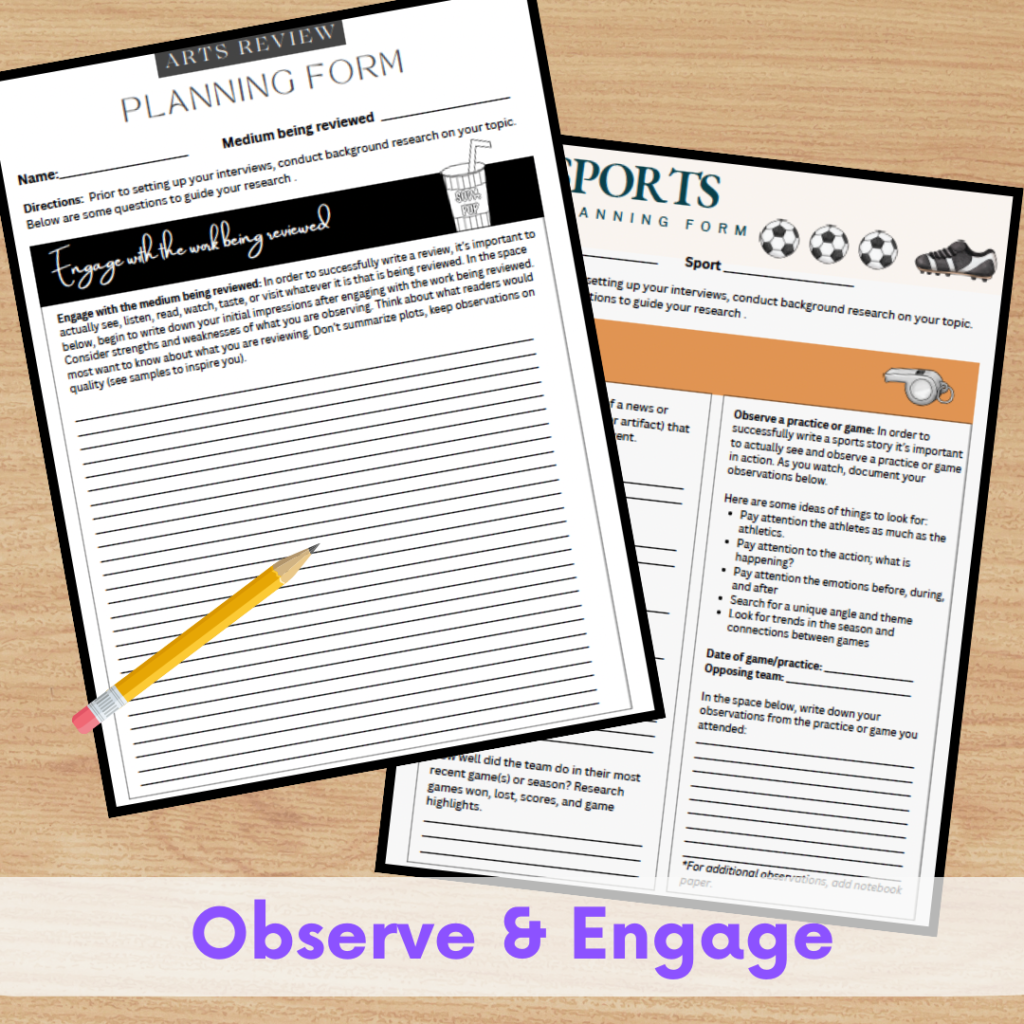
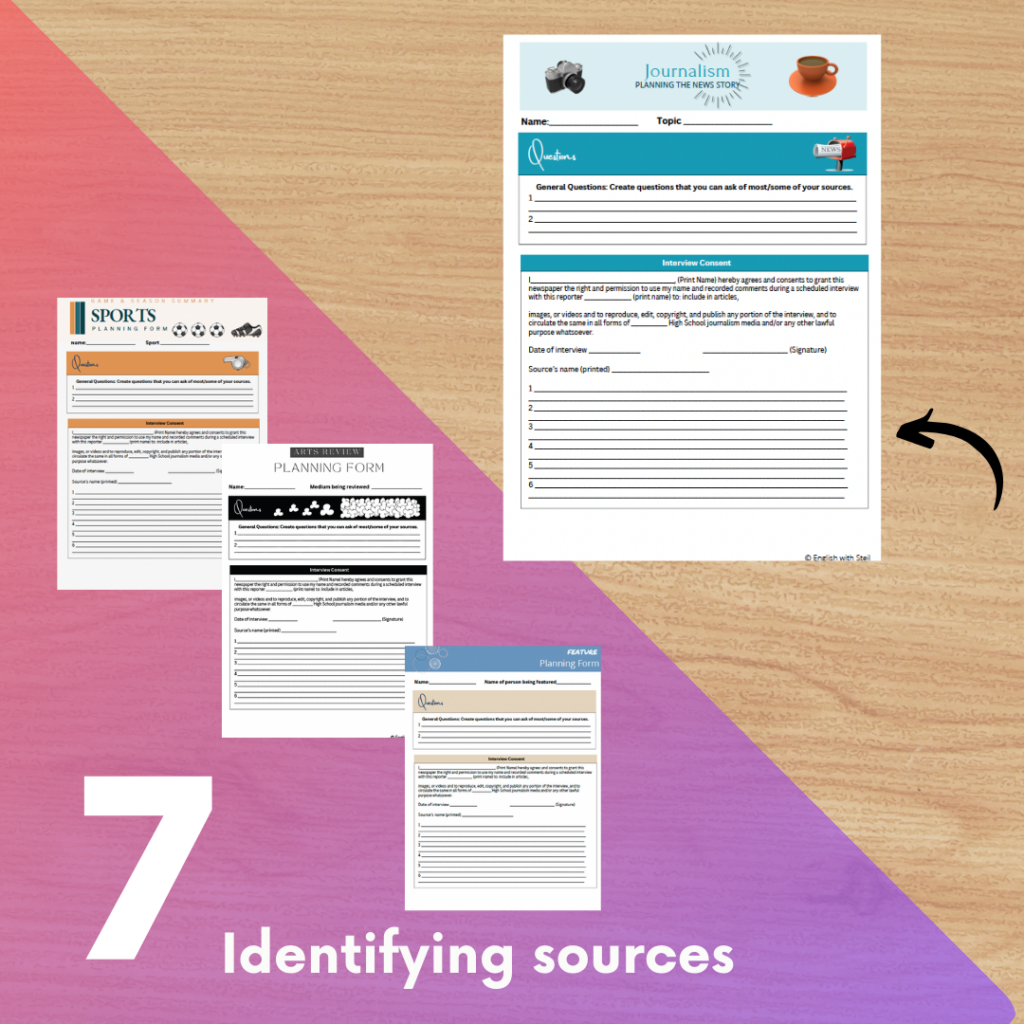
The research station helps students slow down and evaluate sources. Instead of gathering everything at once, they practice identifying what information actually supports their story and which sources are credible enough to trust.
The interview station is always a favorite. Students role-play as reporters and sources, practicing how to ask thoughtful follow-up questions and listen closely to responses. This is where students begin to understand that interviews are not just about getting quotes. They are about understanding people.
Finding the Human Element
This is often the most important station and the one students remember most.
At the human element station, students explore how journalists use personal stories, emotions, and lived experiences to make reporting meaningful. They analyze short excerpts and then experiment with weaving human detail into their own writing.
This station helps students move beyond summarizing events and start telling stories that readers actually care about.
Bringing It All Together
The final station is where everything connects.
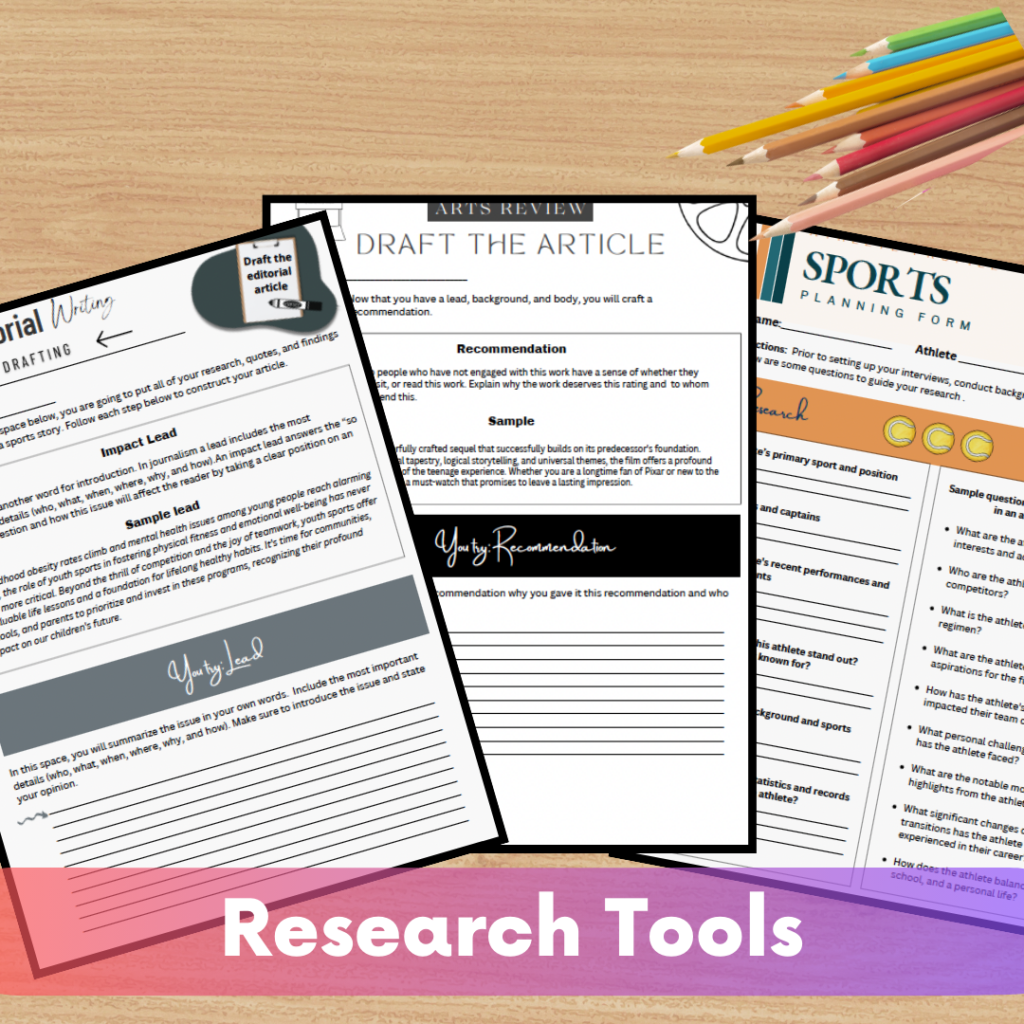
Using notes from each previous station, students begin drafting their articles with purpose. They think intentionally about structure and flow instead of dumping information onto the page.
At the order and structure station, students explore different ways to organize a story. They learn about the inverted pyramid, but they also examine narrative and chronological structures. Students choose the structure that best fits theirstory, which reinforces the idea that journalism is flexible and intentional.
Research and Interviews: Building the Story’s Backbone
Once students have a grasp on theme, angle, and focus, the next stations delve into the research and interviews that bring a story to life.
- Research Station: Students practice gathering credible information from various sources. They learn to distinguish between reliable and unreliable sources, and how thorough research underpins a strong story.
- Interview Station: This interactive station is a favorite. Students role-play as journalists and interview subjects, honing their skills in asking insightful questions and capturing compelling quotes. They learn that good interviews are about listening as much as asking.
The Human Element: Making Stories Relatable
The human element is what makes a story resonate with readers. At this station, students explore how personal stories and emotions can elevate a news article.
- Human Element Station: Through sample articles and discussion, students see how journalists use personal anecdotes and emotional connections to draw readers in. They practice writing their own pieces, incorporating the human element to make their stories more engaging.
Why This Approach Works
What I love most about this process is that it gives students ownership.
Instead of relying on templates or copying examples, students make decisions at every stage. The movement keeps energy up, collaboration feels natural, and students are far more confident when it is time to write.
More importantly, students stop seeing planning as busywork. They begin to see it as part of the craft.
If your students struggle to organize their ideas or feel overwhelmed by long-form writing, breaking the process into stations can be a game changer. It slows them down in the best possible way and helps them build stories that are focused, thoughtful, and human.
And once students experience what it feels like to write with clarity and purpose, they rarely want to go back.
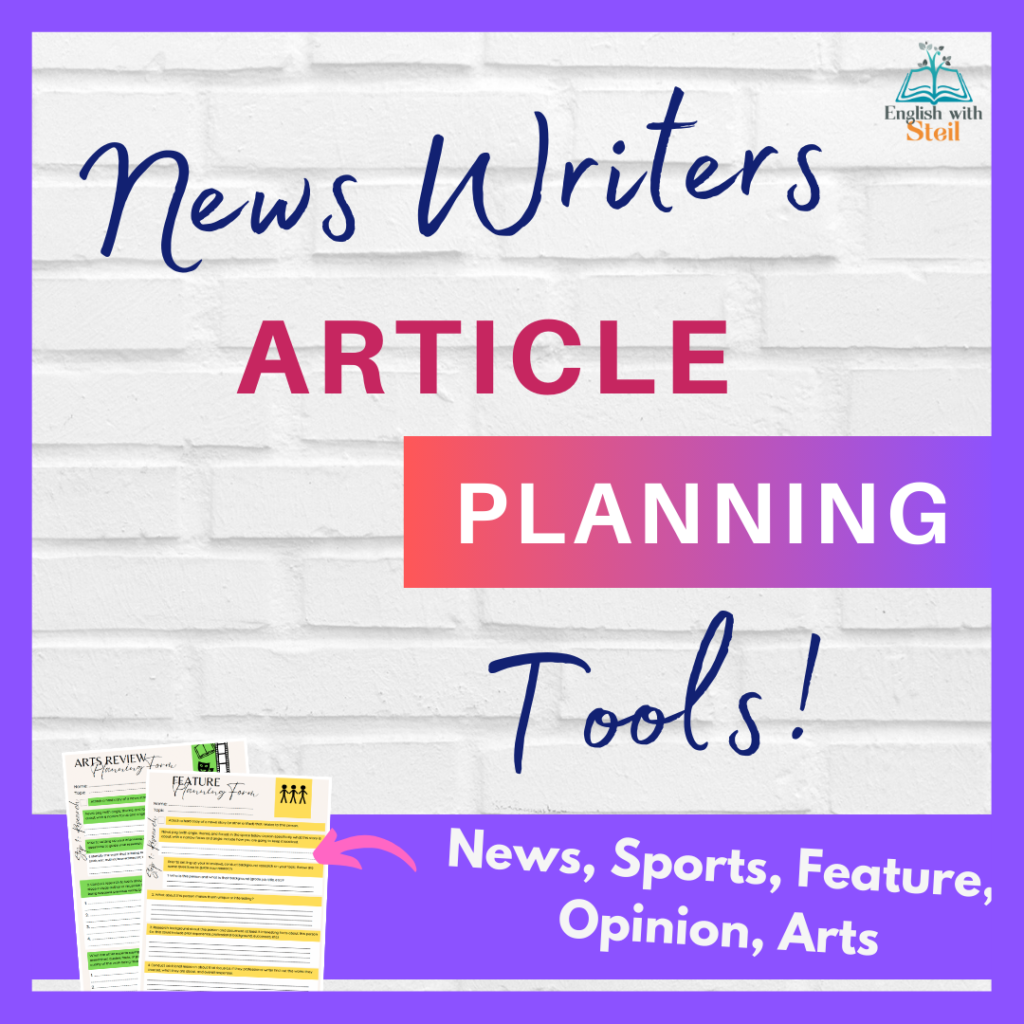
If you want to try this station-based approach without starting from scratch, I pulled together the planning tools I use with my own students. They’re designed to guide students through theme, angle, focus, research, interviews, and structure step by step, so they can spend less time feeling stuck and more time actually writing. You can take what works for your classroom and adapt the rest.
Happy teaching.
Check Out These Resources from My Fellow Teacher Authors
If you’re helping students organize ideas, clarify focus, or move from notes to real stories, these teacher-created resources pair beautifully with a station-based planning approach.
Story Planning That Actually Works for Student Writers by Secondary Sara A teacher-tested look at helping students move from messy ideas to clear, purposeful writing without over-scaffolding or killing creativity.
Teaching Students to Find the Angle in Informational Writing by Bespoke ELA A smart, practical breakdown of how to help students identify focus, perspective, and purpose before they ever start drafting.
Scaffolding Long-Form Writing Without Templates by The Daring English Teacher
Great strategies for supporting organization and structure while still giving students ownership over their writing choices.
Putting It All Together: Crafting a Cohesive Story
The final station is where students bring everything together. They take their notes from previous stations and start drafting a complete story. They focus on structuring their articles logically, ensuring a clear flow from the lead to the conclusion.
- Order and Structure Station: Students learn about the traditional inverted pyramid structure, where the most critical information comes first, followed by supporting details. They also explore alternative structures, like narrative or chronological formats, and decide which works best for their story.
Interactive and Engaging Learning
These stations are not just about learning journalistic techniques—they are about making learning interactive and engaging. By moving through different activities and collaborating with peers, students stay motivated and invested in their learning.
Implementing this method in your classroom can transform the way students understand and appreciate the craft of journalism. It provides them with practical skills, fosters critical thinking, and enhances their ability to communicate effectively. Most importantly, it shows them that every story has the power to inform, inspire, and connect us all.
So, let’s equip our students with the tools they need to become the storytellers of tomorrow. Happy teaching!

