There is a moment during this unit every year when a student stops mid-conversation and says something like,
“Wait… so they want me to feel this way?”
That pause is exactly why I keep teaching media literacy.
Our students are surrounded by advertising. They scroll past it, watch it, hear it, and absorb it constantly, often without realizing how carefully those messages are designed. Teaching media literacy is not about telling students what to think. It is about helping them recognize how they are being persuaded and giving them the tools to slow down and question what they see.
As the school year progresses, it becomes increasingly important to equip our students with the skills they need to navigate the media-saturated world around them. Recently, I taught a comprehensive media literacy unit in my class, focusing on helping students understand how advertisers target them, recognize common rhetorical strategies, and analyze both print and commercial advertisements. Here’s a look at how I teach this unit and the insights I’ve gained along the way.
In today’s world, our students are bombarded with countless messages from various media sources, making it more important than ever for them to develop strong media literacy skills. Recently, I had the opportunity to teach a comprehensive media literacy unit in my class, and I wanted to share my experience and insights with you. This unit focuses on helping students understand how advertisers target them, recognize common rhetorical strategies, and analyze both print and commercial advertisements.
Why Media Literacy is Crucial
There is a moment during this unit every year when a student stops mid-conversation and says something like,
“Wait… so they want me to feel this way?”
That pause is exactly why I keep teaching media literacy.
Our students are surrounded by advertising. They scroll past it, watch it, hear it, and absorb it constantly, often without realizing how carefully those messages are designed. Teaching media literacy is not about telling students what to think. It is about helping them recognize how they are being persuaded and giving them the tools to slow down and question what they see.
With so many messages aimed at teens, it’s vital for them to discern the intentions behind these advertisements and understand how they can be influenced. Media literacy empowers students to critically evaluate the content they encounter, fostering informed and thoughtful consumers.
Why Media Literacy Feels So Urgent Right Now
Students are not short on media exposure. They are short on opportunities to unpack it.
Advertising moves fast. Messages are emotional, visual, and subtle. When students are not taught how to analyze media, they tend to accept it at face value or dismiss it without thinking. Media literacy asks them to pause, notice patterns, and ask better questions.
Once students understand that ads are constructed with intention, they begin to see themselves not just as consumers, but as thinkers.
Why I Teach This Unit in Stations
Early on, I tried teaching media literacy through whole-class discussion and long slide decks. Students understood pieces of it, but the learning did not always transfer.
Breaking the unit into stations changed everything.
Stations allow students to focus on one skill at a time, apply it immediately, and talk through their thinking with peers. Instead of memorizing terms, students practice noticing strategies in real-world examples.
Each station isolates a different layer of media literacy, which helps students build understanding gradually rather than all at once.
Station 1: Understanding How Advertising Targets Us
At the first station, students explore how advertisers target specific audiences.
We look at familiar brands and recent ads and ask simple questions. Who is this for? What assumptions are being made about the audience? What emotions are being triggered?
This station helps students realize that ads are not random. They are designed with a specific viewer in mind.
Station 2: Rhetorical Strategies in Advertising
The rhetorical strategies station is where students begin to name what they are seeing.
Students explore ethos, pathos, and logos, along with common advertising techniques like bandwagon, snob appeal, and glittering generalities. Instead of copying notes, they match strategies to real ads and explain why they think a strategy is being used.
This station often leads to some of the best discussions because students start recognizing these techniques everywhere.
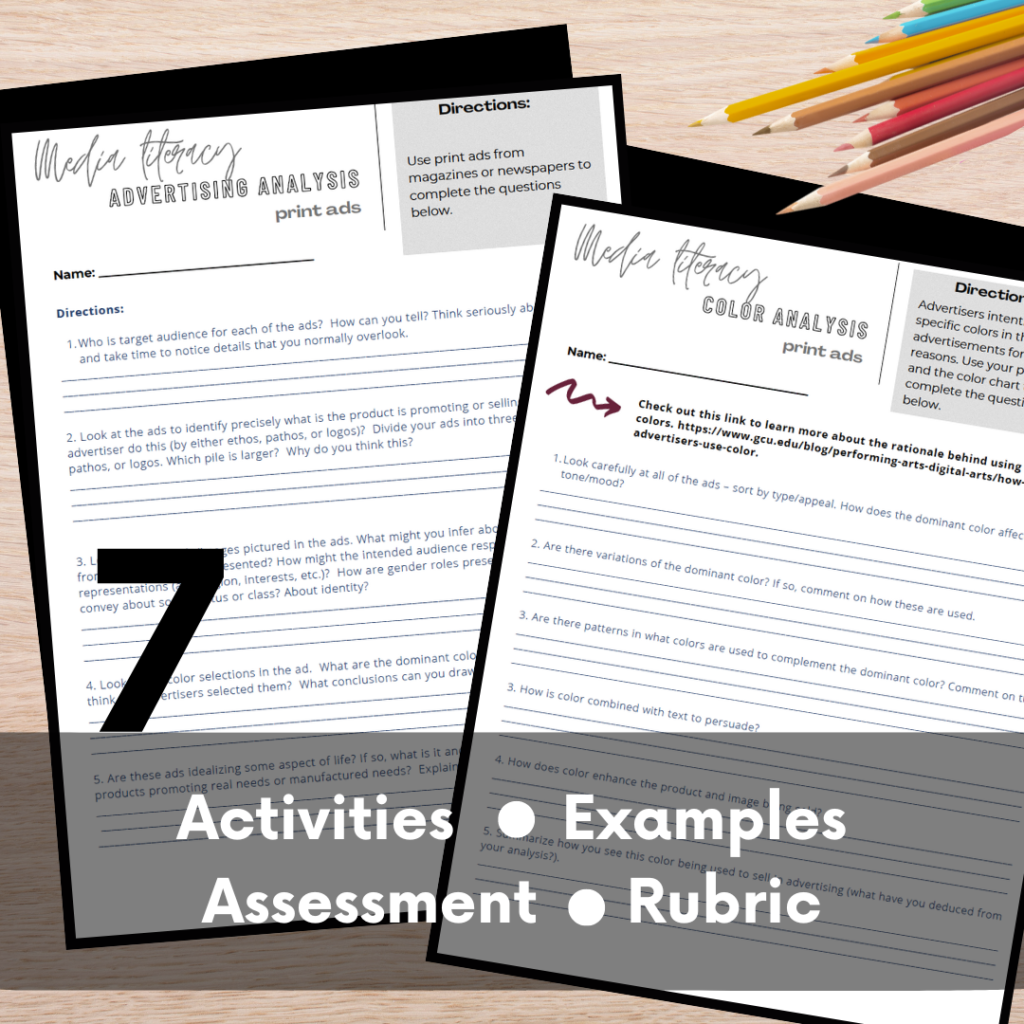
Station 3: Analyzing Print Advertisements
Print ads slow students down in a good way.
At this station, students analyze full-color print advertisements using guided questions. They examine visuals, language, layout, and implied messages. Working in small groups allows students to see how different people interpret the same ad.
This is where students begin to understand that media messages are layered and that interpretation matters.
Station 4: Media Consumption and Reflection
This station is always eye-opening.
Students reflect on their own media habits through surveys or journaling. They track what they consume, where they see ads, and how often they engage with media without realizing it.
This reflection helps students connect the unit to their own lives, which makes the analysis more meaningful.
Station 5: Visual Rhetoric and Color Analysis
Color plays a powerful role in advertising, but students rarely notice it at first.
At this station, students analyze how color influences mood, trust, urgency, and desire. They examine how different color choices can completely change the message of an ad.
Once students see this, they cannot unsee it.
Why Media Literacy is Crucial
With so many messages aimed at teens, it’s vital for them to discern the intentions behind these advertisements and understand how they can be influenced. Media literacy empowers students to critically evaluate the content they encounter, fostering informed and thoughtful consumers.
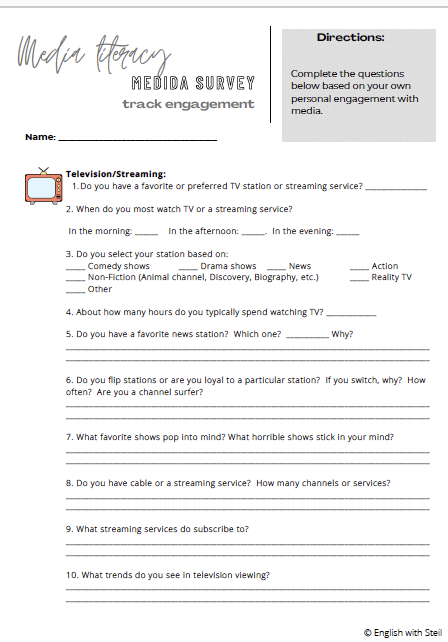
Before we dig into analyzing ads, I like to get a sense of how students already interact with media. We talk about where they see ads, what catches their attention, and how often they notice persuasion at all. To support that conversation, I use a short media survey that helps students reflect on their own media habits before we start breaking everything down. It gives me great insight and gives students a moment to pause and notice their own patterns.
How I Structure the Unit
This media literacy unit is designed to engage students through lessons, discussions, and hands-on activities. Here’s a step-by-step breakdown of how I teach this unit in my classroom:
1. Introduction to Media Literacy and Advertising Strategies
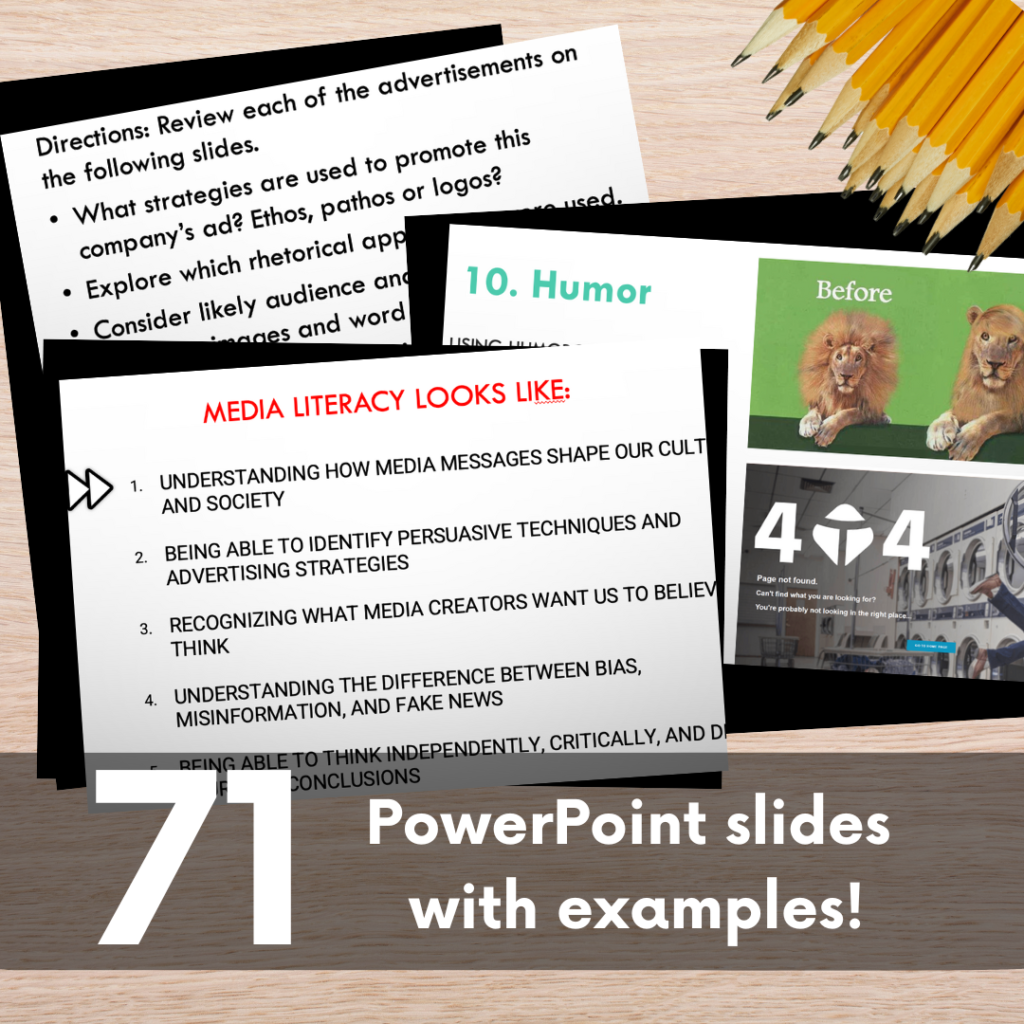
I start with a PowerPoint presentation that introduces the basics of media literacy and advertising strategies. This presentation covers:
- What is Media Literacy: Understanding the concept and its importance.
- Process of Media Literacy: Steps involved in analyzing media messages.
- Analysis of Print and Commercial Ads: We examine three print ads and five commercial ads, discussing the techniques used and their effectiveness.
To make this engaging, I use real-world examples that are relevant to my students’ interests. We discuss current advertisements they’ve seen and analyze them together, which helps them connect theory to practice right from the start.
2. Rhetorical Strategies and Advertising Techniques
Next, we dive into rhetorical strategies using another PowerPoint presentation. This lesson introduces students to:
- Ethos, Pathos, and Logos: The fundamental rhetorical appeals.
- 25 Additional Common Advertising Strategies: Techniques like glittering generalities, traditional wisdom, snob appeal, and more.
I provide students with a note-taking worksheet to track the presentation. This not only helps them follow along but also serves as a valuable study tool. I encourage them to think of examples from advertisements they’ve encountered and discuss how these strategies are used.
3. Print Ad Analysis
Analyzing print advertisements is always a highlight. Here’s how we tackle this:
- Over 18 Full-Color Print Ads: We work through these ads using question prompts. This can be done as a large group activity or in small groups.
- Exploring Print Advertisements Worksheet: This supplemental activity extends their learning and encourages independent analysis.
I often split the class into small groups for this activity. Each group receives a set of print ads and discussion prompts. After analyzing the ads, groups share their findings with the class, promoting collaboration and diverse perspectives.
Bringing It All Together Through Creation
The final step is creation.
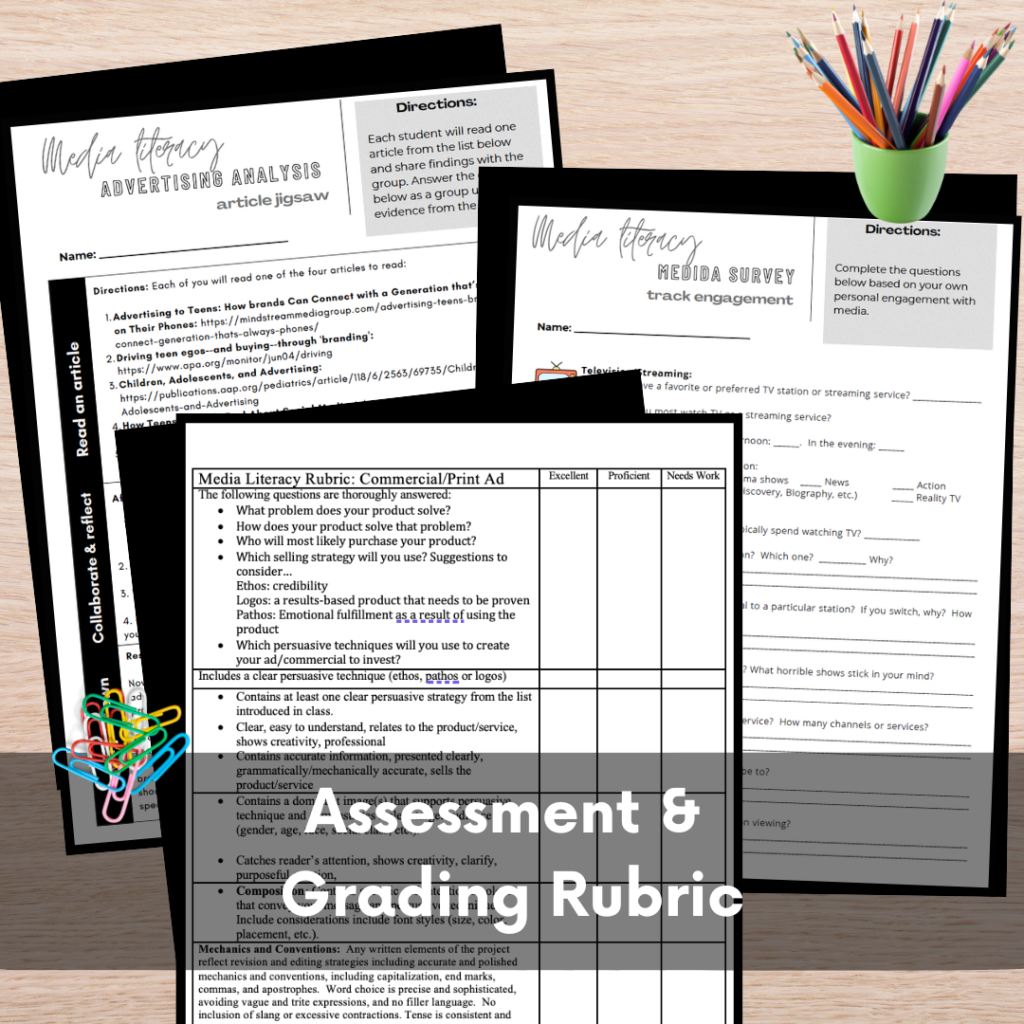
Students design their own advertisements using the strategies they have analyzed. They must explain their choices, justify their rhetorical decisions, and reflect on how they tried to influence their audience.
This is where synthesis happens. Students move from analysis to application, which deepens their understanding of how media works.
Why This Approach Works
What I notice most is how students start talking differently.
They question ads instead of laughing them off.
They notice strategies in real time.
They recognize persuasion without feeling defensive.
Media literacy becomes less about right answers and more about awareness.
A Note If You Want to Try This Approach
If you want support organizing a media literacy and advertising analysis unit like this, I use a set of lessons and activities that guide students through analysis, discussion, reflection, and creation step by step. It is flexible enough to adapt to different grade levels and pacing needs, and you can take or leave pieces depending on your classroom.
Tips and Ideas for Teaching Advertising Strategies and Media Literacy
1. Encourage Discussion
Foster an open classroom environment where students feel comfortable sharing their thoughts and opinions. Media literacy is all about questioning and analyzing, so the more students discuss, the better.
2. Use Real-World Examples
Incorporate current advertisements that students are likely familiar with. This makes the lessons more relevant and engaging. Discussing ads from their favorite brands or recent commercials they’ve seen can spark interest and deeper understanding.
3. Interactive Activities
Hands-on activities like the media consumption journal and color analysis worksheet help students connect theory to practice. Interactive elements keep students engaged and make the learning process more dynamic.
4. Collaborative Learning
Group activities like the advertising articles jigsaw promote teamwork and allow students to learn from each other. Collaborative learning can help students see different perspectives and enhance their analytical skills.
5. Creative Assignments
The final project to create an ad encourages students to synthesize their learning and apply it in a fun and innovative way. Allowing students to present their projects to the class can also build confidence and public speaking skills.
6. Reflect on Personal Media Use
Have students reflect on their own media consumption through surveys or journals. Discuss how different types of media influence their thoughts and behaviors, helping them become more aware and critical consumers.
7. Integrate Technology
Utilize digital tools and online resources to analyze advertisements. There are numerous websites and apps that can help students create and critique media content, making the learning experience more interactive and modern.
Additional Activities and Resources
Ad Phrases Quiz
I kick off some lessons with an ad phrases quiz to test students’ knowledge of popular advertising slogans. It’s a fun and engaging way to start the class and gets them thinking about the power of slogans in advertising.
Advertising Articles Jigsaw
Students read and discuss current articles on the impact of advertising on teens. This jigsaw activity promotes critical thinking and collaborative learning. Each group reads a different article and then teaches the main points to their peers.
Media Consumption Survey/Journal
Students track their media consumption, which leads to eye-opening discussions about their media habits. This activity helps them become more aware of how much media they consume and the types of messages they’re exposed to.
Color Analysis Worksheet Activity
Using a provided link, students analyze how color influences perception in advertisements. This activity helps them understand the subtleties of visual rhetoric and how color can shape emotions and opinions.
Print Ads Analysis Worksheet
Further reinforcing their skills, this worksheet provides additional practice in analyzing print advertisements. It’s a great homework assignment that prepares them for the final project.
Final Thoughts
Teaching media literacy is not about telling students what to believe. It is about helping them slow down, ask questions, and recognize intention.
In a world full of carefully crafted messages, that skill matters.
Happy teaching.
Lorem ipsum dolor sit amet, consectetur adipiscing elit. Ut elit tellus, luctus nec ullamcorper mattis, pulvinar dapibus leo.