Teaching descriptive writing can feel repetitive if students see it as just “adding adjectives.” But when done well, descriptive writing becomes one of the most engaging and creative parts of ELA instruction.
With the right activities, students learn how to observe closely, choose precise language, and create vivid images that stick with the reader. The key is giving them playful, low-pressure ways to practice using their senses and imagination.
These descriptive writing activities are designed to boost engagement, strengthen writing skills, and keep students actively involved—whether you are teaching middle school or high school ELA.
Why Descriptive Writing Matters in ELA
Descriptive writing builds far more than storytelling skills.
When students practice describing objects, scenes, and experiences, they strengthen observation, word choice, and attention to detail. These skills transfer directly to narrative writing, analytical essays, creative writing, and even real-world communication.
Strong descriptive writing helps students show meaning instead of simply telling it. Learning how to use sensory details and specific language allows students to connect with their audience and make their writing memorable.
Descriptive Writing Assignments That Inspire Creativity
Descriptive writing works best when students see purpose behind it.
Object-based narratives allow students to describe a meaningful item while explaining its importance. Character sketches help students combine physical description with personality traits. Setting descriptions teach students how atmosphere affects mood.
Even routine activities become powerful writing opportunities when students describe them using sensory detail and precise language.
Using Descriptive Writing in Daily Instruction
Quick writes, sentence expansion exercises, and art-based prompts make it easy to practice descriptive writing regularly. These short activities reinforce skills without overwhelming students and fit naturally into daily lesson routines.
How to Teach Descriptive Writing Effectively
Strong instruction starts with clear expectations and concrete models.
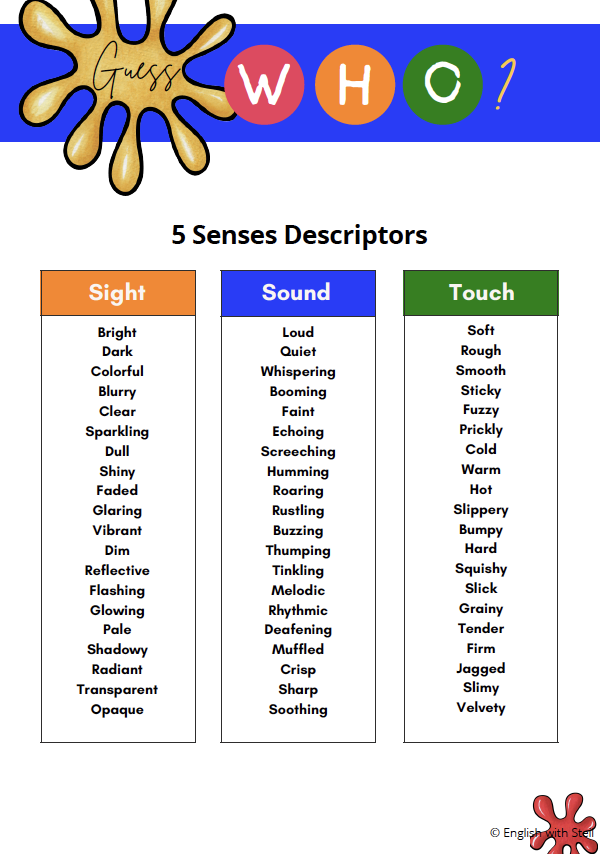
Begin by focusing on the five senses: sight, sound, smell, taste, and touch. Encourage students to move beyond visual details and describe how something feels, sounds, or even smells. A shared sensory word bank can help students avoid vague language.
Model strong descriptive writing by breaking down mentor texts or sample paragraphs. Show students how specific word choices create vivid images. Emphasize specificity by challenging students to replace words like nice, good, or thing with precise descriptions.
Using visual, tactile, or real-life prompts also makes descriptive writing feel more authentic and less abstract.
Engaging Descriptive Writing Activities for the Classroom
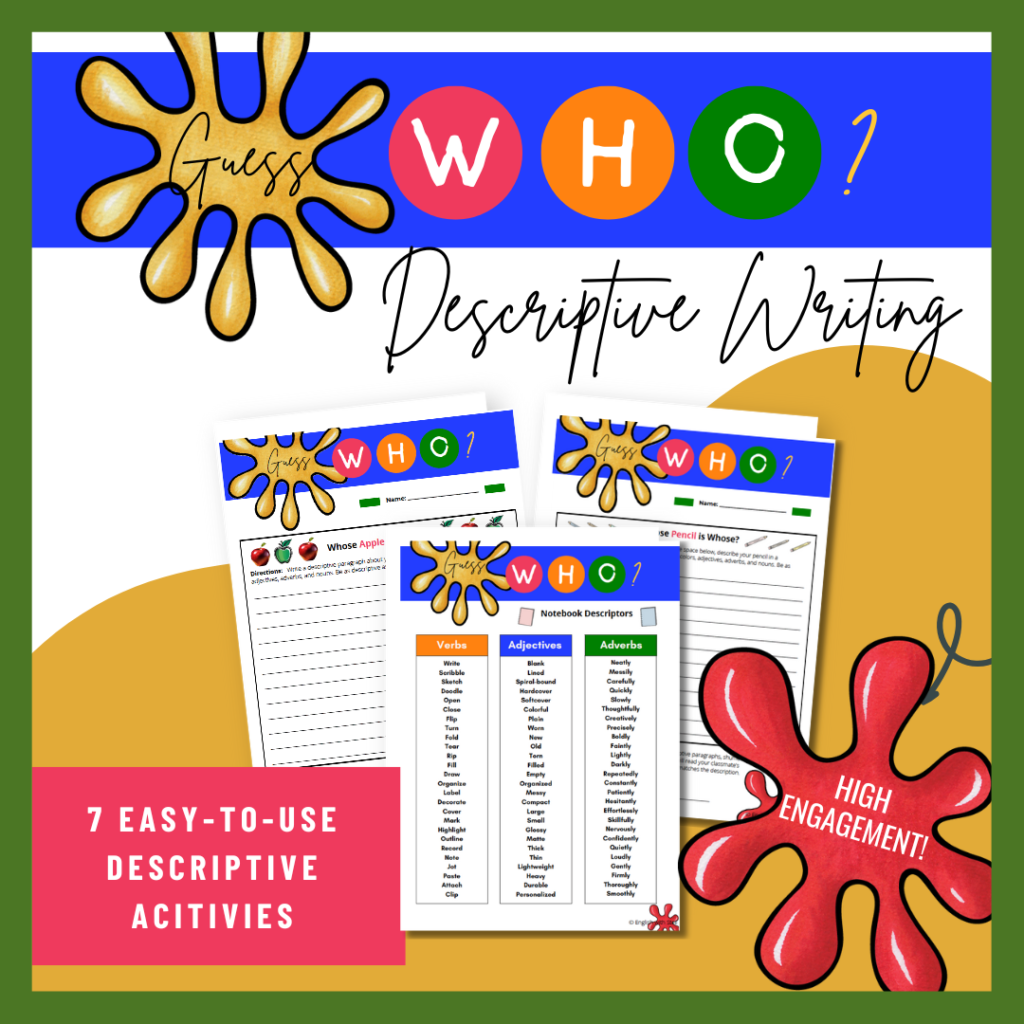
1. “Guess Who?” Collaborative Descriptive Writing Game
This activity blends writing, collaboration, and movement.
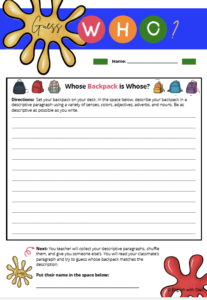
Students secretly choose an object—such as a backpack, water bottle, or shoe—and write a detailed description using sensory details and vivid language. Descriptions are shared aloud, and classmates try to guess the object based on the writing alone.
This activity encourages careful observation, precise word choice, and active listening. Adding a friendly competitive element keeps engagement high while reinforcing core descriptive writing skills.
2. Mystery Object Challenge
Place unusual objects in a bag. Without looking, students feel the object and write a description based entirely on touch. This activity pushes students to rely on texture, shape, and temperature instead of sight.
3. Sensory Walk Writing Prompt
Take students on a short walk around the school. Ask them to record specific sights, sounds, and smells. Students then write a paragraph describing one small moment from the walk in vivid detail.
4. Food Critic Descriptions
Give students a simple snack and have them describe it like a professional food critic. Exaggerated detail makes this activity both memorable and effective for practicing sensory language.
5. Scene Sketch Writing
Students choose a location and describe it using sensory details. Encourage them to focus on mood, texture, and atmosphere rather than listing objects.
How to Teach Descriptive Writing Effectively
1. Focus on the Five Senses
Encourage students to explore sight, sound, smell, taste, and touch when describing objects or experiences. A sensory word bank can help them generate specific, engaging descriptions.
2. Demonstrate Strong Examples
Showcase examples of descriptive writing from literature or your own work. Break down how specific word choices and sensory details create vivid imagery.
3. Promote Specificity
Challenge students to replace vague words like “nice” or “good” with specific, evocative language. For instance, “a nice apple” becomes “a shiny red apple with a crisp, tart flavor.”
4. Use Visual and Tactile Prompts
Bring objects, images, or short videos into the classroom as prompts. Hands-on experiences make it easier for students to describe details authentically.
Engaging Descriptive Writing Activities for Your Classroom
1. “Guess Who?” Collaborative Writing Game
This activity combines writing, teamwork, and fun. Here’s how it works:
- Students choose an object, such as a shoe, water bottle, or backpack, and write a detailed description of it.
- Focus on sensory details, adjectives, and vivid language to bring the object to life.
- Students exchange descriptions and try to guess the object based on the writing.
This activity promotes collaboration, observation, and critical thinking while keeping the energy in the classroom high. Add a competitive twist by awarding points for correct guesses or the most creative descriptions.
2. Mystery Object Challenge
Place unique objects (like a pinecone, keychain, or textured fabric) in a bag. Students feel the object without looking and write a description based on touch alone. This tactile experience encourages them to think beyond just sight.
3. Sensory Walk
Take students on a short walk around the school, asking them to note details they see, hear, or smell. They’ll write a vivid paragraph describing one specific moment from their walk.
4. Food Description as a “Critic”
Provide a simple snack like an apple slice or cookie and ask students to describe its texture, taste, and smell in exaggerated detail. They can adopt the voice of a dramatic food critic for added creativity.
5. Scene Sketching
Have students choose a corner of the classroom or a spot at home to describe in detail. Encourage them to focus on how the space looks, feels, and even smells, helping them sharpen their observational skills.
Descriptive Writing Assignments That Inspire Creativity
- Object Stories: Students describe a meaningful object and its significance in their lives, blending vivid description with narrative.
- Character Sketch: Using sensory details and descriptive language, students create a fictional character’s appearance, personality, and environment.
- Vivid Settings: Assign students to describe a specific place, like a bustling park or a serene beach, capturing the mood and details with rich imagery.
- “A Day in the Life” Narratives: Students write about a routine activity, such as making breakfast or walking to school, focusing on sensory details to make the ordinary extraordinary.
Incorporating Description into Daily Lessons
- Quick Writes: Start class with prompts like “Describe the weather outside” or “Write about what your backpack feels like when it’s full.”
- Sentence Expansions: Have students rewrite simple sentences with more detail. For instance, “The dog barked” could become “The shaggy brown dog barked sharply, its booming voice echoing through the quiet street.”
- Art and Writing: Use famous paintings or photographs as prompts for students to describe in writing.
The Benefits of “Guess Who?” for Collaboration and Fun
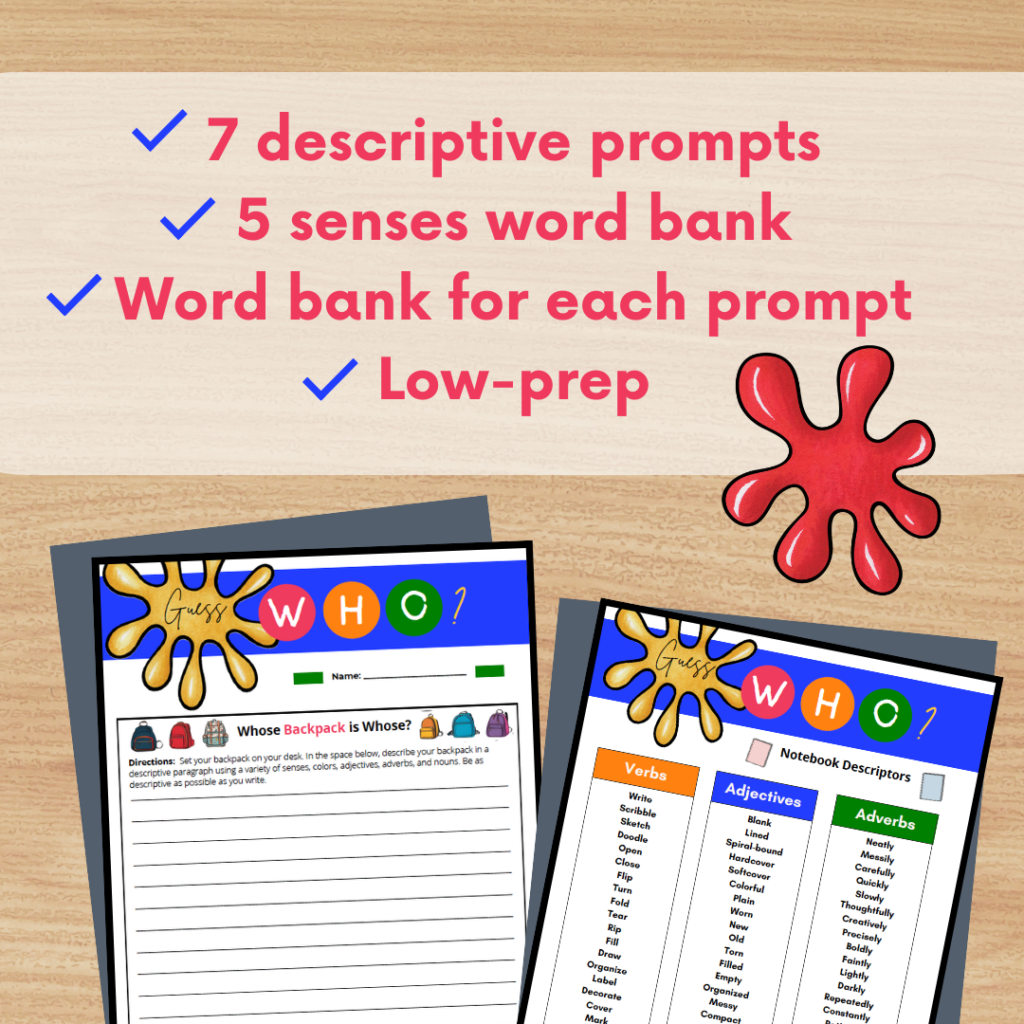
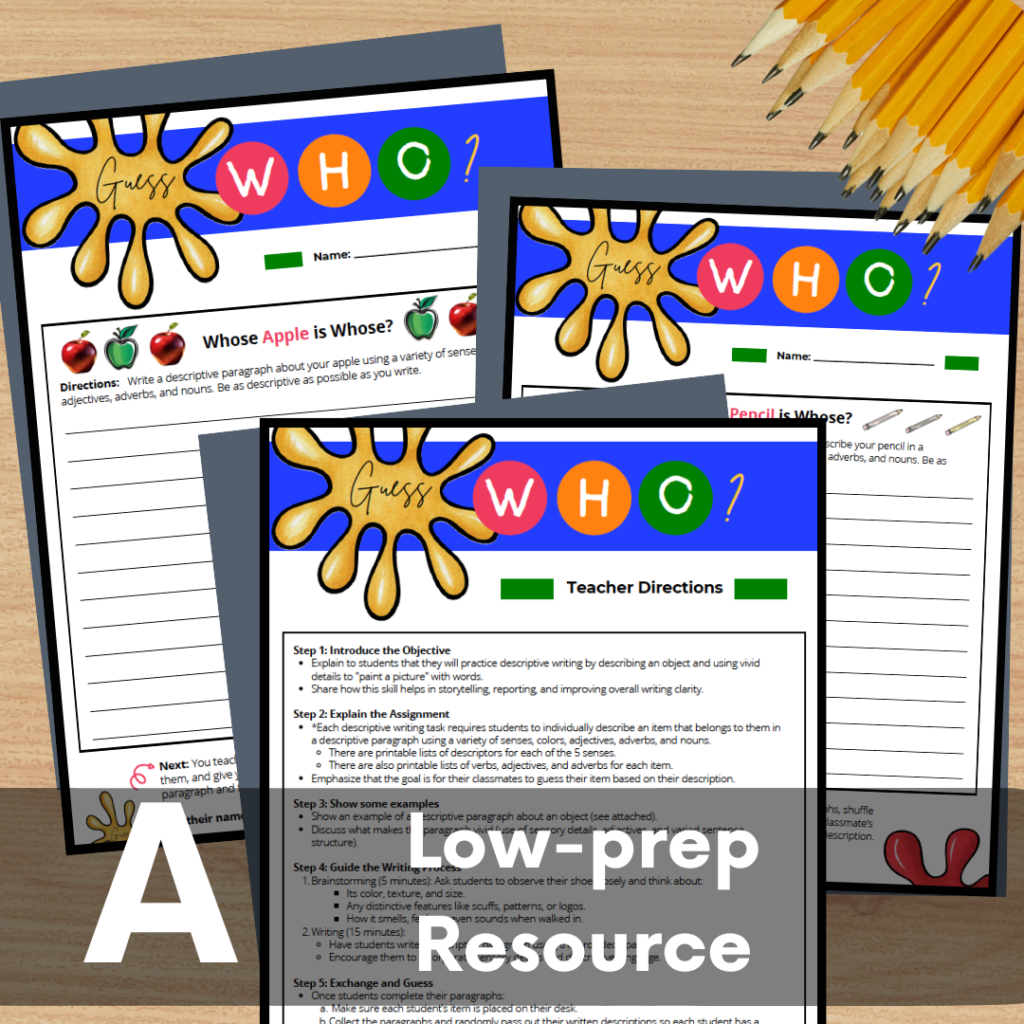
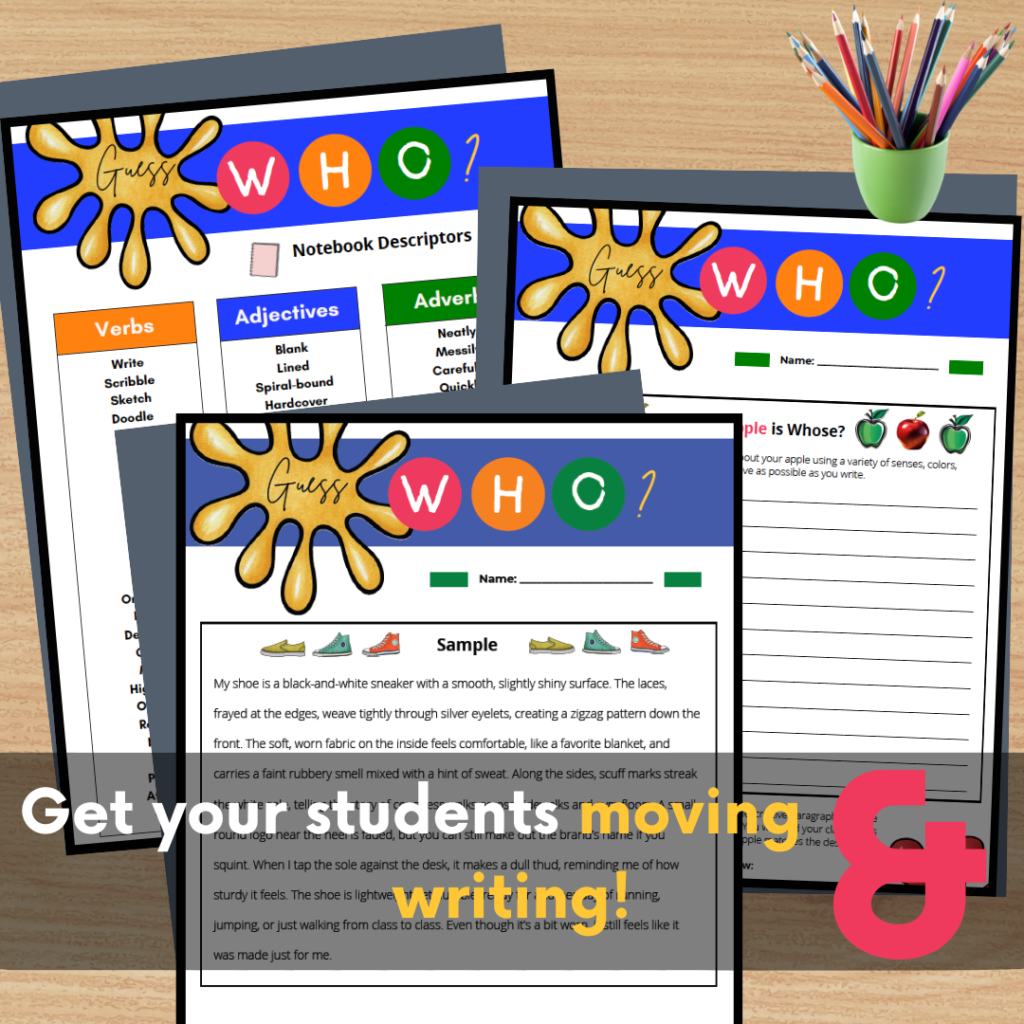
The “Guess Who?” activity stands out as an interactive way to teach descriptive writing. Students practice crafting detailed, sensory-rich paragraphs while engaging in a fun, collaborative guessing game. This activity fosters teamwork, critical thinking, and movement in the classroom, keeping students actively engaged. It’s a perfect blend of creativity and skill-building that brings writing to life.
Why Teachers Love the “Guess Who?” Activity
The “Guess Who?” descriptive writing activity keeps students moving, thinking, and writing. It encourages collaboration while strengthening descriptive language and critical thinking. Because it feels like a game, students stay engaged while practicing essential writing skills.
Final Thoughts
Descriptive writing does not need to feel repetitive or forced.
When students are given creative, interactive ways to practice sensory detail and precise language, writing becomes engaging and meaningful. Activities like “Guess Who?” turn descriptive writing into an experience students remember—and skills they continue to use.
Check Out These Resources from My Fellow Teacher Authors
If you are looking for even more creative, low-pressure ways to help students strengthen descriptive writing, sensory language, and word choice, these resources from fellow teacher authors pair perfectly with the activities in this post:
Descriptive Writing Activities That Actually Engage Students by Room 213
Practical strategies for helping students move beyond basic adjectives and write with clarity, detail, and voice.Teaching Sensory Language Without Overwhelming Students by Room 213
A thoughtful approach to teaching the five senses in ways that feel manageable and authentic for middle and high school writers.Sentence Expansion Activities for Stronger Writing by Laura Randazzo
Excellent ideas for helping students add depth and detail to their writing one sentence at a time.Creative Writing Warm-Ups That Don’t Feel Like Extra Work by Secondary Sara
Quick, engaging prompts that fit easily into daily instruction and support descriptive language.Low-Prep Writing Games for the ELA Classroom by Bespoke ELA
A great collection of interactive writing activities that boost engagement without sacrificing rigor.Using Images and Objects to Teach Descriptive Writing by Laura Randazzo
Smart ways to use visual and tactile prompts to help students write more vividly and confidently.