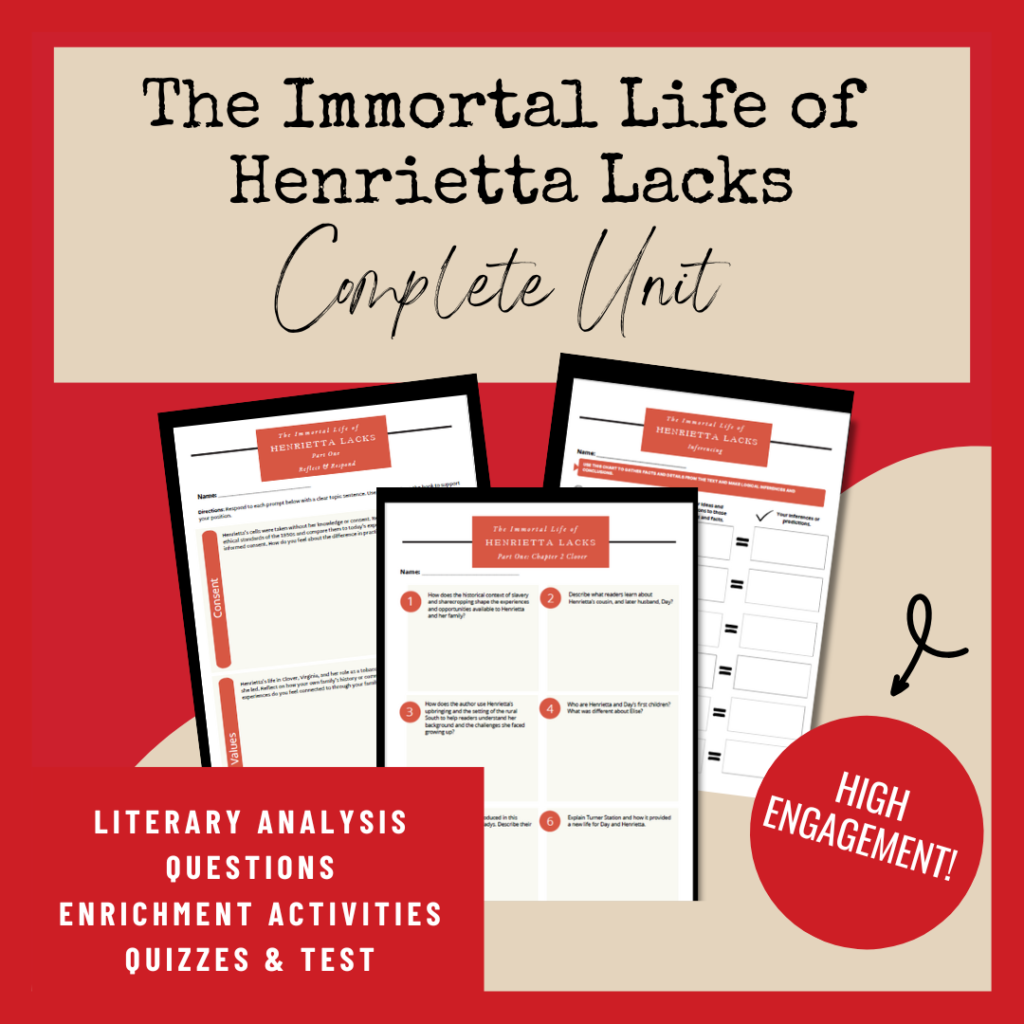
The Immortal Life of Henrietta Lacks by Rebecca Skloot is a book that combines biography, science, and ethics, introducing readers to Henrietta Lacks, an African American woman whose cells (known as HeLa cells) transformed modern medicine. Henrietta’s cells were taken without her knowledge in the 1950s, a time when medical consent, especially for Black patients, was often overlooked. Her “immortal” cells went on to help develop the polio vaccine, cancer treatments, gene mapping, and more. But the story of how Henrietta’s cells were used without her consent raises questions that echo through generations of her family, impacting them deeply and shedding light on injustices in medical research.
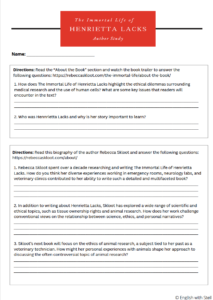
Author Rebecca Skloot, a science writer, dedicated over a decade to researching and writing The Immortal Life of Henrietta Lacks. Her interest in Henrietta’s story began in a biology class, where her teacher mentioned HeLa cells but not the woman behind them. Driven by curiosity and a passion for exploring ethical issues in science, Skloot interviewed members of the Lacks family, navigated ethical dilemmas, and conducted extensive historical research. The result is a beautifully crafted narrative that combines Henrietta’s life story with larger questions about medical ethics, race, and scientific progress.
About the Author and Her Journey to Write the Book
Some books change the way students see the world.
The Immortal Life of Henrietta Lacks is one of those texts.
Part biography, part science writing, and part investigative journalism, Rebecca Skloot’s book introduces students to Henrietta Lacks, an African American woman whose cells were taken without her knowledge in the 1950s and went on to revolutionize modern medicine. HeLa cells contributed to the development of the polio vaccine, cancer treatments, gene mapping, and countless medical breakthroughs.
But this is not just a story about science. It is a story about consent, race, power, ethics, journalism, and what happens when progress comes at the expense of humanity.
Teaching this text well requires intention, care, and creativity. When approached thoughtfully, it becomes one of the most meaningful and interdisciplinary units you can offer students.
The Immortal Life of Henrietta Lacks is a rich, multi-layered text that brings together science, history, ethics, and human resilience, making it a uniquely powerful book for students. Here are a few compelling reasons to teach this book:
Why This Book Belongs in the Classroom
1. Ethical Questions Students Can’t Ignore
At the heart of the book is a question that still matters today: Who gets to benefit from scientific progress, and at what cost?
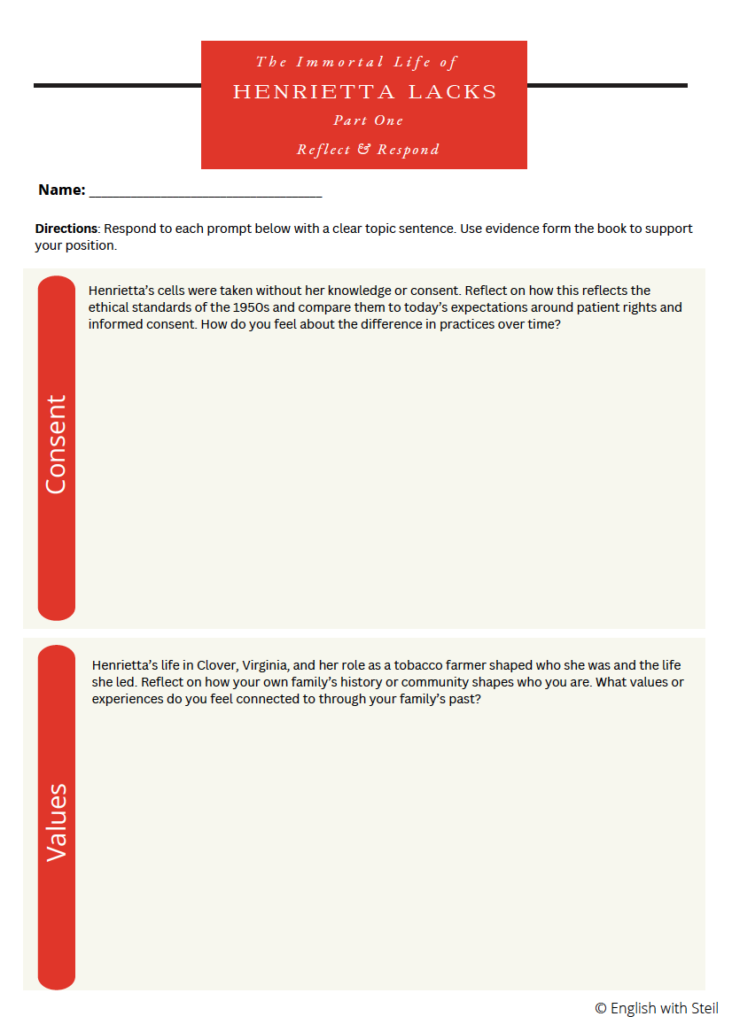
Henrietta’s cells were taken without consent during a time when patient rights, especially for Black patients—were routinely ignored. Teaching this text allows students to grapple with bioethics, informed consent, and medical responsibility in a way that feels real, urgent, and human.
These discussions naturally connect to modern debates about DNA privacy, genetic research, and data ownership.
2. Examining Race and Inequality in Healthcare
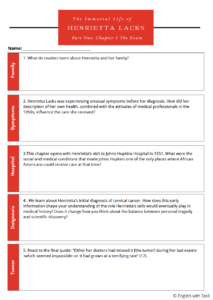
The book provides a clear lens into systemic racism in medicine and research. Students see how Henrietta’s treatment reflects broader patterns of inequality and how those injustices shaped generations of mistrust in healthcare systems.
This creates meaningful opportunities for discussion around:
Historical context and present-day implications
Health disparities
Institutional power and accountability
Handled with care, these conversations help students think critically about how history informs the present.
3. Humanizing Science Through Story
Many students experience science as abstract or detached. Henrietta’s story changes that.
By centering the narrative on a real woman and her family, the book reminds students that behind every scientific discovery are real people with lives, identities, and families. This humanization helps bridge the gap between STEM and empathy, encouraging students to see ethics as inseparable from innovation.
4. A Master Class in Journalism Ethics
Rebecca Skloot’s role as a journalist is just as important as Henrietta’s story itself.
Students observe Skloot:
Building trust with the Lacks family
Navigating consent and transparency
Correcting misinformation
Balancing public interest with personal dignity
For journalism, ELA, or social studies classrooms, this text becomes a living case study in ethical storytelling and responsible reporting.
5. Powerful Themes of Legacy, Identity, and Family
The Lacks family, especially Deborah Lacks, grounds the book emotionally. Deborah’s search for understanding, closure, and justice offers students a lens into how legacy is shaped, protected, and sometimes exploited.
These themes resonate deeply with students and open the door to reflective writing, discussion, and personal connection.
Key Themes to Explore in the Classroom
Key Themes to Explore With Students
Ethics and Consent in Medical Research
Race, Power, and Inequality in Healthcare
Legacy and Identity
Family, Memory, and Trauma
The Role of Journalism in Shaping Public Narrative
Ethics and Consent in Medical Research:
Henrietta’s cells were taken without her permission, raising questions about consent, privacy, and the rights of patients. Discuss how these issues have evolved and the ongoing challenges in medical ethics today.
The Intersection of Race, Health, and Injustice:
Henrietta’s story highlights the racial inequalities in healthcare, particularly in the mid-20th century. This theme is powerful for understanding how marginalized groups have historically been treated by the medical community and how this impacts their trust in healthcare systems today.
Legacy and Identity:
The novel explores how Henrietta’s legacy continues to affect her family and the world. Students can consider how legacies are formed, remembered, and sometimes exploited, especially when the subject is seen as a “source” rather than a person.
The Role of Family and Memory:
Deborah Lacks, Henrietta’s daughter, plays a crucial role as she tries to learn about her mother’s impact while processing her family’s pain. Students can explore how family members remember, protect, and honor each other, even in the face of tragedy.
Creative and Engaging Teaching Strategies
Create a “HeLa Legacy Museum” Project
Students design a physical or digital museum exhibit honoring Henrietta Lacks. Exhibits might include:
Timelines of Henrietta’s life and scientific impact
Ethical reflection panels
Artistic interpretations
Primary-source research
This project builds research, synthesis, and empathy while allowing student choice and creativity.
Host a Bioethics Role-Play or Debate
Assign students roles such as:
Medical researchers
The Lacks family
Hospital administrators
Lawmakers
Students debate informed consent, compensation, and scientific responsibility. This strategy builds critical thinking and perspective-taking skills.
Legacy Through Personal Storytelling
Invite students to reflect on their own family histories or legacies. Short narrative or reflective writing assignments help students connect personally to the book’s themes without requiring disclosure beyond their comfort level.
Media Analysis and Representation
Students analyze how Henrietta’s story has been portrayed across articles, documentaries, and media coverage. This builds media literacy and highlights how storytelling choices shape public understanding.
Connecting Bioethics to Today
Bring the text into the present by examining modern issues such as:
Genetic testing companies
Medical data privacy
AI and health research
Students evaluate how protections have changed—and where gaps still exist.
Why This Text Works Especially Well for Journalism Students
The Immortal Life of Henrietta Lacks is ultimately a book about storytelling power.
Students see firsthand:
The importance of consent in reporting
The responsibility journalists hold when telling stories of trauma
The long-term impact journalism has on real people
The necessity of accuracy, humility, and accountability
It reinforces that journalism is not just about information—it is about humanity.
physical “museum exhibit” dedicated to Henrietta Lacks. They could use visual displays, written reflections, timelines, and artworks that represent Henrietta’s life, HeLa cells’ scientific contributions, and the ethical questions the book raises. This project encourages research, creative expression, and empathy.
Role-Play Debate on Medical Ethics: Divide students into groups representing different stakeholders—doctors, scientists, the Lacks family, and policymakers—and hold a debate on medical ethics, using the issues raised by Henrietta’s story as a foundation. Students can discuss topics like informed consent, patient rights, and the balance between scientific progress and ethical responsibility. This helps students understand multiple perspectives.
Exploring Legacy Through Personal Storytelling: Encourage students to think about their own families and the legacies they would like to honor. Have them write short reflections or narratives about a family member whose story matters to them. This activity connects them personally to the theme of legacy, helping them empathize with the Lacks family’s desire to honor Henrietta.
Analyze Media and Public Perception: Skloot’s book also discusses how the media covered Henrietta’s story over the years, often sensationalizing or misrepresenting it. Have students examine articles, documentaries, or fictional portrayals of real-life medical cases. They can then discuss how media representation impacts public perception, understanding, and empathy.
Bioethics in Today’s World: Bring the story into the present by examining bioethics today. Students can research current issues in genetic research, DNA privacy, and the use of personal data in health studies. Discuss how these modern ethical questions relate to Henrietta’s story and how laws, attitudes, and protections have changed (or not) since her time.


Final Thoughts
Teaching The Immortal Life of Henrietta Lacks is not about delivering answers. It is about helping students sit with complexity, ask ethical questions, and recognize the human stories behind progress.
When taught with care, this book becomes more than a unit. It becomes a conversation students carry forward.
Check Out These Resources from My Fellow Teacher Authors
If you are teaching The Immortal Life of Henrietta Lacks or exploring ethics, identity, and storytelling across disciplines, these resources from fellow teacher authors offer thoughtful, classroom-ready support that pairs well with this unit:
Teaching Ethics Through Literature and Nonfiction by Room 213
A practical guide to facilitating ethical discussions in ELA and social studies classrooms with care, structure, and student voice at the center.How to Teach Sensitive Topics Without Shutting Students Down by Room 213
Strategies for creating safe, respectful spaces when discussing race, trauma, consent, and injustice—especially relevant for texts like Henrietta Lacks.Using Nonfiction to Teach Empathy and Critical Thinking by Secondary Sara
Teacher-tested ideas for helping students analyze nonfiction texts while maintaining empathy, nuance, and student engagement.Teaching Ethics, Bias, and Perspective in Informational Texts by Bespoke ELA
A thoughtful look at how to guide students through complex nonfiction topics without oversimplifying or avoiding difficult conversations.Journalism Ethics in the Classroom by Laura Randazzo
A strong resource for examining consent, representation, and responsibility in storytelling—perfect for pairing with Rebecca Skloot’s reporting choices.Media Literacy and Representation in Nonfiction by Ditch That Textbook
Helpful strategies for analyzing how stories are framed, whose voices are centered, and how media choices shape public understanding.