
One of the biggest challenges students face after high school has very little to do with content knowledge, and everything to do with communication.
Whether they are interviewing for a job, attending a college orientation, networking at a career fair, or collaborating in a professional setting, students need to know how to introduce themselves, hold a conversation, listen actively, and speak with confidence. Those skills do not come naturally to everyone, and they certainly do not develop from worksheets alone.
That is where Speed Networking comes in.
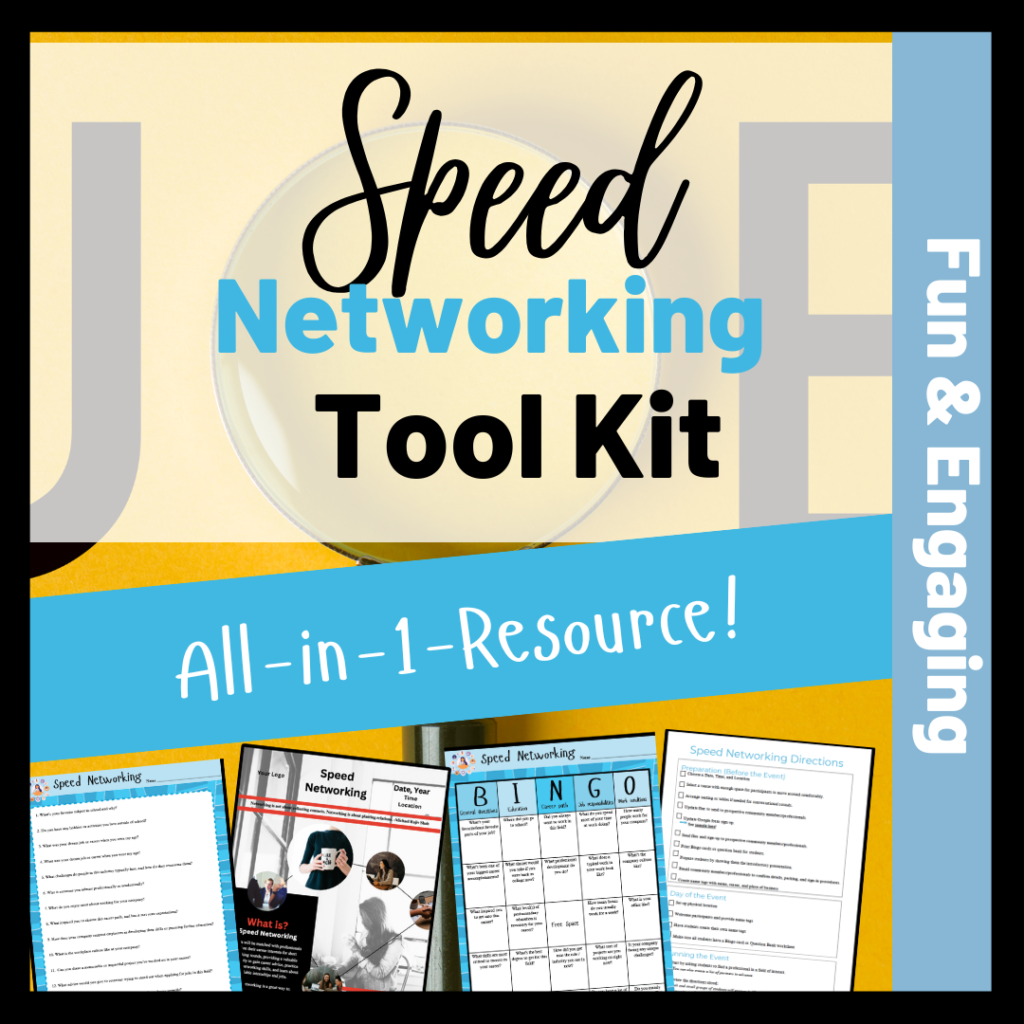
Speed networking is a structured, low-pressure activity that gives students repeated, short opportunities to practice professional conversation. When paired with a simple bingo-style format, it becomes an engaging classroom experience that feels fun while quietly building essential college and career readiness skills.
What Speed Networking Looks Like in the Classroom
At its core, speed networking is exactly what it sounds like.
Students rotate through a series of short, timed conversations with different partners. Each round focuses on a prompt or question, such as career interests, strengths, goals, or experiences. Conversations are brief—usually two to five minutes—which keeps energy high and prevents anxiety from building.
The structure matters. Because students know the conversation will end soon, they are more willing to participate. Because the prompts are clear, they are not scrambling for what to say. And because they repeat the process multiple times, confidence builds quickly.
When you add a bingo-style tracking sheet, students stay focused, motivated, and engaged throughout the activity.
Why Speed Networking Builds College and Career Readiness
Speed networking is more than an icebreaker. It is intentional skill practice.
Students learn how to articulate ideas clearly, respond thoughtfully to questions, and adjust their communication for different audiences. They practice active listening instead of waiting for their turn to talk. They learn how to ask follow-up questions and make connections based on shared interests.
Perhaps most importantly, students gain confidence. Speaking to new people in a structured, supportive environment helps reduce fear and normalize professional conversation. These are the same skills students will need for interviews, career fairs, college discussions, and future workplaces.
The Skills Students Develop Through Speed Networking
This activity supports multiple career-ready competencies at once.
Students strengthen communication skills by practicing introductions and explanations. They develop interpersonal skills by engaging respectfully with peers and learning how to read conversational cues. Critical thinking comes into play as students respond to prompts and adapt their answers. Collaboration and community-building naturally emerge as students learn from one another.
Speed networking also introduces goal-setting in a subtle but meaningful way. When students talk about aspirations, interests, and strengths, they begin to see how their choices connect to future pathways.
Students Develop Career Skills Through Speed Networking
This activity doesn’t just bring excitement to the classroom—it’s a tool for developing essential life and career-ready skills, such as:
- Communication Skills: Learn how to start and maintain meaningful conversations.
- Active Listening: Encourage students to truly hear and connect with others.
- Networking Confidence: Help them gain comfort in building professional and personal relationships.
- Collaboration: Foster a sense of community by encouraging students to share and learn from one another.
- Goal Setting: Introduce students to the value of setting and working toward career or personal aspirations.


What You Need to Run a Speed Networking Activity
Speed networking does not require complicated setup.
You need a clear set of conversation prompts aligned to your goal, whether that is career exploration, team building, or communication practice. You need a simple rotation structure so students know where to move and when. You also need time for reflection so students can process what they learned about themselves and others.
A bingo-style recording sheet helps students stay accountable and gives the activity a clear purpose beyond conversation alone.
Easy Planning Tips for Teachers
Preparation is straightforward and flexible.
Conversation rounds typically last two to five minutes. A visible timer keeps things moving and reduces uncertainty. Clear instructions at the beginning help students understand expectations, especially around listening and respectful dialogue.
After the activity, reflection matters. Journaling, discussion, or exit tickets allow students to name what felt challenging, what felt successful, and what they want to improve next time.
Why Teachers Love Speed Networking Bingo
Teachers appreciate this activity because it works in many settings.
It fits easily into advisory, ELA, social studies, career readiness courses, and career days. It works with middle school, high school, and even postsecondary students. Prompts can be adjusted to focus on academics, careers, leadership, or simple relationship-building.
Most importantly, students are engaged. They are moving, talking, thinking, and practicing real-world skills that transfer far beyond the classroom.
What You’ll Need for a Speed Networking Event
- Conversation Starters: Prepare a list of prompts or questions to guide discussions, such as career aspirations, hobbies, or academic interests.
- Clear Structure: Create a plan for how participants will rotate and interact (e.g., timed rounds, partner rotations).
- Defined Goals: Decide on the purpose of the event, such as practicing introductions, exploring career paths, or building a sense of community.
- Reflection Activities: Provide students with opportunities to process their experience, such as journaling or group discussions.
Easy Set-Up and Planning Tips
Organizing a Speed Networking Bingo event is simple and stress-free:
- Prepare Bingo Cards: Use pre-made templates or customize your own with prompts tailored to your event’s goals.
- Set a Timer: Conversations typically last 2–5 minutes. Keep things fast-paced and exciting!
- Encourage Movement: Create a setup that allows students to rotate quickly and meet new people.
- Provide Instructions: Offer clear directions and examples to get everyone started.
- Reflect Afterward: Use included reflection questions to help students process what they learned.
Why Teachers Love Speed Networking Bingo
- Flexible: Works for classrooms, career fairs, and even virtual events.
- Engaging: Keeps students active and excited while learning.
- Versatile: Prompts can focus on academic goals, career aspirations, or even fun icebreakers.
- Impactful: Helps students build confidence and skills they’ll use for a lifetime.
Speed networking is not just an activity to fill time. It is a powerful way to help students practice communication, confidence, and connection in a setting that feels safe and manageable.
When students are given repeated opportunities to speak, listen, and reflect, they begin to see themselves as capable communicators. That confidence follows them into interviews, classrooms, and future careers.
If you are looking for a simple, high-impact way to build college and career readiness skills, speed networking is a strong place to start.
Check Out These Resources from My Fellow Teacher Authors
If you are looking to build communication skills, confidence, and career readiness in ways that actually feel doable in the classroom, these resources from fellow teacher authors pair perfectly with speed networking activities:
Teaching Career Readiness Skills Without Another Worksheet by Room 213
A practical look at helping students develop real-world communication and professional skills through discussion, collaboration, and structured conversation.Building Student Confidence Through Low-Stakes Speaking Activities by Room 213
Smart strategies for helping students practice speaking in ways that feel safe, structured, and supportive.Real-World Speaking Activities for Secondary Students by Secondary Sara
Classroom-ready ideas for helping students practice introductions, discussion skills, and professional communication.Teaching Soft Skills in the Classroom by Bespoke ELA
A thoughtful breakdown of how skills like communication, listening, and collaboration can be embedded naturally into everyday instruction.Low-Prep SEL Activities That Build Community by Laura Randazzo
Great ideas for relationship-building activities that strengthen classroom culture while supporting student voice.Career Exploration Activities That Actually Engage Students by Secondary Sara
Helpful strategies for connecting career conversations to student interests without overwhelming them.