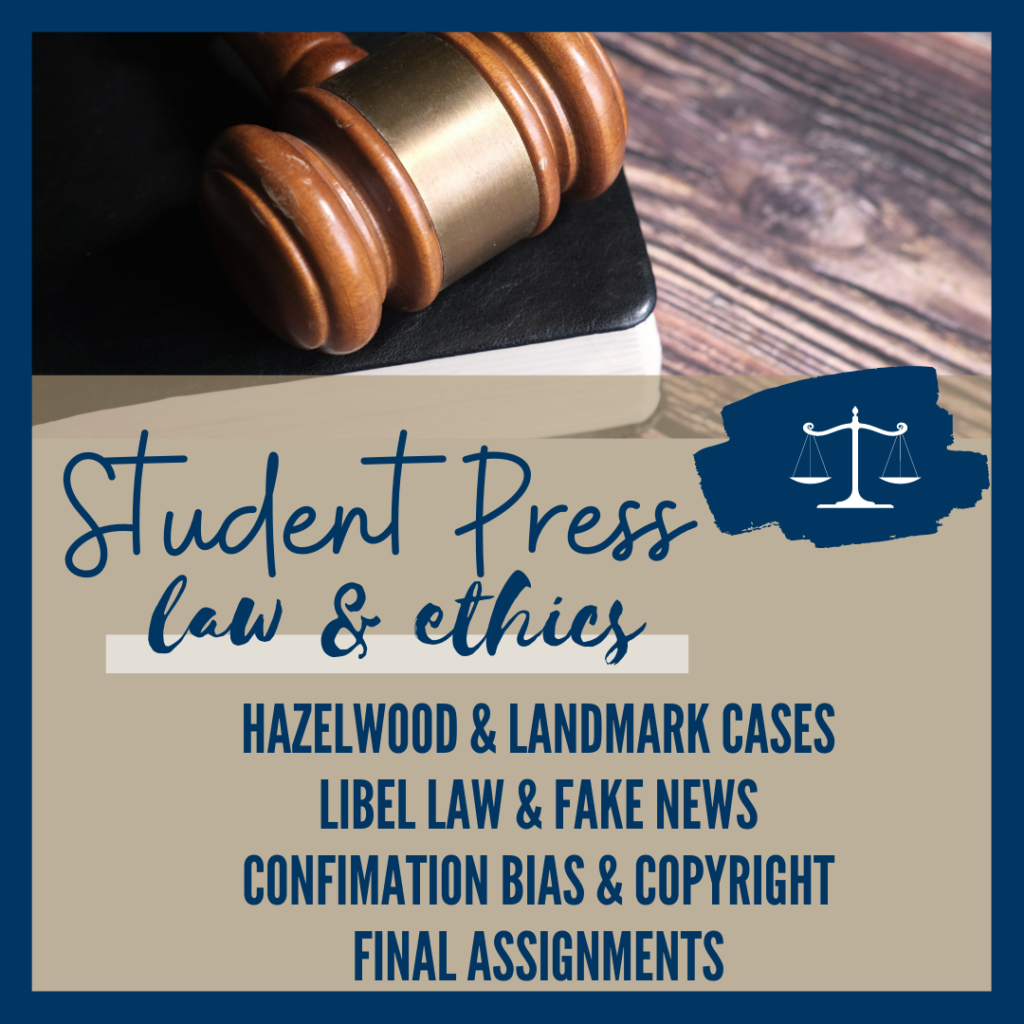
The first time I taught press law, I remember thinking it was going to feel dry. Important, yes. Necessary, absolutely. But engaging? I was not convinced. What surprised me was how quickly students leaned in once they realized this unit was not about memorizing cases or legal vocabulary. It was about their rights, their voices, and the real decisions they were making as student journalists.
Once students understand that press law directly affects what they can publish, how they report, and how protected they are when they do it well, the entire tone of the class shifts. These lessons stop feeling theoretical and start feeling personal.
Navigating the world of student journalism can be a thrilling adventure, but it’s also crucial to equip our young journalists with a solid understanding of their legal rights and ethical responsibilities. In my journalism class, I’ve found that teaching student press law is not only essential but also incredibly engaging for students. Here are some ideas of how I introduce my students to the First Amendment, landmark Supreme Court cases, and the ethical considerations that shape responsible journalism.
Starting With the First Amendment — and Making It Stick
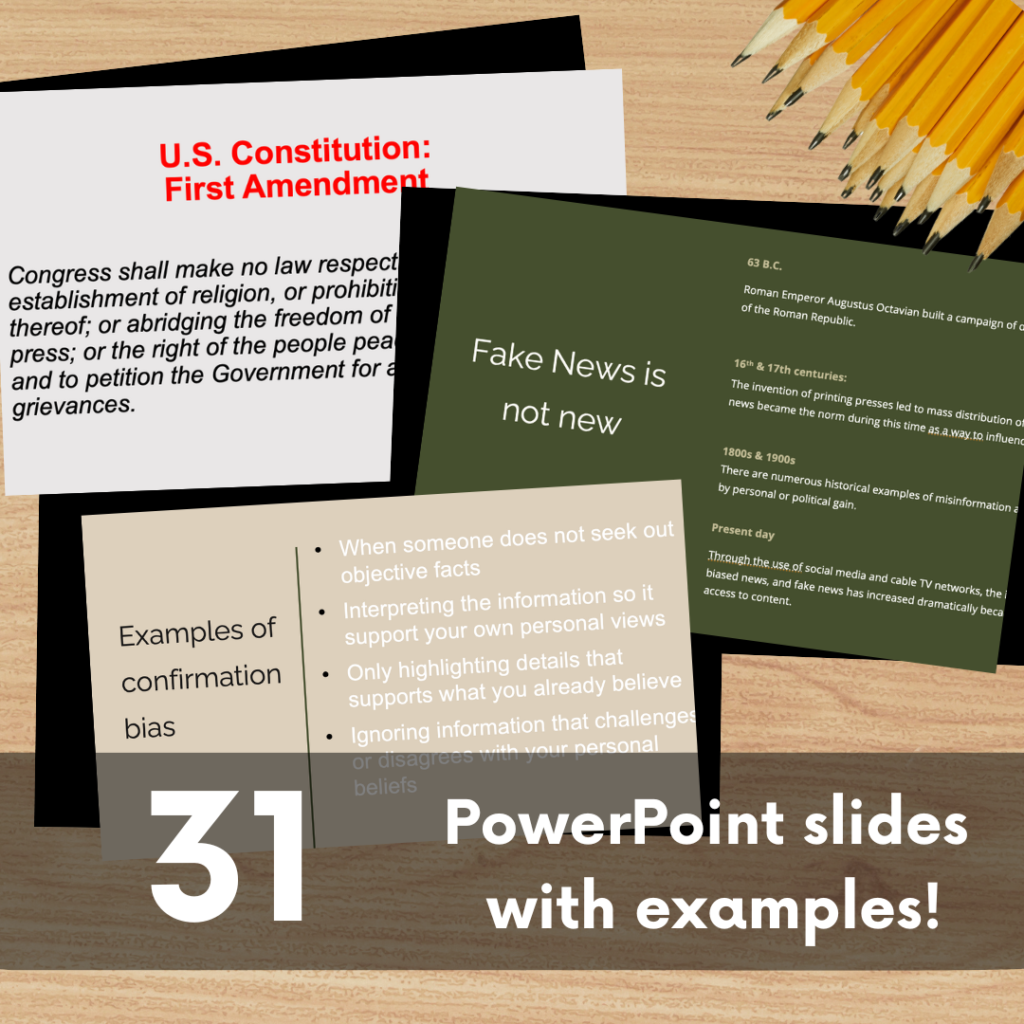
I always begin with the First Amendment, but not as a lecture. Instead of listing the five freedoms and moving on, we slow down and talk about what those freedoms look like in a school setting. Students are often surprised to learn that the press is explicitly named alongside speech, religion, assembly, and petition. That realization alone sparks questions.
At this point, I ask students to think about where they already see the First Amendment at work in their lives. School announcements. Student protests. Editorials. Social media posts. Once they start making those connections, the amendment feels less like a historical document and more like something that actively shapes their experience at school.
Supreme Court Cases Feel Different When Students See Themselves in Them
Press law truly comes alive when we start talking about Supreme Court cases. Instead of presenting them as abstract rulings, I frame each case as a story involving real students and real consequences.
When we examine Tinker v. Des Moines, students immediately connect with the idea that young people do not lose their rights when they enter a school building. That line stays with them, especially when we talk about what counts as disruption and who gets to decide.
The conversation becomes more complicated when we move into Hazelwood v. Kuhlmeier. This is often the first time students grapple with the idea that school-sponsored publications come with limits. Rather than telling students what to think, I let them wrestle with the tension between administrative control and student voice. Those discussions are thoughtful, sometimes uncomfortable, and always meaningful.
Cases like Bethel v. Fraser help students understand that free speech is not unlimited, especially in school settings. This naturally leads into conversations about responsibility, professionalism, and audience awareness in student media.
Landmark Supreme Court Cases
To give students a real sense of how the First Amendment applies to student journalism, we dive into landmark Supreme Court cases. Here are a few key cases we cover:
Tinker v. Des Moines (1969): We discuss how this case established that students do not “shed their constitutional rights to freedom of speech or expression at the schoolhouse gate.” This case is crucial for understanding student speech rights.
Hazelwood School District v. Kuhlmeier (1988): This case is a bit more complex, as it gives school administrators the authority to censor school-sponsored publications if the content is inconsistent with the educational mission of the school. We explore the implications and discuss what constitutes “legitimate pedagogical concerns.”
Bethel School District No. 403 v. Fraser (1986): This case highlights the limits of free speech in schools, particularly when it comes to lewd or indecent speech. It’s a great springboard for discussions about appropriate content in student publications.
Why Ethics Matter Just as Much as the Law
Understanding legal rights is only half the picture. The most impactful moments in this unit come when students realize that ethical journalism often requires going beyond what the law allows.
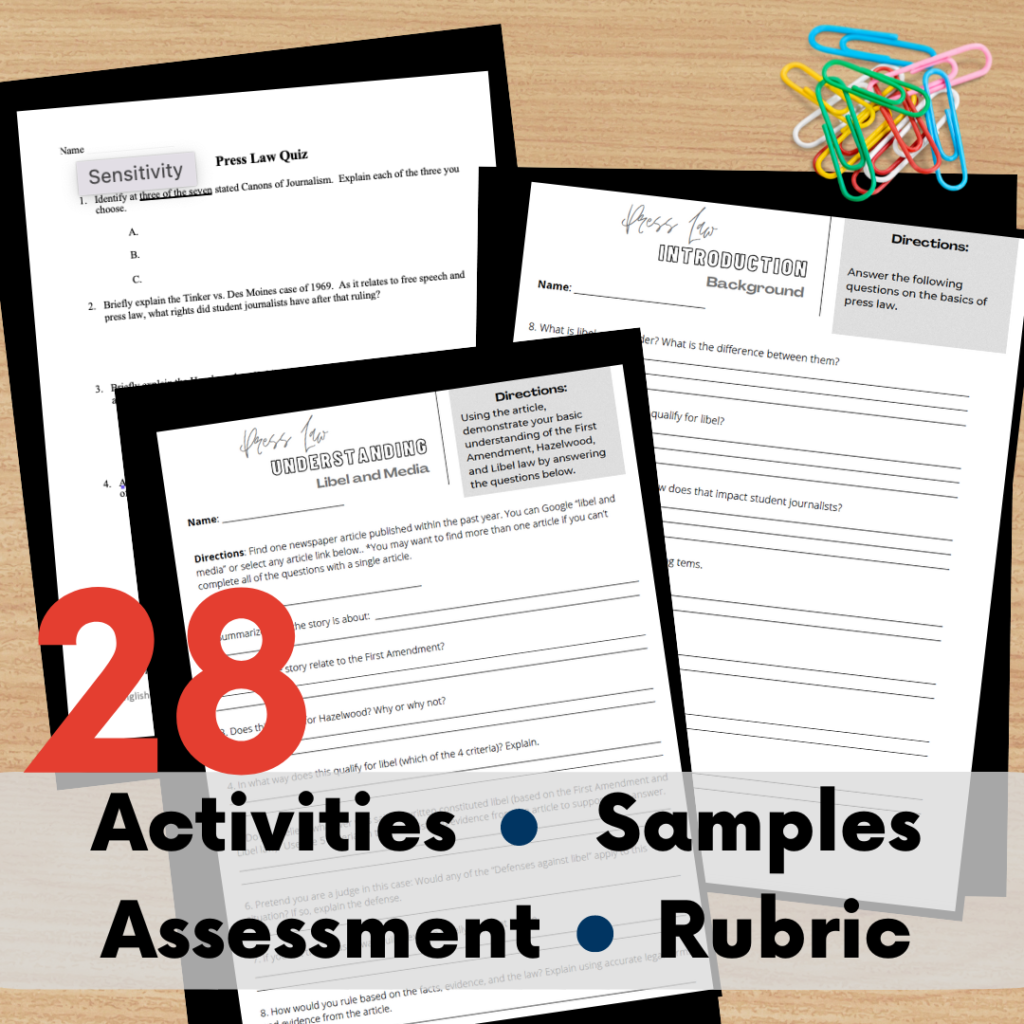
We spend time unpacking libel, and students are often surprised by how easy it is to cross that line unintentionally. This is where fact-checking stops being an abstract expectation and becomes a real responsibility. When students understand the potential harm of publishing inaccurate information, their approach to reporting becomes noticeably more careful.
Discussions around confirmation bias and misinformation resonate deeply, especially when students recognize how easily biased narratives spread online. Analyzing sample articles together helps students see how subtle word choices and framing can influence readers without them even realizing it.
Conversations about public figures versus private citizens also stick. Students begin to understand why context matters and why ethical reporting often requires restraint, even when a story feels tempting to publish.
Understanding the law is just one part of the puzzle. Ethical journalism is equally important. We delve into several key ethical issues:
Libel: We discuss what constitutes libel and the importance of verifying facts before publication. Students learn about the potential legal consequences of publishing false information that harms someone’s reputation.
Confirmation Bias and Fake News: These topics are particularly relevant today. We explore how personal biases can affect reporting and the importance of seeking out reliable sources. I often include exercises where students identify bias in sample articles.
Public Figures vs. Private Citizens: This distinction is crucial in journalism. We discuss the different standards for reporting on public figures versus private citizens and why it matters.
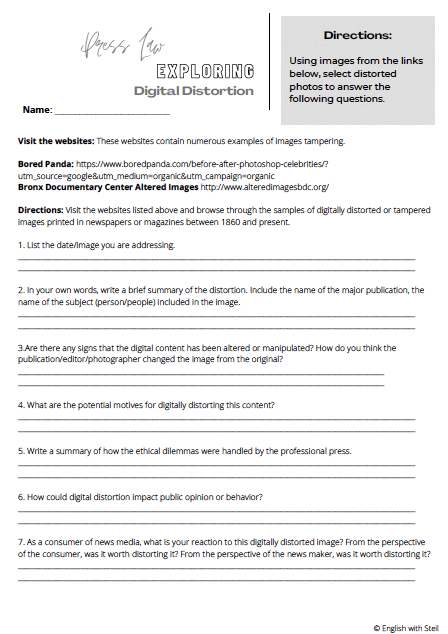
Image Tampering: With the prevalence of digital media, we talk about the ethics of photo manipulation and the importance of authenticity in visual journalism.
Copyright: We cover the basics of copyright law, helping students understand the importance of respecting intellectual property and the proper way to use images, music, and other media in their work.
Bringing Press Law to Life in the Classroom
What makes press law memorable is not the content alone, but how students engage with it. Mock trials have consistently been one of the most effective activities I use. When students step into the roles of lawyers, judges, and journalists, they are forced to apply legal principles instead of just recalling them.
Ethical dilemma discussions are equally powerful. Presenting students with realistic scenarios forces them to consider not just what they can publish, but what they should publish. These conversations often spill into newsroom culture, shaping how students talk about responsibility and trust throughout the year.
Guest speakers, when available, add another layer of authenticity. Hearing from professional journalists or legal experts reinforces that these issues extend far beyond the classroom.
What Students Walk Away With
By the end of a press law unit, students are not just more knowledgeable. They are more confident. They understand their rights, but they also understand the responsibility that comes with them. They begin to see journalism as a civic duty rather than just a class assignment.
Most importantly, they recognize that ethical decision-making is not optional in journalism. It is foundational.
Bringing It All Together
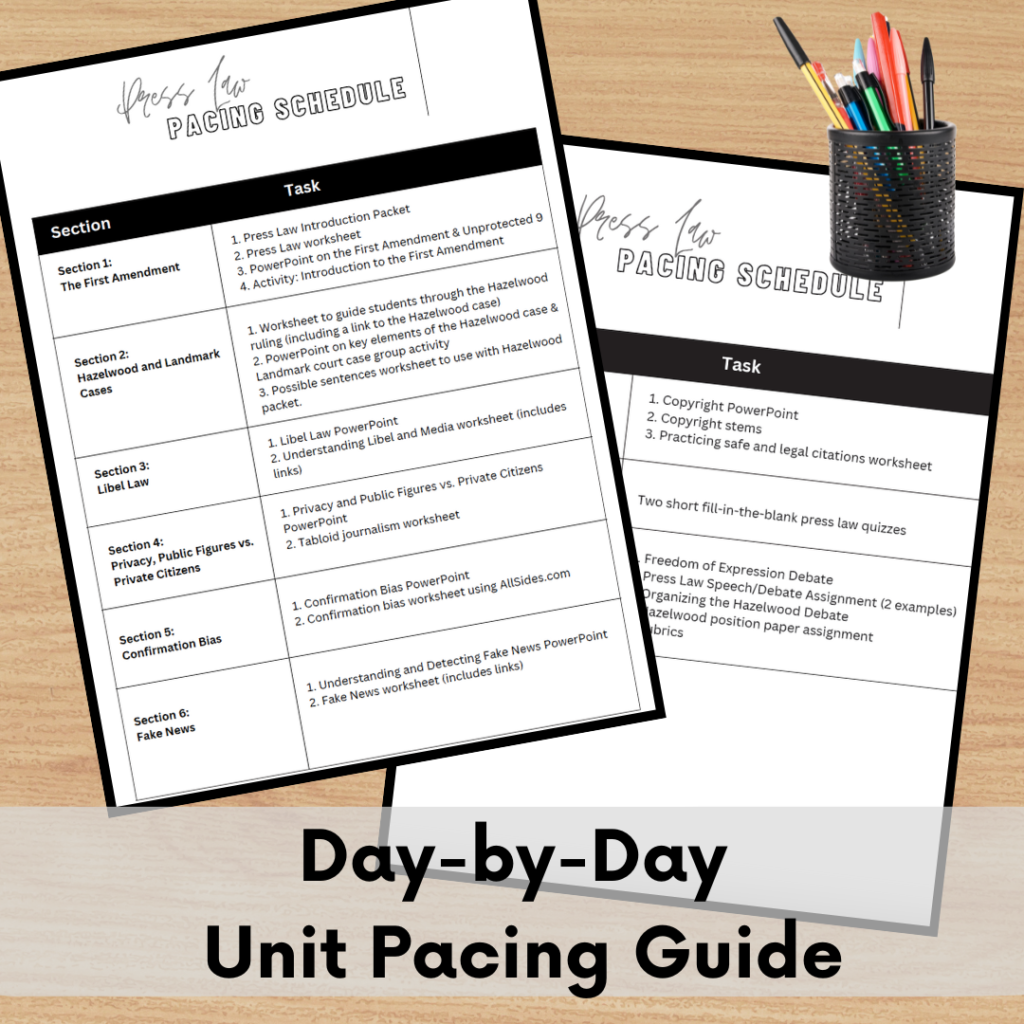
To make these lessons engaging, I use a mix of activities, discussions, and real-world examples. Here are a few ideas:
Mock Trials: We stage mock trials based on landmark cases. Students take on roles of lawyers, judges, and plaintiffs/defendants, which helps them understand the legal principles in a memorable way.
Ethical Dilemmas: Present students with hypothetical scenarios involving ethical issues. For example, what should they do if they find out a popular student was involved in a minor crime? These discussions foster critical thinking and ethical decision-making.
Guest Speakers: Invite local journalists or legal experts to speak about their experiences. Hearing from professionals in the field can make the concepts we discuss more tangible and relevant.
Final Thoughts
Teaching student press law might seem daunting at first, but it’s incredibly rewarding. It equips students with the knowledge they need to navigate their rights and responsibilities as young journalists. By understanding the First Amendment, landmark Supreme Court cases, and ethical considerations, they become more confident and capable reporters.
If you haven’t incorporated a unit on student press law into your journalism class, I highly recommend giving it a try. Your students will benefit immensely from understanding the legal and ethical landscape of journalism, and they’ll be better prepared to produce responsible, impactful content.
Happy teaching and happy reporting!
Check Out These Resources from Fellow Journalism & ELA Teacher Authors
If you’re teaching press law, student rights, or journalism ethics, these teacher-created resources pair beautifully with lessons on the First Amendment, Supreme Court cases, and responsible reporting.
Teaching Journalism
Student Press Law Basics Every Adviser Should Teach
A clear, classroom-friendly breakdown of student press rights, censorship, and why press law matters for advisers and students alike.
Student Press Law Center
Know Your Rights: A Student Journalist’s Guide
An essential resource for teaching Tinker, Hazelwood, and student free expression. Great for reference, case studies, and real-world connections.
Secondary Sara
Teaching Media Bias Without Shutting Down Conversation
A strong companion piece for discussions around confirmation bias, misinformation, and ethical decision-making in student media.