October can be a weird month in the classroom.
Students are buzzing with Halloween energy, attention spans are shorter than usual, and it can feel harder than ever to keep learning meaningful without sucking the fun out of the room. Over the years, I’ve learned that fighting the season rarely works—but leaning into it absolutely can.
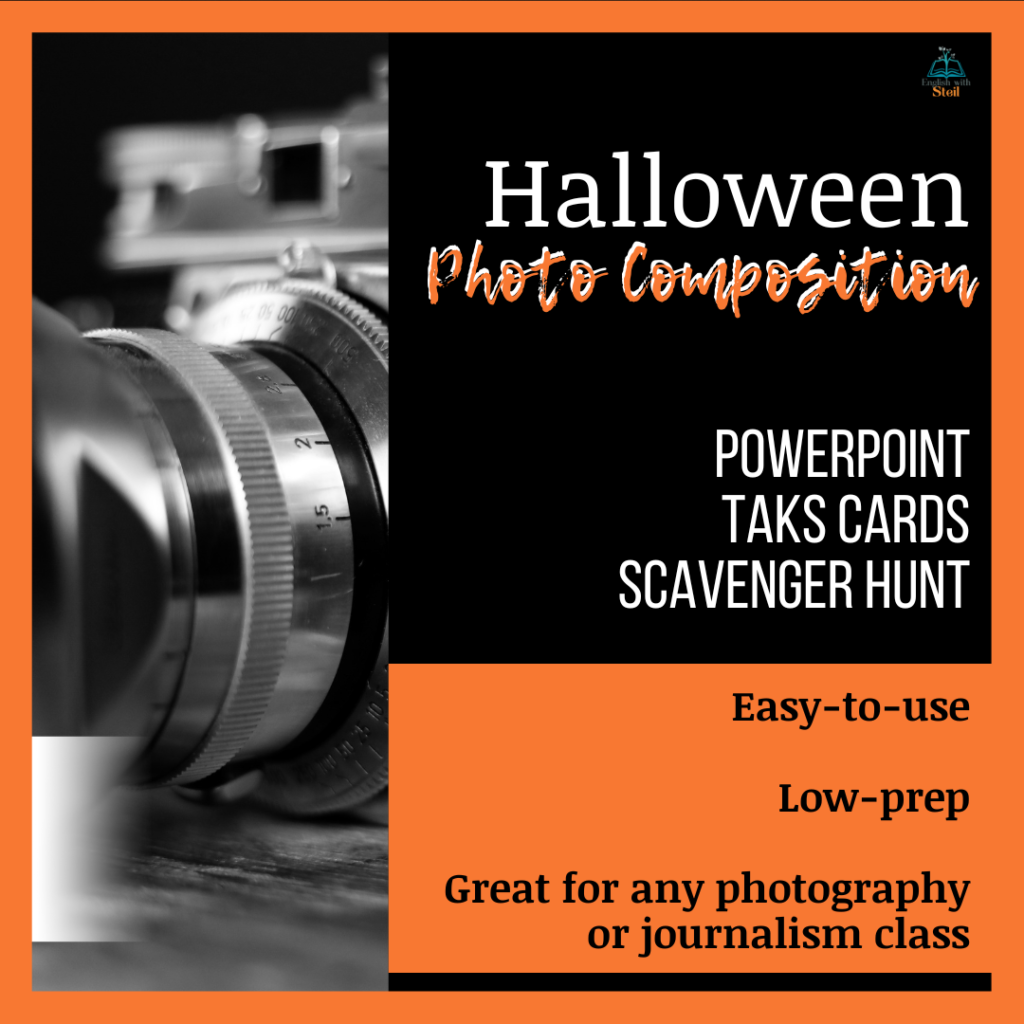
That’s how this Halloween-themed photo composition unit was born.
What started as a simple way to keep students engaged turned into one of my favorite visual storytelling lessons of the year. Not only were students excited, but they were also thinking carefully about composition, intention, and how images communicate meaning—all skills that transfer beautifully to journalism, yearbook, ELA, and media classes.
Why Teach Photo Composition This Way?
Photo composition is one of those skills students think they already understand. They take pictures constantly, after all. But when you ask them to explain why a photo works—or why it doesn’t—you quickly see the gaps.
This unit slows students down and gives them a reason to be intentional. By pairing composition techniques with a seasonal theme, students stop snapping random photos and start making choices. And when learning feels playful, students are much more willing to experiment.
Starting with Task Cards (Because Structure Matters)
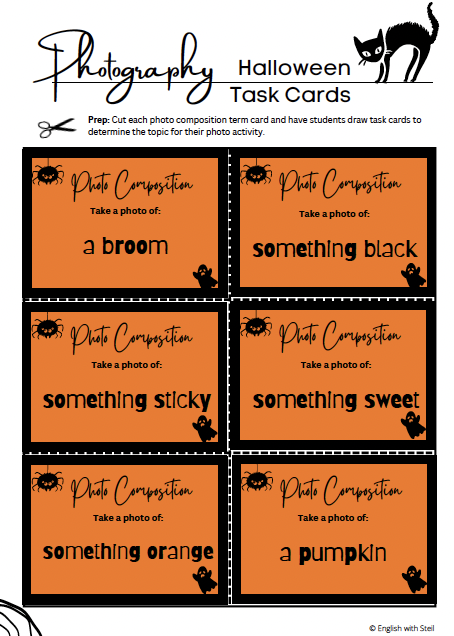
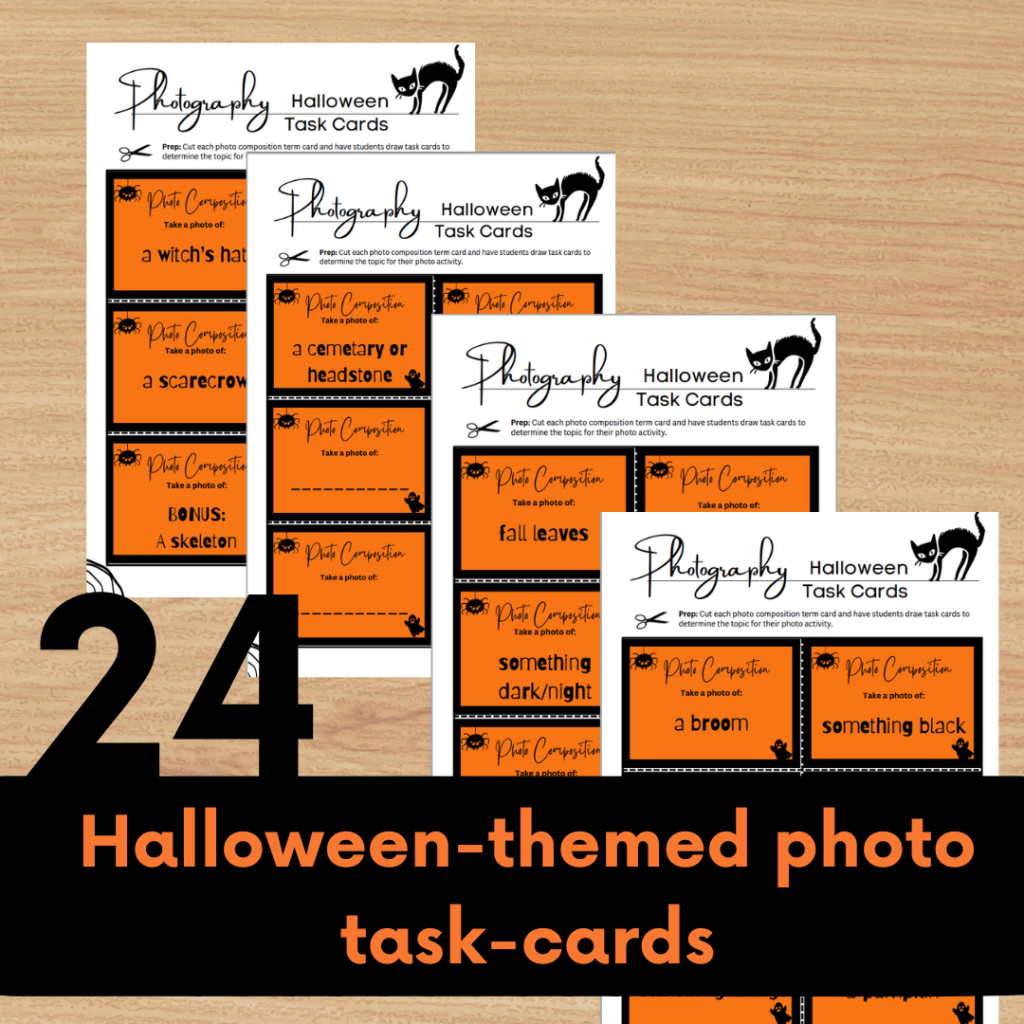
I kicked off the unit with Halloween-themed task cards focused on specific photo composition techniques. Each card gave students a clear goal and a creative challenge—enough structure to guide them, but enough freedom to let their ideas shine.
Some of the student favorites included:
Rule of Thirds: Photograph a spooky scene without placing the subject in the center. This was harder than students expected—and led to great discussions about balance.
Leading Lines: Use hallways, fences, or rows of pumpkins to guide the viewer’s eye.
Framing:: Capture a subject through branches, doorways, or windows to create focus.
Light and Shadow: Photograph shadows cast by decorations or natural light to create mood.
The task cards helped students focus on one technique at a time, which kept them from feeling overwhelmed. It also made assessment much clearer; I could quickly see whether students understood each concept.
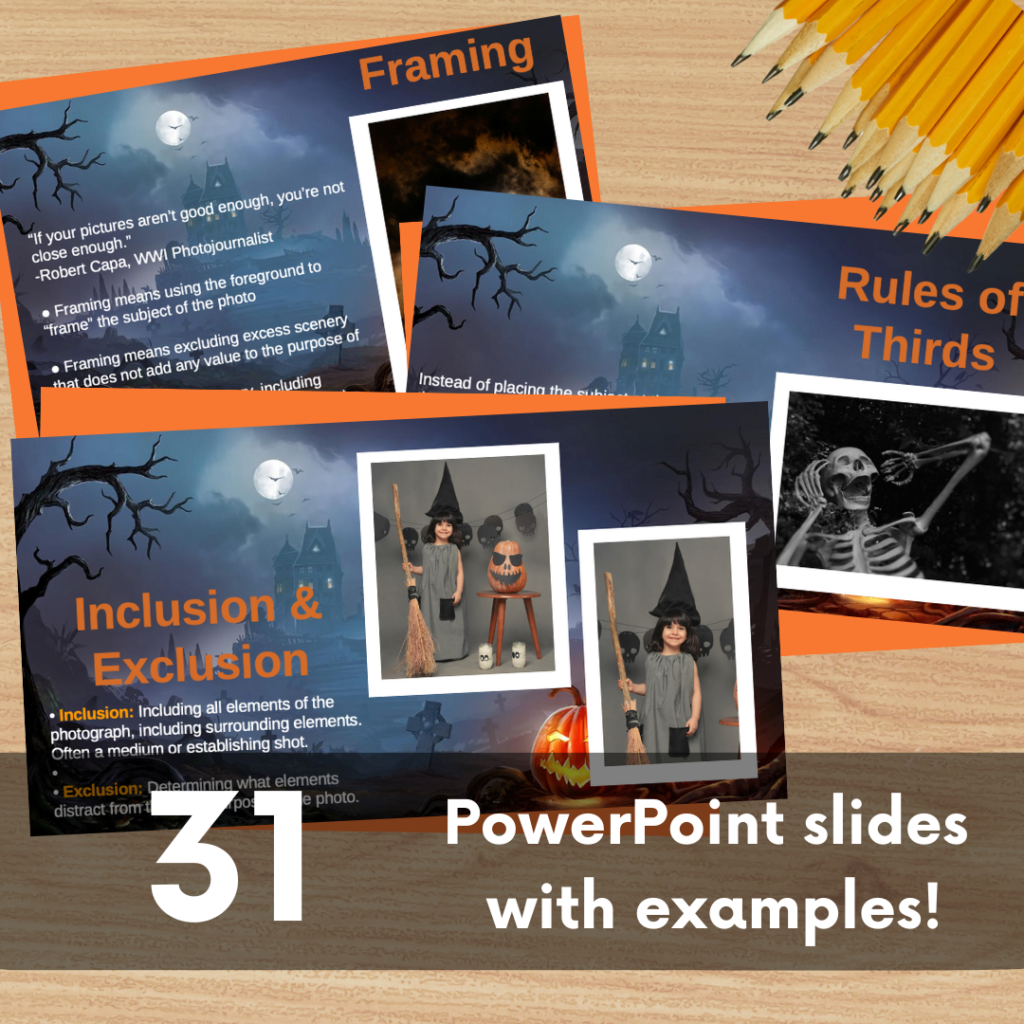
Presentation on Composition Techniques
Before diving into the photo-taking fun, I kicked off the unit with a presentation on composition techniques. I used plenty of visuals to keep things interesting. We covered the basics like the rule of thirds, leading lines, framing, symmetry, and patterns.
I made sure to include lots of Halloween-themed examples. For instance, a picture of a pumpkin patch to explain patterns or a shot of a dark, winding path for leading lines. The spooky visuals kept the students engaged and excited about applying these techniques to their own photos.
Frontloading with Visual Examples (Before the Chaos Begins)
Before students ever touched a camera, we spent time looking at examples.
I used a short presentation filled with Halloween-themed images to introduce:
Rule of thirds
Leading lines
Framing
Symmetry and patterns
Texture
Light and shadow
We analyzed what worked, what didn’t, and why. Students pointed out details they’d never noticed before. Using seasonal images kept the mood light, but the conversations were serious and thoughtful.
This step mattered. Once students understood what to look for, they were much more intentional during the hands-on portion.
The Scavenger Hunt: Controlled Chaos (in the Best Way)
Then came the scavenger hunt—the part students still talk about.
Armed with their task cards and composition goals, students moved through the school (and outside when weather allowed) hunting for specific shots. The list included things like:
A spider web emphasizing texture
A close-up that highlights detail
A long hallway using leading lines
Shadows that create mood
A symmetrical group photo
Yes, the energy was high. But it was purposeful energy.
Students debated angles. They retook photos. They asked each other for feedback. And without realizing it, they were applying vocabulary like composition, balance, and focus naturally.
Scavenger Hunt for the Perfect Shot
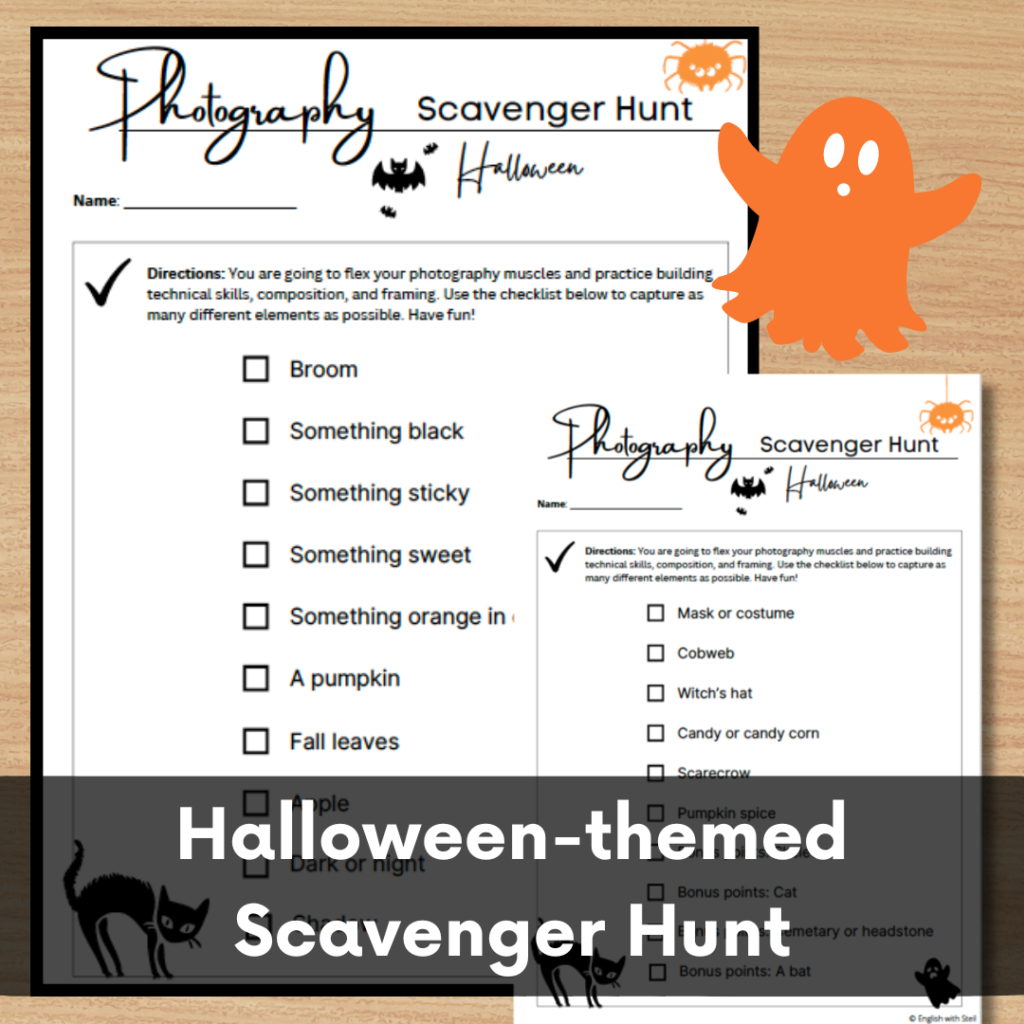
Now, here’s where the real fun began – the scavenger hunt! I organized a Halloween photo scavenger hunt around the school and even ventured outside if weather permitted. Each student or group received a list of items or scenes to capture, incorporating the composition techniques we discussed. Here’s a snippet of what was on our list:
- A spider web (emphasizing texture)
- A close-up of a jack-o’-lantern’s face (focus on details)
- A long hallway decorated with Halloween decorations (using leading lines)
- Shadows cast by eerie decorations (playing with light and shadow)
- A group photo with everyone in costume (practicing symmetry and balance)
This scavenger hunt was a blast. The kids were running around, excitedly looking for the perfect shot, and it was wonderful to see them applying what they had learned in a fun, practical way. Plus, it was a great way to get them moving and exploring different environments.
Reflection Turns Fun into Learning
After the scavenger hunt, we slowed things back down.
Students selected their strongest photos and explained:
Which composition technique they used
Why they chose that angle or subject
What they might change next time
This reflection piece is where the learning really stuck. Students began to articulate why certain images worked—and that language carries over beautifully into writing, design, and media analysis.
I also created a mini classroom gallery with printed photos. Seeing their work displayed gave students a sense of pride and ownership, and it turned our room into a visual celebration of learning.
Why This Unit Works Across Subjects
What I love most about this unit is how flexible it is. I’ve used it with:
Journalism students learning visual storytelling
Yearbook staffs practicing photo selection
ELA classes analyzing mood and symbolism
Media classes building foundational photography skills
It scales easily for different grade levels and works whether students are using phones, cameras, or tablets.
Final Thoughts
This Halloween-themed photo composition unit hits the sweet spot between fun and substance. Students stay engaged, learning feels authentic, and the skills transfer far beyond October.
If you’re looking for a seasonal lesson that still respects instructional time and pushes students to think critically, this one is worth trying. Sometimes, leaning into the moment is exactly what learning needs.
Happy snapping and happy Halloween 🎃📸
Check Out These Photography & Visual Storytelling Resources from Fellow Teacher Authors
If you’re teaching photo composition, visual storytelling, or media literacy, these teacher-created resources pair beautifully with a hands-on unit like Spooky Snapshots.
Photography & Visual Composition
The Daring English Teacher
Teaching Visual Analysis Through Photography
A great resource for helping students slow down and analyze how images create mood, meaning, and message—perfect for reflection after a photo scavenger hunt.
Teaching Journalism
Photojournalism Basics for Student Media
Clear, classroom-ready guidance on composition, storytelling, and ethical photo use that works well for journalism and yearbook classes.
Visual Storytelling & Media Literacy
Erintegration
Using Photography to Build Creativity and Visual Literacy
Ideas for using photography as a creative thinking tool, especially helpful for students who struggle with traditional writing but thrive visually.