Let’s be honest for a second.
When I tell students we’re starting a poetry unit, the reactions are predictable. A few kids light up. A few brace themselves. And at least one student asks, “Do we have to?”
If you teach secondary English, you know exactly the look.
For a long time, poetry felt like one of the hardest things to teach well—especially with reluctant learners. Not because poetry isn’t powerful, but because students often come in with baggage. They expect it to be confusing, overly emotional, or full of “hidden meanings” they’re afraid they’ll miss.
What finally changed things in my classroom wasn’t lowering expectations—it was changing how we entered poetry.
Start with Curiosity, Not Analysis
One of the biggest shifts I made was resisting the urge to begin with close reading and annotations. Instead, I start with high-interest, low-pressure activities that invite students in before asking them to analyze.
Things like:
Blackout poetry using articles or song lyrics
Writing poems about ordinary objects
Short mentor poems students can respond to creatively
These activities send an important message early on: Poetry isn’t a puzzle you have to solve. It’s something you can interact with.
Once students realize poetry can be playful, personal, or even funny, they’re much more willing to dig deeper.
Choosing Poets Students Can Connect With
Another thing that made a big difference was being intentional about which poets I introduced first. Accessibility matters—especially early in a unit.
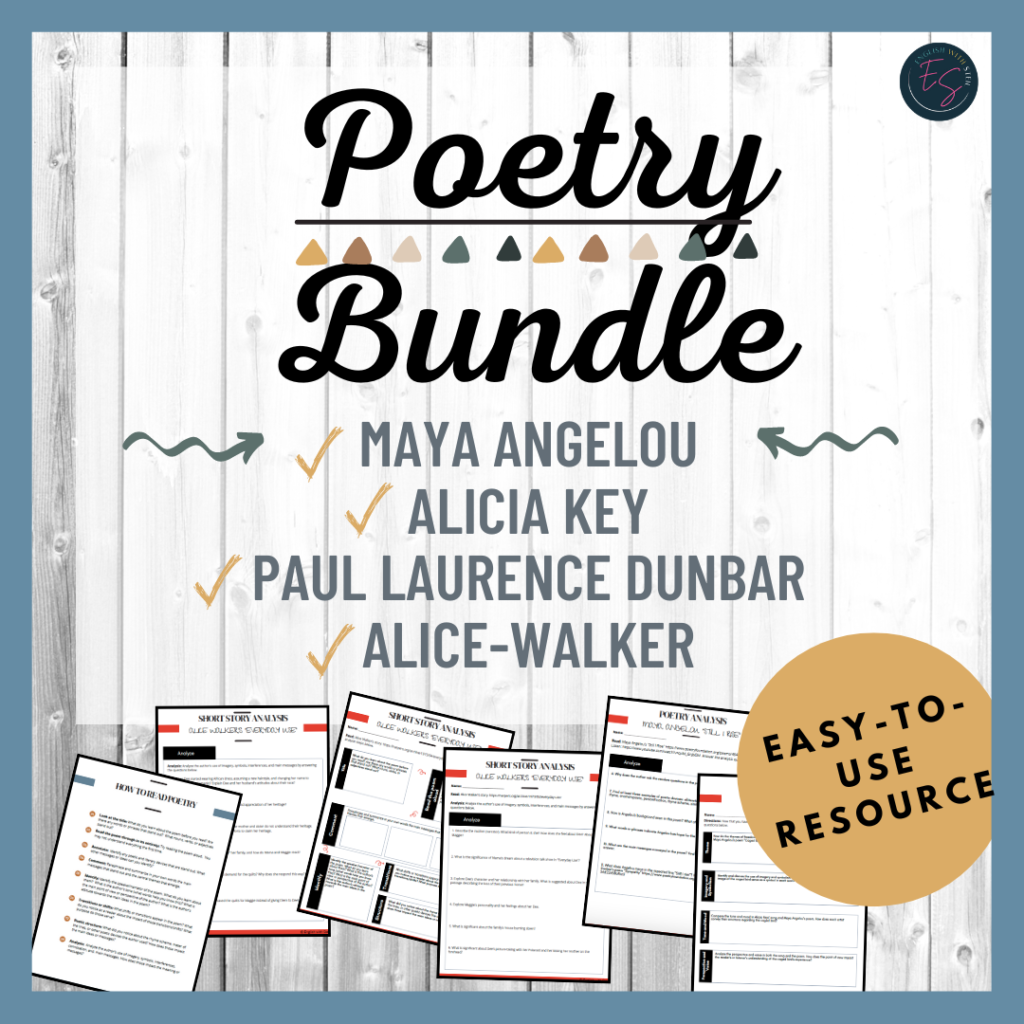
Three poets I consistently return to are Maya Angelou, Alice Walker, and Paul Laurence Dunbar. Their work is rich, layered, and meaningful, but also deeply human. Students recognize the emotions, struggles, and questions in their writing.
Instead of overwhelming students with biographical lectures, I introduce each poet briefly and then let the poems do the heavy lifting.
Three poets I find accessible for students are Maya Angelou, Alice Walker, and Paul Laurence Dunbar. These poets offer rich, diverse perspectives that can deeply engage our students.
Maya Angelou
Background: Maya Angelou was an American poet, memoirist, and civil rights activist. Born in 1928, she gained international acclaim with her autobiography, I Know Why the Caged Bird Sings. Her poetry often explores themes of identity, family, and racism, and she is known for her powerful and inspirational voice.
Analyzing Poems:
- Theme Identification: Have students identify and discuss themes in Angelou’s poems such as resilience, freedom, and social justice. For instance, “Still I Rise” is a great poem to explore themes of empowerment and defiance.
- Voice and Tone: Discuss how Angelou’s voice and tone convey strength and determination. Ask students to compare her tone in different poems.
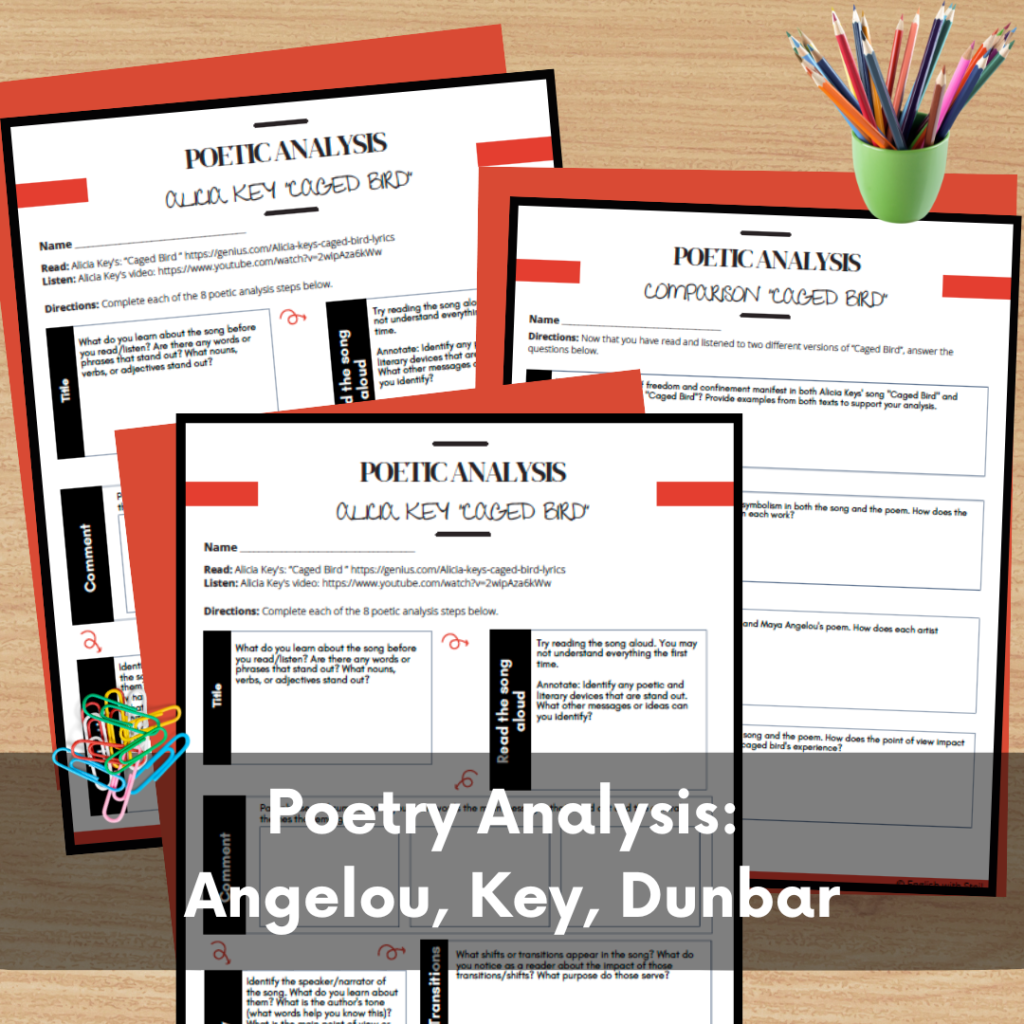
- Imagery and Symbolism: Analyze how Angelou uses imagery and symbolism to convey deeper meanings. For example, the metaphor of a bird in “Caged Bird” symbolizes the struggle for freedom.
Alice Walker
Background: Alice Walker is an American novelist, short story writer, poet, and social activist. She was born in 1944 and is best known for her Pulitzer Prize-winning novel, The Color Purple. Her poetry often addresses themes of race, gender, and social justice.
Analyzing Poems:
- Cultural Context: Discuss the historical and cultural context of Walker’s work. How do her experiences and background influence her poetry?
- Narrative Style: Walker often tells stories through her poems. Analyze how she uses narrative techniques to engage the reader. Poems like “Expect Nothing” offer rich material for this.
- Emotional Impact: Explore the emotional impact of Walker’s poetry. Ask students to reflect on their own responses and what emotions the poems evoke.
Paul Laurence Dunbar
Background: Paul Laurence Dunbar was an American poet, novelist, and playwright of the late 19th and early 20th centuries. Born in 1872, he was one of the first African-American poets to gain national recognition. His work often reflects the experiences of African-Americans in the post-Civil War United States.
Analyzing Poems:
- Dialect and Language: Discuss Dunbar’s use of dialect in his poetry. How does it contribute to the authenticity and impact of his work? Poems like “We Wear the Mask” provide a good starting point.
- Historical Perspective: Explore the historical context of Dunbar’s poetry. How do his poems reflect the social and racial issues of his time?
- Symbolism and Themes: Analyze the symbolism and themes in Dunbar’s poems. For example, “Sympathy” uses the metaphor of a caged bird to explore themes of oppression and longing for freedom.
Teaching Maya Angelou: Voice and Strength
When we read Maya Angelou, we focus heavily on voice and tone.
Poems like “Still I Rise” invite students to talk about confidence, resistance, and resilience—topics they already understand, even if they don’t yet have academic language for them.
I’ll often ask:
What kind of speaker do you hear in this poem?
Where do you feel confidence? Defiance?
How does repetition shape the message?
Students are often surprised by how quickly they have something to say.
Teaching Alice Walker: Emotion and Perspective
Alice Walker’s poetry opens the door to conversations about emotion, perspective, and storytelling.
Her poems feel intimate, which helps students realize poetry doesn’t have to sound formal to be meaningful. We talk about:
How personal experience shapes a poem
What emotions are being explored
Why simple language can still carry deep meaning
I also like pairing Walker’s poems with reflective writing so students can explore their own responses without worrying about being “right.”
Teaching Paul Laurence Dunbar: Language and Masking
Paul Laurence Dunbar’s work is especially powerful for discussing voice, code-switching, and symbolism.
With poems like “We Wear the Mask,” students immediately connect to the idea of hiding parts of yourself to survive or fit in. That recognition leads naturally into discussions of:
Dialect and language choices
Historical context
Metaphor and symbolism
Students often say, “This doesn’t feel old,” which is exactly the point.
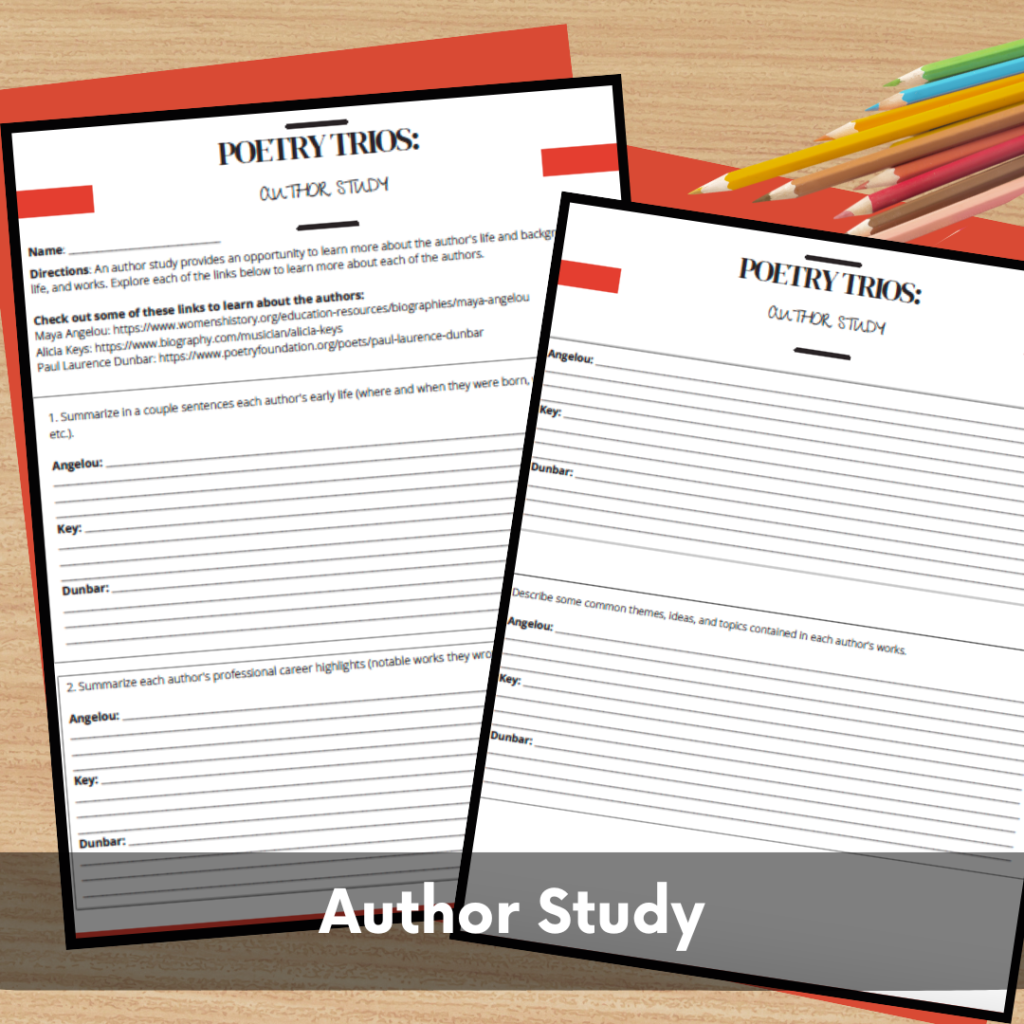
Ideas for Analyzing Poems
Close Reading:
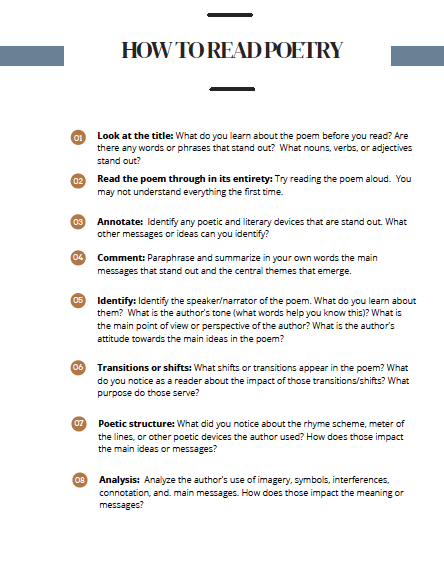
- Have students do a close reading of a selected poem. Encourage them to annotate the text, noting any literary devices, interesting word choices, and their initial reactions.
Group Discussions:
- Facilitate group discussions where students can share their interpretations and insights. This can help them see different perspectives and deepen their understanding.
Creative Responses:
- Ask students to write their own poems in response to a poem by Angelou, Walker, or Dunbar. This can help them connect personally with the material.
Comparative Analysis:
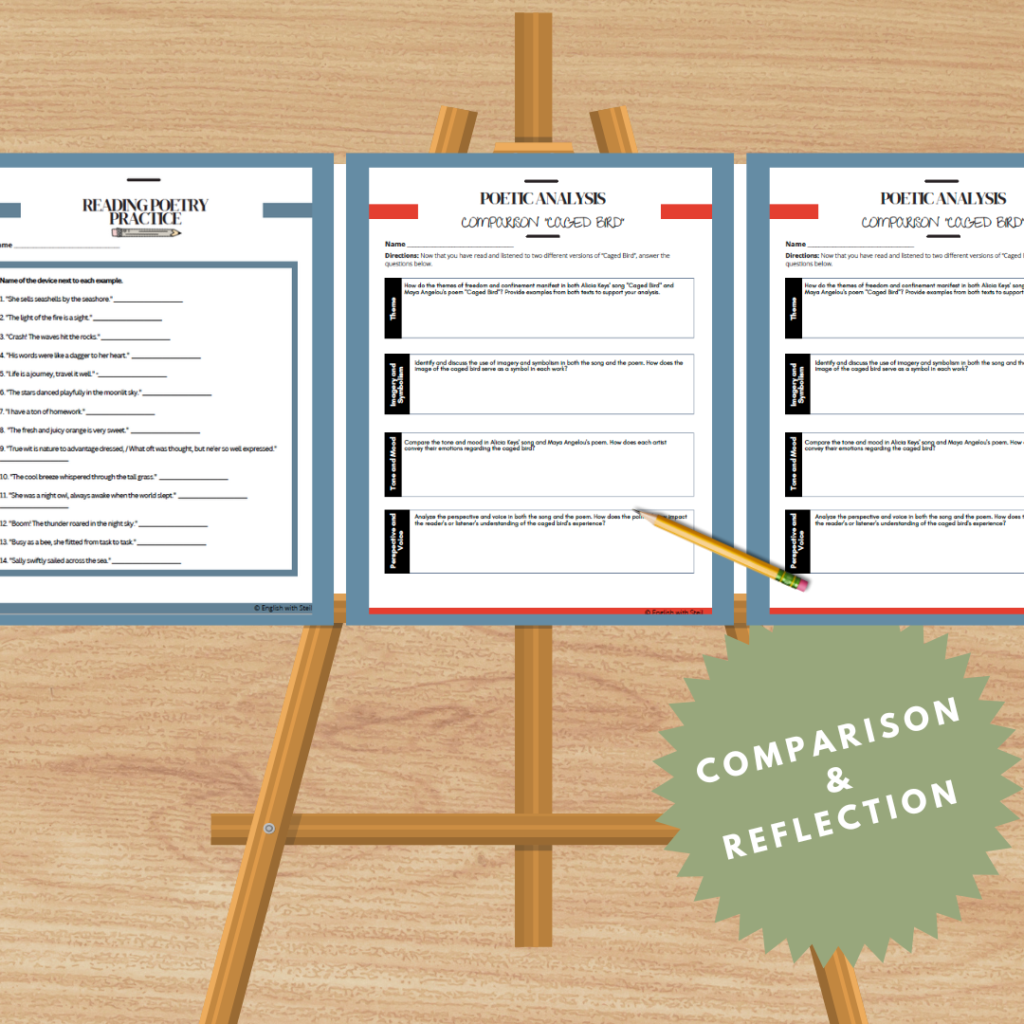
- Have students compare and contrast poems by the three poets. What common themes do they find? How do the poets’ styles and approaches differ?
Historical Context Research:
- Assign students to research the historical context of each poet’s work. How does understanding the time period help them appreciate the poems more deeply?
Multimedia Projects:
- Encourage students to create multimedia projects that explore a poem’s themes, imagery, and impact. This could include videos, presentations, or digital art.
Poetry Readings:
- Organize a poetry reading session where students read aloud poems by Angelou, Walker, and Dunbar. Discuss how hearing the poems can alter their perception and understanding.
Moving into Analysis Without Losing Students
Once students are engaged, that’s when we lean into analysis—but carefully.
Some strategies that work well:
Close reading in short chunks, not full poems at once
Small group discussions before whole-class conversations
Sentence starters that help students explain their thinking
Creative responses, like writing a poem back to the author
Comparing poems across poets also helps students see shared themes—identity, freedom, voice—without feeling overwhelmed.
Why Poetry Starts to Click
When poetry instruction works, it’s usually because students feel safe enough to try.
They stop worrying about having the “perfect” interpretation and start focusing on:
What the poem is saying
How it’s saying it
Why it matters
That’s when reluctant learners start surprising themselves.
Final Thoughts
Poetry doesn’t have to be intimidating or boring. When students are given space to explore, respond, and connect before being asked to analyze, their confidence grows, and so does their understanding.
If poetry has felt like a struggle in your classroom, try starting smaller. Lead with curiosity. Let students experience poetry before you ask them to explain it.
You might be surprised by how quickly resistance turns into real engagement.
Check out these resources from my fellow teacher authors
How to Teach Poetry When You’re Short on Time by Secondary Sara
A practical, teacher-tested look at fitting meaningful poetry instruction into real-world class schedules.National Poetry Month: A Whole Month of Poetry Activities for Secondary ELA by Bespoke ELA
A thoughtfully curated collection of poetry activities that balance engagement, rigor, and flexibility.The Cutest Literary Analysis by Laura Randazzo
A great reminder that short texts—including poems—can be powerful tools for building analysis skills without overwhelming students.Using Art to Teach Literary Analysis by Secondary Sara
A smart crossover approach for engaging reluctant learners through visuals, mood, and symbolism.Poetry Activities That Don’t Feel Like “Poetry Unit” Work by Bespoke ELA
Perfect for teachers looking to sneak poetry into the curriculum in ways students don’t immediately resist.