Every year, I remind myself that college essays are often the first time students are asked to write about themselveswithout a clear structure or right answer.
That lack of structure can feel freeing for some students and completely overwhelming for others. Without guidance, many default to sounding formal, distant, or overly accomplished.
My goal in teaching college essays is not to help students impress an admissions office. It is to help them write something honest, thoughtful, and grounded in who they are right now.
As the college application season kicks into high gear, one component stands out as particularly crucial: the college essay. While grades, test scores, and extracurricular activities are essential, the college essay offers a unique opportunity to showcase your individuality, creativity, and passion. It’s your chance to speak directly to admissions officers and make a lasting impression. Here’s why writing a strong college essay is so important and some tips to help you craft a standout piece.
Why the College Essay Matters
Personal Insight: The college essay provides a glimpse into who you are beyond your academic achievements. It’s a chance to share your personality, values, and experiences that have shaped you.
Differentiation: In a sea of applications, a well-written essay can set you apart. It’s your opportunity to stand out from other applicants with similar grades and test scores.
Demonstration of Skills: Your essay showcases your writing skills, which are crucial for success in college. It demonstrates your ability to organize thoughts, express ideas clearly, and engage readers.
Connection with Admissions Officers: A compelling essay helps admissions officers see you as a person, not just a list of achievements. It can create a connection and leave a lasting impression.
Why College Essays Feel So Hard for Students
College essays ask students to do something they are not often asked to do in school.
They have to reflect.
They have to choose what matters.
They have to explain why something shaped them.
There is no formula, no single right answer, and no clear rubric. That uncertainty can be paralyzing, especially for students who are used to clear expectations.
When students understand that the essay is not about impressing colleges but about communicating clearly and honestly, everything shifts.
How I Frame the College Essay From the Start
Before we ever look at prompts, we talk about purpose.
College essays are not resumes. They are not five-paragraph essays. They are conversations on paper. Admissions officers already know students’ grades and activities. The essay exists to provide context and voice.
Once students understand that, they stop trying to list achievements and start telling stories.
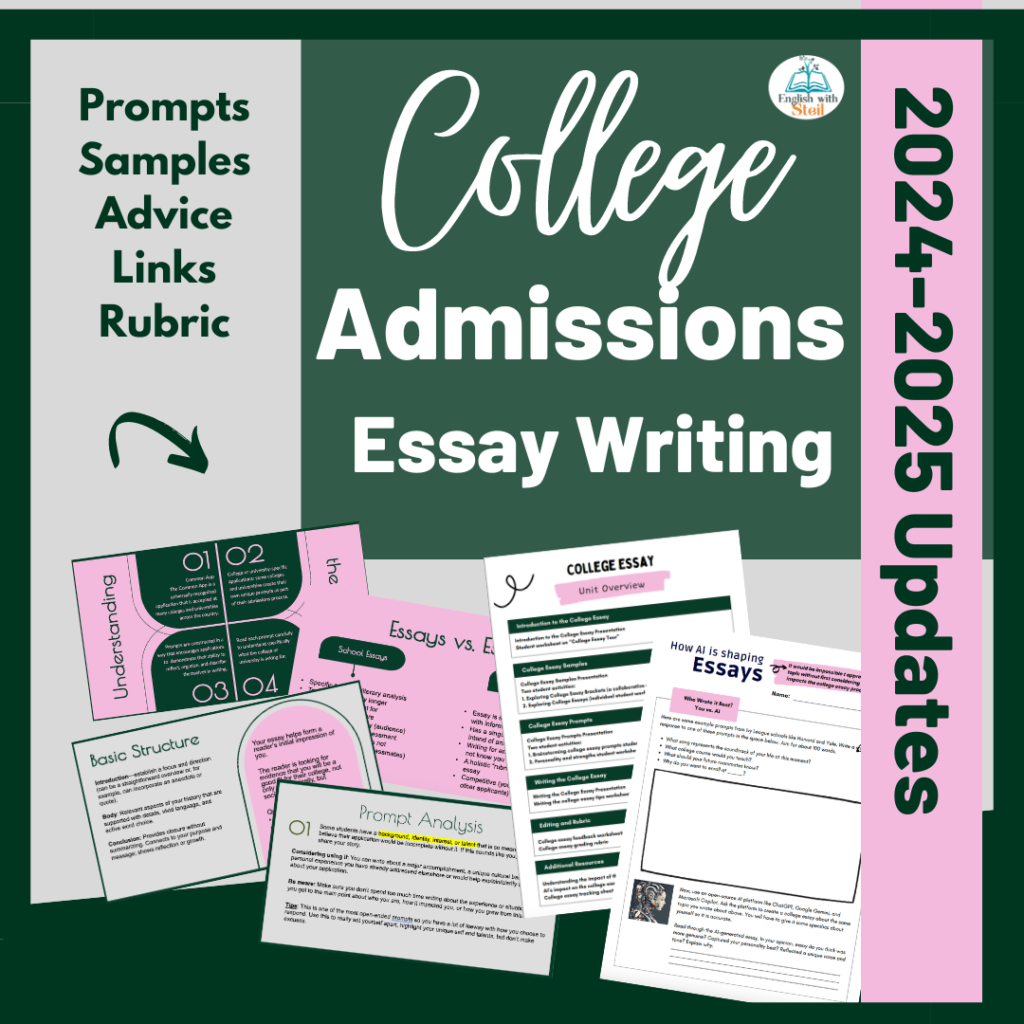
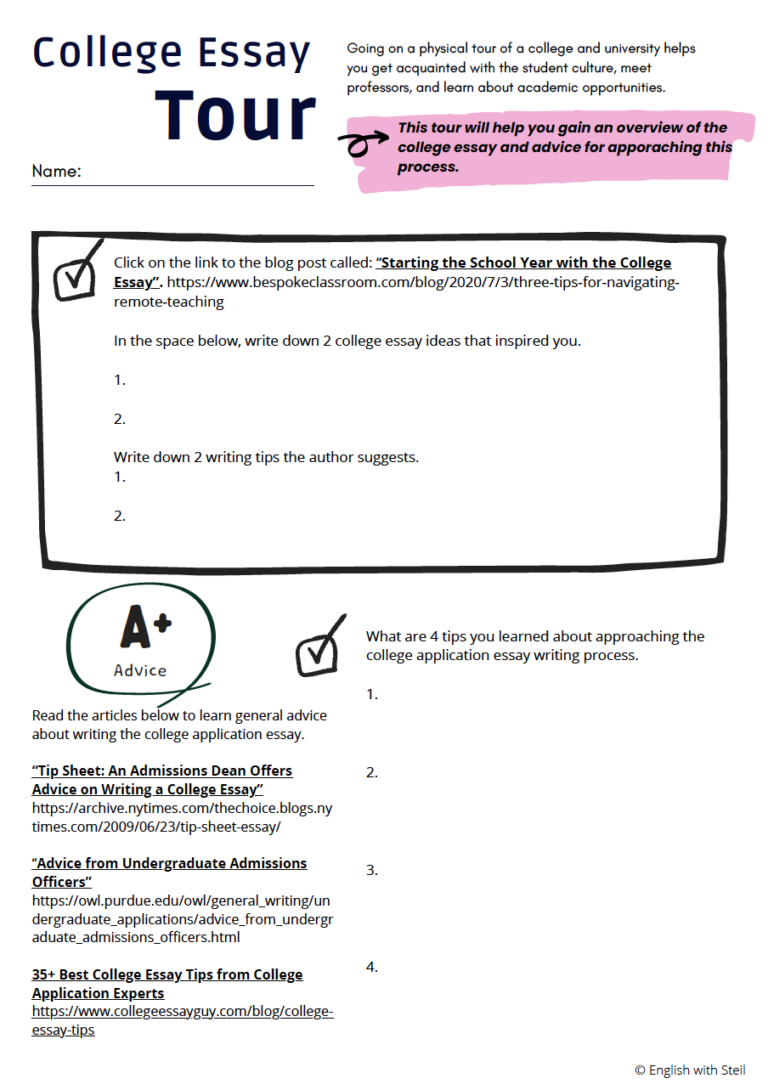
Before students ever start drafting, I like to walk them through real examples and talk about what college essays actually do well. Not as models to copy, but as opportunities to notice voice, structure, and reflection. I use a short “college essay tour” to guide that conversation, and it helps lower anxiety while giving students a clearer sense of what’s possible.
Helping Students Find the Right Story
One of the biggest breakthroughs comes when students realize they do not need the biggest story. They need the right one.
I encourage students to focus on a single moment, experience, or realization. That might be a challenge, a routine, a small decision, or a quiet turning point. Specificity matters more than scale.
When students zoom in, their writing becomes clearer, more vivid, and more authentic.


Tips and Tricks for Writing a Strong College Essay
1. Start Early
One of the best ways to set yourself up for success is to begin working on your essay well before the deadline. Starting early allows you to brainstorm ideas without pressure, explore different directions, and truly reflect on the experiences you want to highlight. It also provides ample time for revisions, ensuring your essay is polished and thoughtfully crafted. By beginning early, you can step away from your draft for a few days and return with fresh eyes, catching errors or areas for improvement that you might have missed initially.
2. Be Authentic
Admissions officers read thousands of essays, and the ones that stand out are often those that feel genuine and personal. Writing about what truly matters to you—whether it’s a passion, a challenge you’ve overcome, or a unique perspective—creates a connection with your reader. Authenticity resonates far more than attempting to impress with exaggerated accomplishments or overly complex language. Be honest about your experiences, and don’t shy away from showing vulnerability or imperfection; these qualities make your story relatable and compelling.
3. Focus on a Specific Story or Experience
Rather than trying to cover your entire life story or a laundry list of achievements, zero in on a single story or moment that had a significant impact on you. A focused narrative allows you to explore details and emotions in depth, making your essay more engaging and memorable. Whether it’s a transformative volunteer experience or a personal challenge, specificity helps paint a vivid picture and showcases how that moment shaped your character and aspirations.
4. Show, Don’t Tell
The key to a captivating essay lies in showing rather than telling. Instead of stating qualities like determination or resilience, illustrate them through detailed examples. For instance, describe the late nights you spent perfecting a project or the creative solution you found to a problem. Vivid, sensory language brings your story to life and allows the reader to experience your journey alongside you. This technique makes your essay more dynamic and impactful.
5. Highlight Growth and Learning
Colleges are not just interested in what you’ve done but in what you’ve learned and how you’ve grown from those experiences. Reflect on key moments and articulate the lessons they taught you. For example, how did a failure push you to develop resilience? How did stepping out of your comfort zone shape your perspective? Highlighting personal growth demonstrates self-awareness and maturity, qualities that admissions officers value.
6. Stay Organized
A well-structured essay is easier to read and more persuasive. Begin with an engaging introduction that hooks your reader and introduces the main theme. The body should provide detailed anecdotes or reflections that support your theme, while the conclusion ties everything together and leaves a lasting impression. Using transitions between paragraphs ensures your essay flows smoothly, creating a cohesive and engaging narrative.
7. Edit and Revise
Great writing rarely happens on the first try. Take the time to revise your essay multiple times, focusing on clarity, tone, and coherence. Seek feedback from trusted teachers, mentors, or peers who can provide constructive criticism. Be open to their suggestions, but ensure the final draft remains true to your voice. Each revision is an opportunity to refine your essay, making it stronger and more impactful.
8. Avoid Common Pitfalls
Certain mistakes can weaken an otherwise strong essay. Avoid clichés like “I learned the value of hard work” or overly dramatic phrases. Steer clear of thesaurus overuse; choose words you’re comfortable with to maintain a natural tone. Ensure that each paragraph adds new insights and doesn’t repeat points. By sidestepping these pitfalls, you can create an essay that feels fresh and authentic.
9. Proofread
Even the most compelling essay can be undermined by spelling and grammar mistakes. Carefully proofread your work to catch typos and errors. Reading your essay aloud can help identify awkward phrasing or missed words. Additionally, have a trusted friend, teacher, or family member review it for errors you might have overlooked. A polished essay reflects your attention to detail and professionalism.
10. Reflect on the Prompts
Make sure your essay directly addresses the prompt you’ve chosen. Take the time to reflect on what the question is asking and ensure your story aligns with it. Avoid veering off-topic or including irrelevant details. Throughout your essay, periodically revisit the prompt to ensure your narrative remains focused and relevant. Admissions officers want to see how you’ve thoughtfully engaged with their question, so make sure your essay delivers on that expectation.
Teaching Students to Show Growth Without Forcing It
Colleges care about growth, but students often feel pressure to manufacture it.
Instead of telling students to “show growth,” we talk about reflection. What did you learn? What changed? What do you understand now that you did not before?
When reflection comes from genuine thinking rather than forced phrasing, it feels natural instead of cliché.
Organization as Support, Not Restriction
Strong college essays still need structure, but that structure should support the story rather than restrict it.
We focus on clear beginnings that pull readers in, middle sections that develop insight through concrete detail, and endings that feel reflective rather than dramatic. Transitions matter because they guide the reader’s thinking.
When students see organization as a tool, not a rule, their confidence grows.
Revision as Discovery
Revision is where the best writing happens.
I remind students that their first draft is not supposed to be perfect. It is supposed to exist. From there, revision becomes a process of refining voice, clarifying meaning, and cutting what does not belong.
Peer feedback and teacher conferences help students hear their own writing more clearly. Often, students already have what they need on the page. They just need help seeing it.
Why This Approach Works
What changes most is how students talk about their writing.
They stop asking, “Is this what colleges want?”
They start asking, “Does this sound like me?”
That shift leads to essays that feel honest, grounded, and memorable. Students walk away knowing they wrote something real, regardless of where they apply.
A Note If You Want to Support This Process
Before students draft, I like to walk them through a guided “essay tour” that breaks down what effective college essays actually do without turning them into templates. It helps students see possibilities without copying examples. If you want a ready-to-use version of that process, I share a short free resource that works well as an introduction.
Final Thoughts
College essays are not about proving worth. They are about sharing perspective.
When students are given permission to write honestly and thoughtfully, they rise to the challenge. They learn how to reflect, communicate, and advocate for themselves in writing.
And those skills matter far beyond the application season.
Happy teaching.
Looking for More Thoughtful Ways to Teach College Essays?
If you are supporting students through college essay writing, these resources from fellow teacher-authors pair well with a voice-first, low-pressure approach. Each one focuses on clarity, reflection, and helping students write honestly.
6 Ways to Help Seniors Write College Essays by Secondary Sara
Practical, student-centered strategies for guiding seniors through brainstorming, drafting, and revision.
Starting the School Year With the College Essay by Bespoke ELA
A thoughtful look at why earlier, lower-pressure work leads to stronger college essays later.
Teaching Personal Narrative Without Clichés by Laura Randazzo
A helpful reminder that authentic voice matters more than dramatic stories.