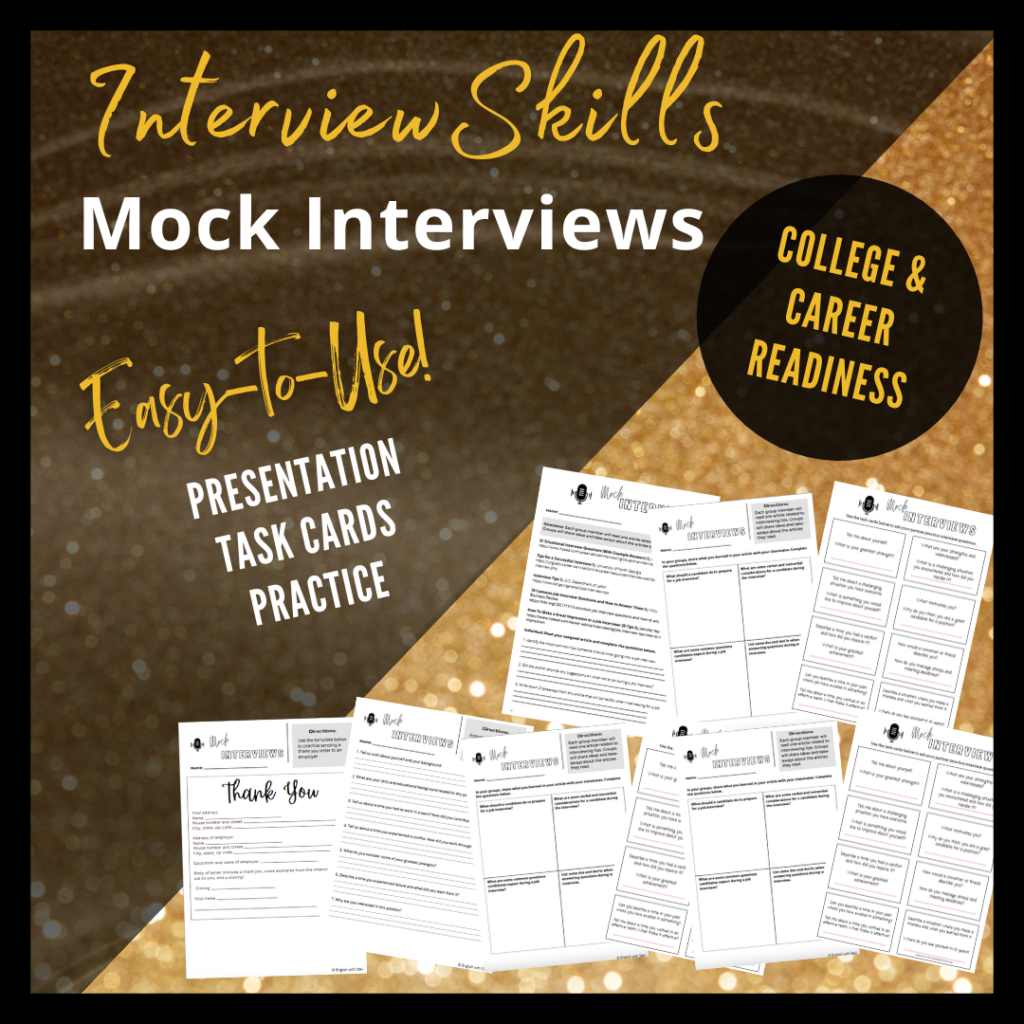
Help your students prepare for the real world and equip them with the essential skills needed to navigate life after school, especially the job market. A pivotal aspect of this preparation is mastering the art of interviews. Recognizing this need, I have started incorporating mock interviews in my class as a way to bolster students’ confidence and proficiency in interviewing. Through a blend of research, presentation, video resources, and hands-on practice exercises these ideas help students feel confident when heading into an interview.
Interviewing is one of those skills students know they need, but rarely get to practice in a meaningful way.
They can list advice.
They can Google common questions.
They can tell you what they are “supposed” to do.
But when they sit across from someone and have to answer out loud, everything changes.
That is why mock interviews have become one of my favorite ways to teach real-world communication skills. They move interviewing out of theory and into experience, where confidence is actually built.
Why Mock Interviews Matter More Than Worksheets
Interviewing is not just about having the right answer. It is about delivery, tone, body language, and the ability to think on your feet.
Students cannot develop those skills by reading tips alone.
Mock interviews give students a low-stakes way to practice being professional, thoughtful, and composed. They also normalize nervousness. Students realize quickly that everyone feels awkward at first, and that confidence grows through repetition.
How I Set Up Interviewing Instruction Before the Mock Interviews
I do not start with role play right away.
First, we build understanding.
Step 1: Research What Interviews Actually Look Like
Students begin by researching common interview formats and questions related to their interests. This step helps them see that interviews vary by field and context.
Instead of asking students to memorize answers, I have them notice patterns:
What kinds of questions appear repeatedly?
What do strong answers have in common?
What skills do employers value across fields?
This reframes interviews as conversations, not interrogations.
Step 2: Have Students Teach Each Other
Students share what they learned through short presentations or discussions. Teaching their peers reinforces understanding and builds early speaking confidence.
We talk openly about:
Answer structure
Nonverbal communication
Professional tone
Common mistakes students notice in examples
This step lays the groundwork for critique later.
Using Video to Make Interviewing Concrete
Before students ever interview each other, we watch interview clips.
Some are strong. Some are uncomfortable. That contrast is important.
As a class, we analyze:
Body language
Eye contact
Clarity of answers
Tone and pacing
Students quickly pick up on what works and what does not. This makes expectations visible without turning them into rigid rules.
Moving Into Mock Interviews (The Part Students Remember)
Once students understand what effective interviewing looks like, we move into mock interviews.
I set these up as stations so students rotate through different roles:
Interviewer
Interviewee
Observer
This structure keeps everyone engaged and reduces pressure. Students are not “on” the entire time.
The Structure of the Mock Interview Unit
The unit is meticulously structured to cover all facets of interview preparation through various engaging activities. Let’s explore these components and how they contribute to the overarching goal of preparing students for successful job interviews.
1. Jigsaw Group Activity: Exploring Interview Techniques
The unit kicks off with a jigsaw group activity, where students are divided into teams to research interviewing techniques. Each group is assigned links to current, updated articles about interviewing, including questions and tips. This collaborative effort not only fosters teamwork but also ensures that students gain a broad perspective on effective interview strategies. By sharing insights, students learn from each other, creating a rich tapestry of knowledge.
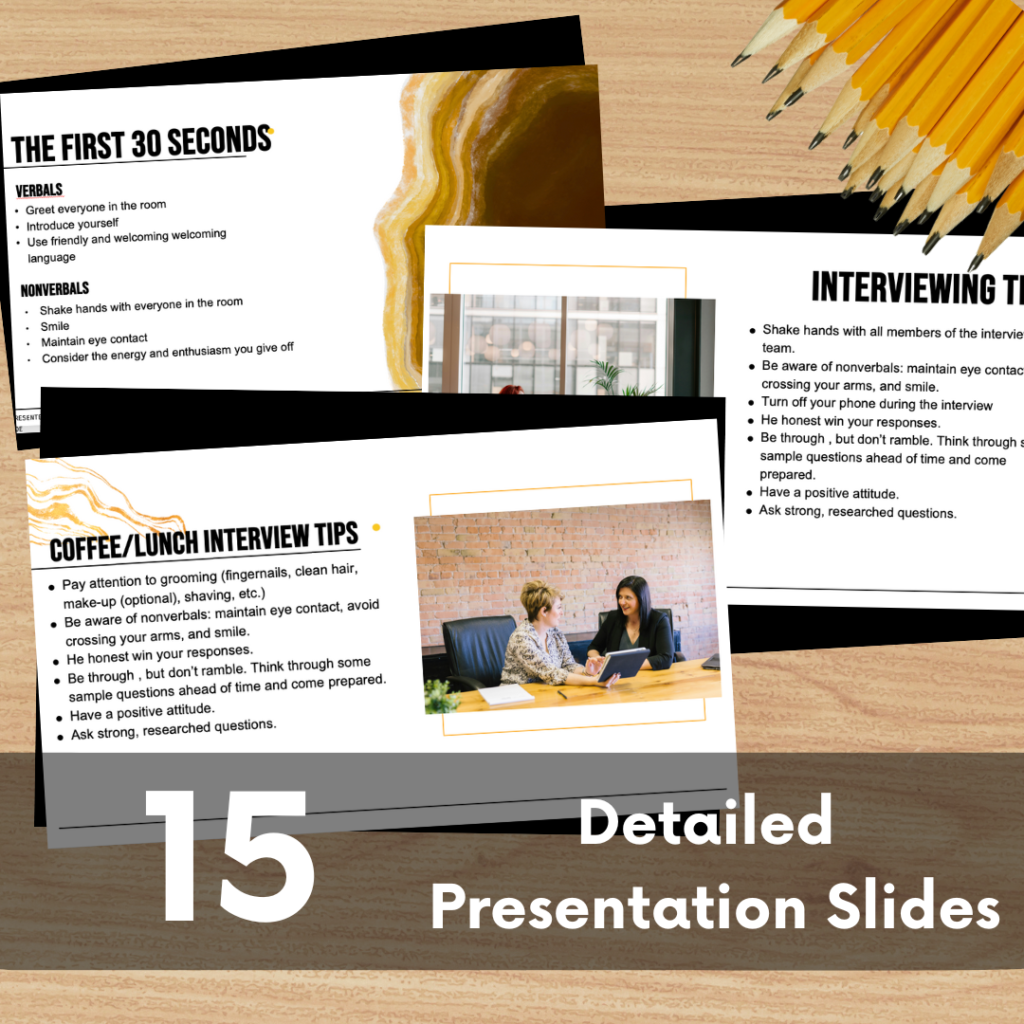
2. Interactive PowerPoint Presentation: Dos, Don’ts, and Tips
A key component of the unit is a 15-slide PowerPoint presentation, editable to suit classroom needs. This presentation delves into the dos and don’ts of interviews, offering tips for navigating different interview scenarios. Accompanied by a video segment on interview tips, this visual and auditory learning tool serves as a comprehensive guide, laying the foundation for what constitutes a successful interview.
3. Individual Reflection through Practice Questions
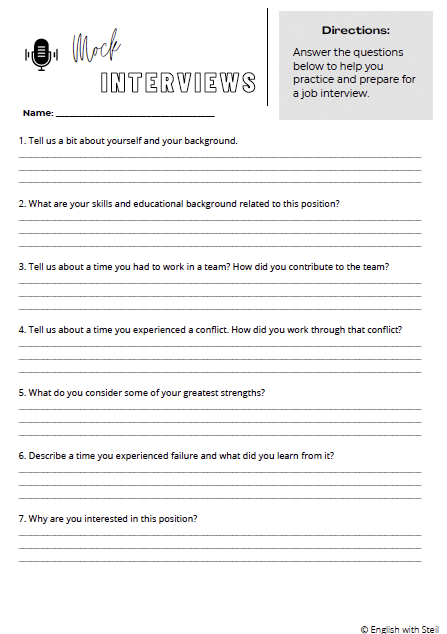
To personalize the learning experience, the unit includes a worksheet filled with practice interview questions. Students are encouraged to reflect on and craft their answers, enabling them to develop thoughtful, authentic responses. This exercise not only aids in self-reflection but also helps students articulate their skills, experiences, and aspirations effectively.
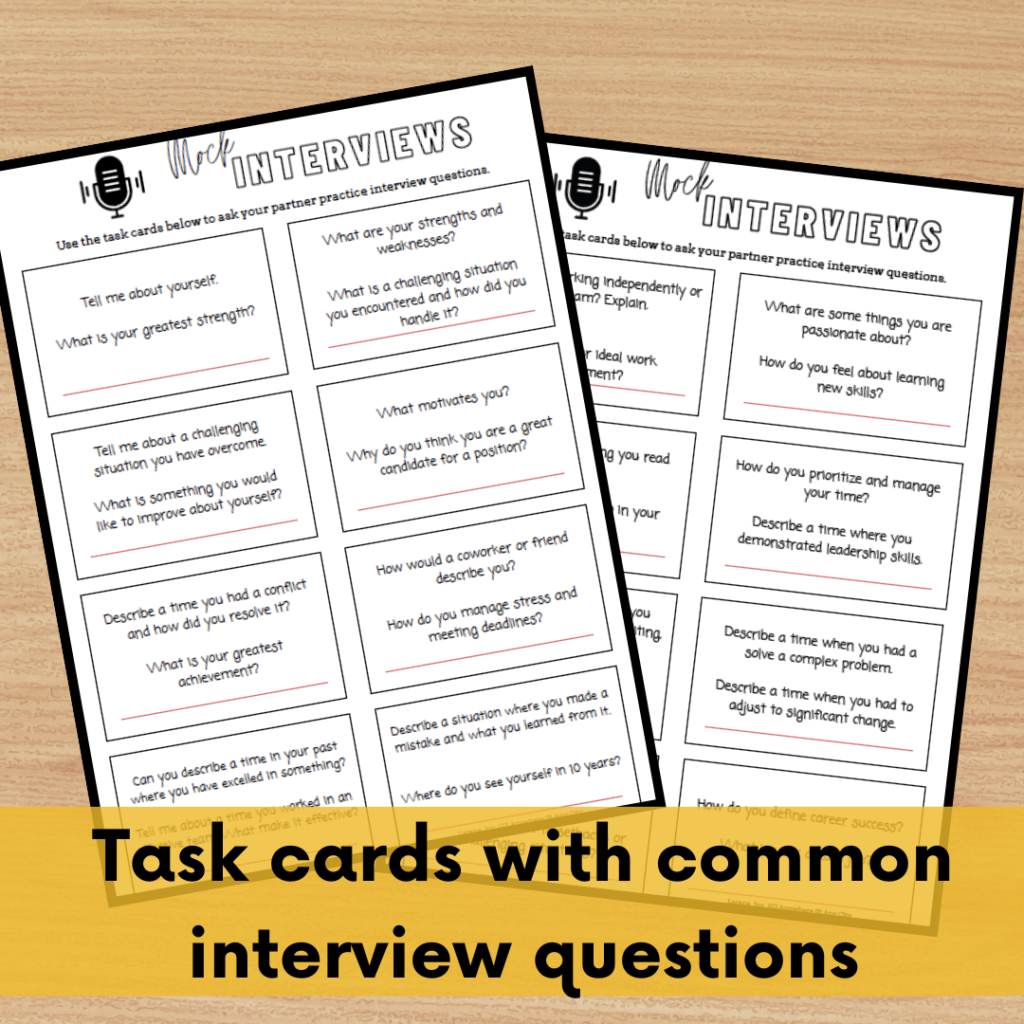
4. Mock Interview Task Cards: Simulating Real Interviews
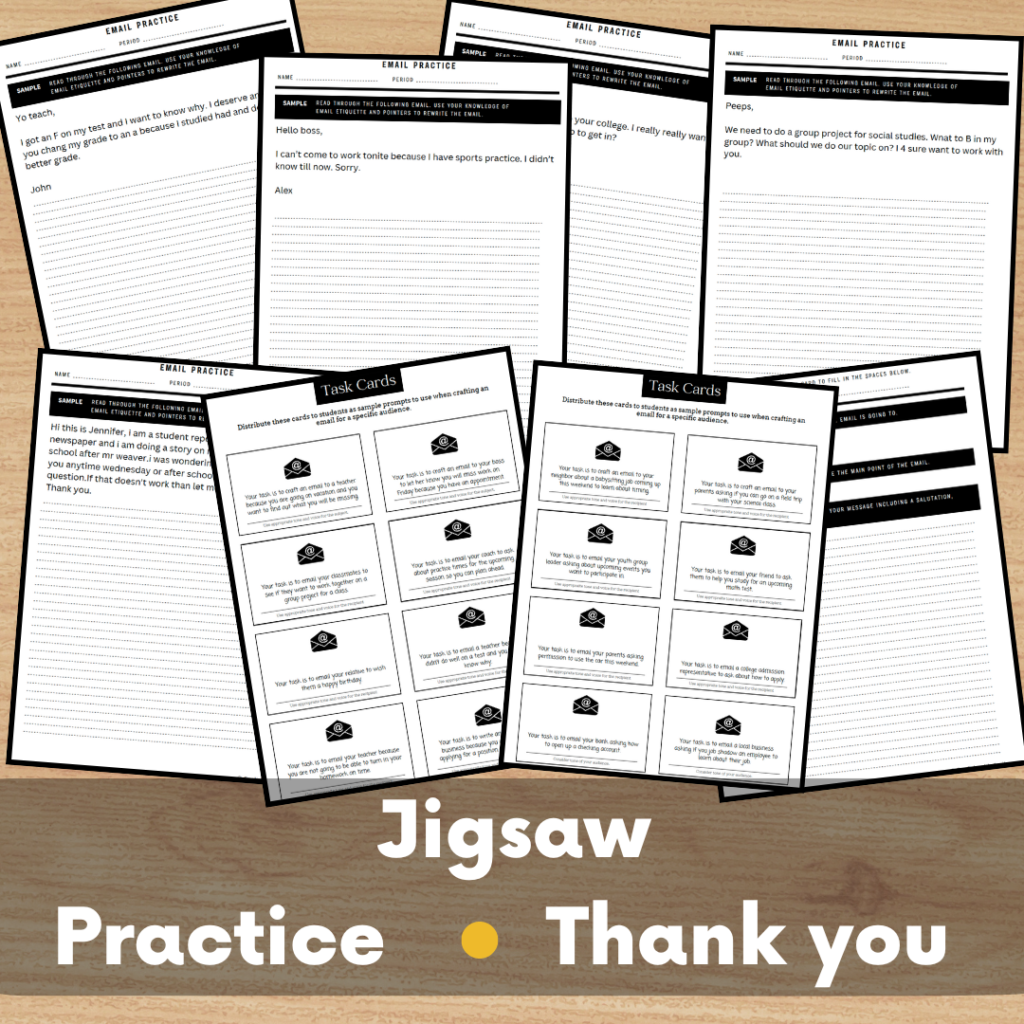
One of the unit’s highlights is the use of mock interview task cards, with 16 scenarios included. These cards simulate a wide range of interview situations, providing students with a safe, supportive environment to practice their newly acquired skills. By role-playing these scenarios, students gain valuable firsthand experience, easing the anxiety that often accompanies real-life interviews.
5. Crafting the Perfect Thank You Letter
Understanding the importance of post-interview etiquette, the unit features a thank-you letter template. This guide helps students craft thoughtful, professional thank-you notes, a critical step in leaving a lasting positive impression on potential employers.
6. Assessment and Feedback: A Rubric for Success
To measure progress and provide constructive feedback, the unit incorporates a comprehensive rubric. This tool assesses students on various aspects of the interview process, from preparation to execution, ensuring they have a clear understanding of their strengths and areas for improvement.
How I Run the Mock Interviews
Students receive a prompt or scenario and a short preparation window. This mirrors real-life interviews, where answers are thoughtful but not scripted.
During interviews, I encourage interviewers to ask follow-up questions. This helps interviewees practice thinking in the moment rather than reciting rehearsed lines.
Observers use a simple rubric or checklist to note strengths and areas for growth. This makes feedback specific and useful.
Teaching Reflection (Where Growth Really Happens)
After mock interviews, students reflect.
This is not about what went wrong. It is about what they noticed:
What felt easier than expected?
What was harder?
What would they do differently next time?
Reflection helps students recognize progress and identify next steps without feeling discouraged.
Teaching Thank-You Notes as Part of the Process
Interviewing does not end when the conversation does.
Students learn how to write a short, professional thank-you note that reinforces interest and professionalism. This is often overlooked, but students appreciate learning something immediately useful.
It also reinforces the idea that communication continues beyond the interview itself.
Why This Approach Works
Mock interviews work because they combine:
Preparation
Practice
Feedback
Reflection
Students leave with more than advice. They leave with experience.
Even students who are initially hesitant gain confidence by the second or third round. By the end, interviews feel less intimidating and more manageable.
A Note If You Want to Try This
If you want a ready-to-use structure for teaching interviewing without building everything from scratch, I use a mock interview unit that includes research activities, practice scenarios, task cards, and reflection tools. I like having a framework in place so I can focus on coaching students rather than managing logistics.
To keep the focus on coaching rather than logistics, I use a mock interview framework that includes research activities, interview scenarios, task cards, and reflection tools. Having those pieces ready allows me to spend more time listening, giving feedback, and helping students refine their communication instead of managing materials.
Additional Tips for Success
Interview Rubric: Develop a clear rubric to assess students’ performance during their mock interviews. Include categories such as clarity of answers, confidence, eye contact, and overall professionalism.
Peer Review: Incorporate peer review sessions where students can give and receive feedback from their classmates. This fosters a supportive learning environment and allows them to learn from each other’s experiences.
Real-World Insights: Invite guest speakers from various industries to talk about what they look for in candidates during interviews. This real-world perspective can provide valuable insights and tips.
Follow-Up: Encourage students to reflect on their mock interview experiences by writing a short essay or journal entry. What did they learn? What would they do differently next time? This reflection helps solidify their learning and prepares them for future interviews.
Final Thoughts
The mock interview unit stands as a testament to the power of experiential learning. By simulating real-world interview scenarios, students not only learn the theoretical aspects of successful interviewing but also apply these principles in practice. This hands-on approach, coupled with research and reflection activities, ensures that students walk away with a deep understanding of the interview process and the confidence to tackle real-world job interviews head-on.
In a world where first impressions can make or break job opportunities, empowering students with the skills to navigate interviews with confidence is invaluable. As educators, our role extends beyond imparting knowledge; it involves preparing our students for the challenges and opportunities of the future. With this comprehensive mock interview unit, we take a significant step toward achieving that goal, ensuring our students are not just ready to face interviews but to excel in them.
Interviewing is a skill students will use long after they leave our classrooms.
Giving them a chance to practice in a supportive, low-pressure environment is one of the most practical ways we can prepare them for life beyond school.
Mock interviews turn nervous energy into confidence, and uncertainty into preparation.
That is why they have become a staple in my classroom.
Happy teaching.
Looking for More Ways to Teach Career-Ready Communication Skills?
If you are building interview, resume, or career-readiness lessons, these resources from fellow teacher-authors pair well with mock interview instruction. Each one focuses on practical skills students will use beyond the classroom.
Teaching Soft Skills in Secondary Classrooms by Secondary Sara
Clear strategies for helping students practice communication, professionalism, and confidence.
Career Readiness Activities for High School Students by Bespoke ELA
Thoughtful ideas for preparing students for life after graduation without overwhelming them.
Helping Students Communicate With Confidence by Laura Randazzo
A reminder that confidence is built through practice, reflection, and supportive feedback.
Real-World Writing and Speaking Tasks That Matter by The Daring English Teacher
Practical ways to connect classroom work to authentic communication skills.