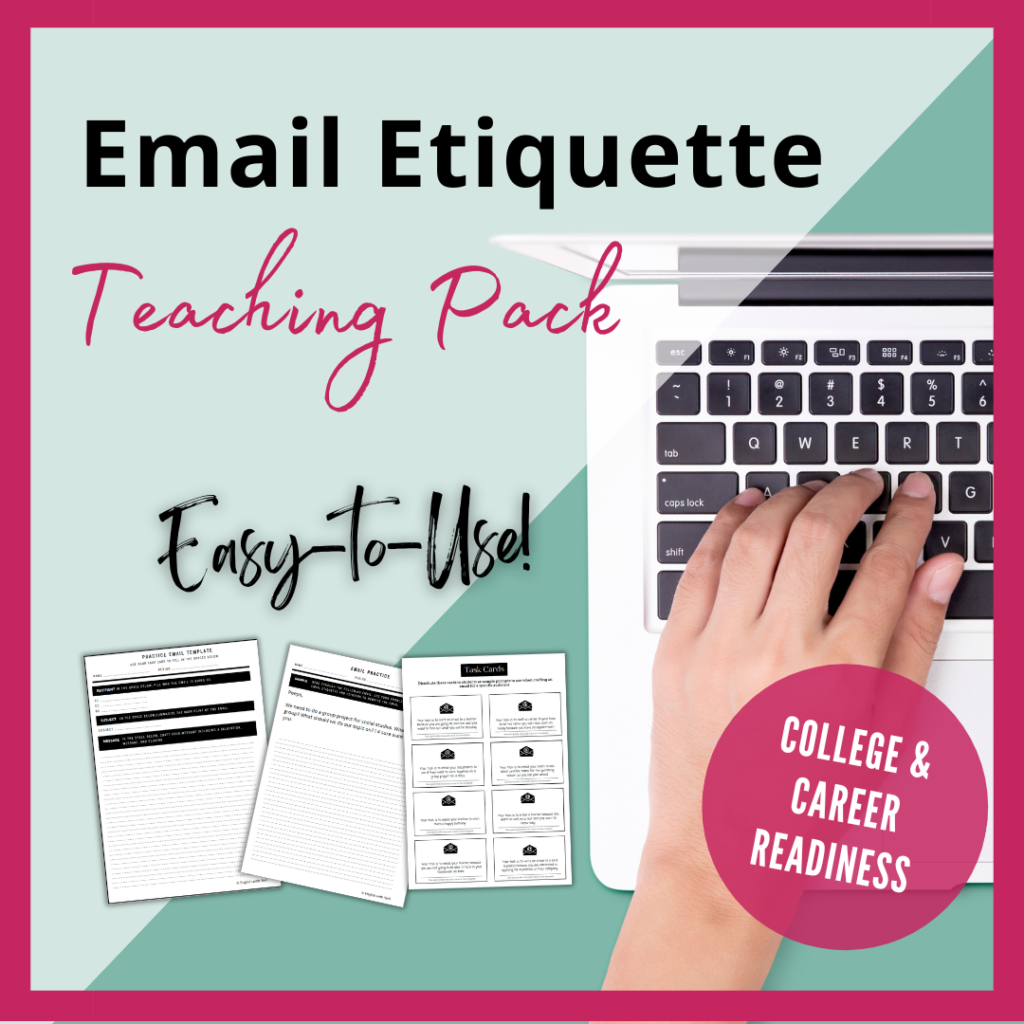
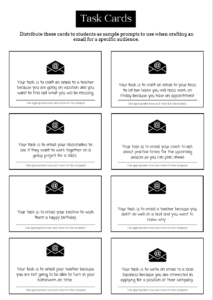
The Benefits of Teaching Students How to Craft Professional Emails
In today’s fast-paced digital landscape, effective communication is more important than ever. Yet, one crucial skill often overlooked in education is the art of writing professional emails. Equipping students with this ability prepares them for academic success, career readiness, and effective interpersonal communication. Dive into why teaching professional email writing is vital and how it benefits students in every aspect of their lives.
1. Real-World Relevance
Email is one of the most commonly used forms of communication in professional and academic settings. Teaching students how to write professional emails ensures they are prepared for real-world interactions with professors, employers, and colleagues. Mastery of this skill helps students navigate professional environments confidently and effectively.
2. Professionalism and First Impressions
A well-crafted email often serves as a student’s first impression on professors or potential employers. Teaching professional email writing emphasizes the importance of creating a polished, positive image. A thoughtful email can demonstrate attention to detail, respect, and preparedness, leaving a lasting impression that opens doors to opportunities.
3. Improved Communication Skills
Crafting professional emails requires clarity and precision. Students learn to express their thoughts concisely while maintaining a respectful tone. These skills extend beyond email writing, enhancing their ability to communicate effectively in both written and verbal forms.
4. Increased Responsiveness
Emails that are structured professionally and convey a clear purpose are more likely to receive timely and thoughtful responses. By teaching students to write emails that are easy to read and address the recipient’s needs, educators empower them to engage in productive communication.
5. Enhanced Digital Etiquette
Professional email writing introduces students to the basics of digital etiquette. They learn the importance of proper salutations, respectful language, and well-organized messages. These principles apply across various forms of digital communication, fostering a culture of respect and professionalism.
6. Improved Academic Performance
Students who can write effective emails often have an academic advantage. They can confidently reach out to professors for clarifications, request extensions, or engage in meaningful discussions about coursework. This ability supports a more proactive and enriching learning experience.
7. Career Readiness
In the professional world, email is a daily tool for job applications, networking, and correspondence. Teaching students how to craft professional emails equips them with a fundamental skill for career success, ensuring they are prepared to navigate workplace communication.
8. Conflict Resolution
Professional emails can serve as a tool for resolving conflicts respectfully and constructively. By learning how to address issues thoughtfully, students gain skills that will help them manage disagreements in the workplace and other settings with maturity and diplomacy.
9. Attention to Detail
Writing professional emails demands attention to detail, including proper grammar, spelling, and formatting. These habits instilled early in life encourage students to develop a meticulous approach to all aspects of their academic and professional endeavors.
10. Building Relationships
Email is a powerful medium for building and maintaining relationships. Whether reaching out to professors, mentors, or colleagues, professional email writing fosters trust, respect, and goodwill, helping students establish meaningful connections that support their personal and professional growth.

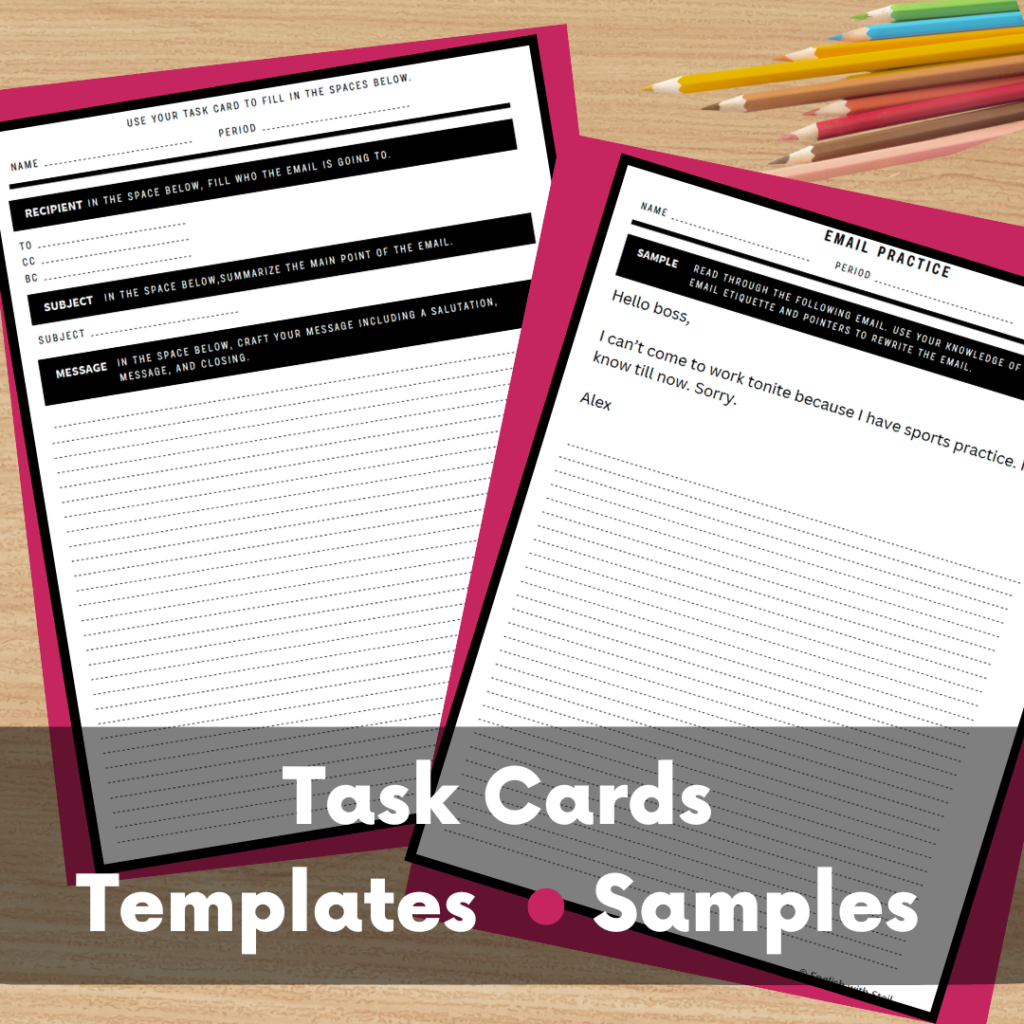
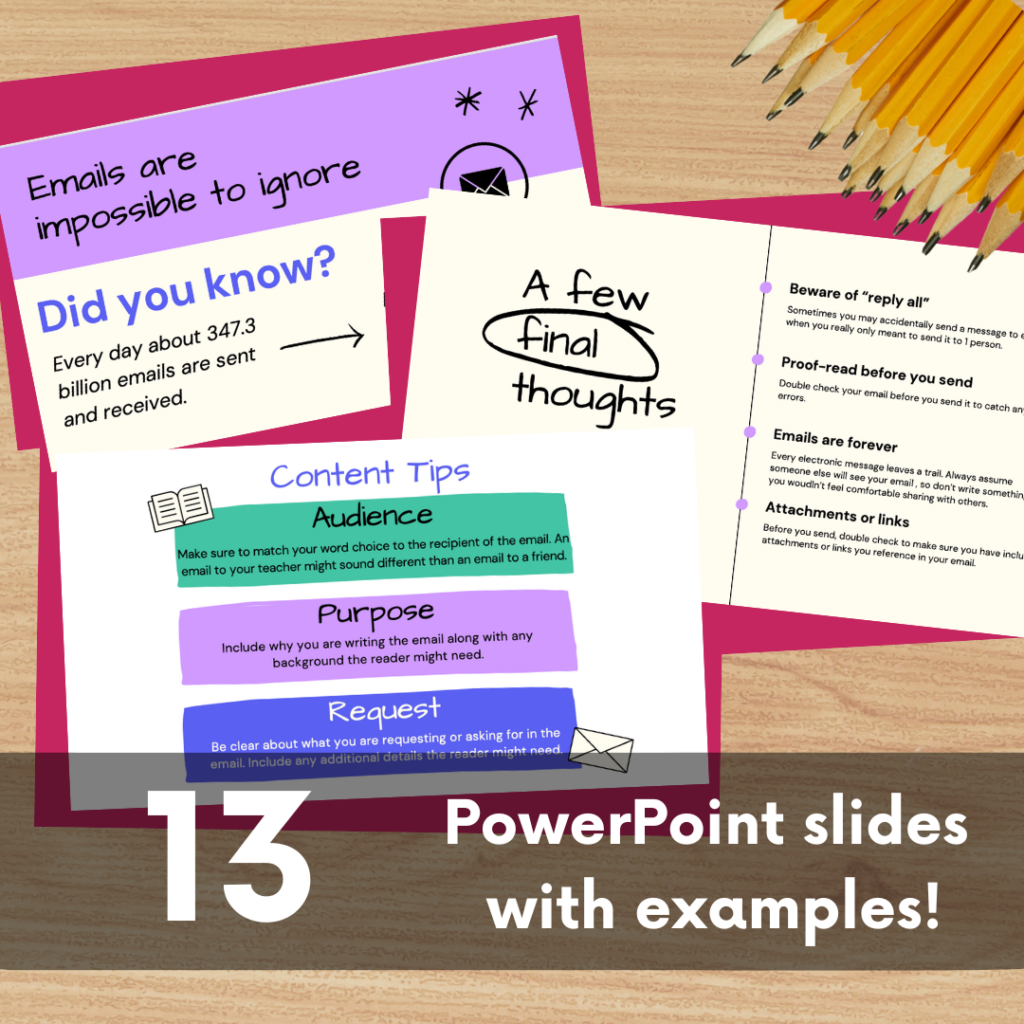
No Fail Email Tips
1. Clear and Concise Subject Line
The subject line is the first thing recipients see. Make it specific and concise, providing a clear preview of the email’s content. For example, use “Request for Meeting on [Date]” instead of vague phrases like “Important Matter.” A strong subject line ensures your email is noticed and prioritized.
2. Use Proper Salutations and Greetings
Start your email with an appropriate greeting based on the recipient and context. For formal communications, use “Dear [Name],” or “Hello [Name],” while informal emails might begin with “Hi.” Avoid overly casual greetings like “Hey” unless you have a close relationship with the recipient.
3. Be Clear and to the Point
Structure your email so the purpose is evident from the beginning. Use short paragraphs and bullet points to organize your thoughts. For example, if requesting assistance, state the need clearly in the opening sentences and provide any relevant context concisely.
4. Proofread and Edit
Spelling or grammatical errors can undermine the professionalism of your email. Always proofread your message before sending it, checking for typos and ensuring clarity. Tools like Grammarly or reading the email aloud can help identify mistakes.
5. Maintain a Professional Tone and Courtesy
Use polite language and avoid slang or informal phrases. Incorporate words like “please” and “thank you” where appropriate to convey respect and professionalism. Avoid all caps, as it can be interpreted as shouting, and ensure your tone remains constructive, especially in sensitive communications.
Final Thoughts
Teaching students to write professional emails is an investment in their future. It prepares them for academic success, career readiness, and effective communication in all aspects of life. By incorporating email writing into the curriculum, educators empower students with a vital skill that bridges the gap between school and the professional world. Equip your students to succeed—one email at a time!