
If you have ever taught ethos, pathos, and logos, you probably know the struggle. Students can usually memorize the definitions, but actually applying rhetorical appeals in a meaningful way is a whole different story.
That is why I love finding ways to make rhetorical appeals feel real.
When students can see persuasion in the world around them and then create something of their own, the learning sticks so much more. Instead of simply identifying appeals on a worksheet, they begin to understand why advertisers, influencers, brands, and creators make the choices they do. Even better, they get to practice those moves themselves.
If you are looking for creative ways to bring rhetorical appeals to life in your classroom, here are some of my favorite hands on, project based learning ideas that help students connect persuasion to the real world.
Start with ads students actually care about
One of the easiest ways to make rhetorical appeals more engaging is to start with advertising examples that feel familiar, current, and interesting to students. When they see persuasion in real brands, real products, and real media, the concept becomes much less abstract.
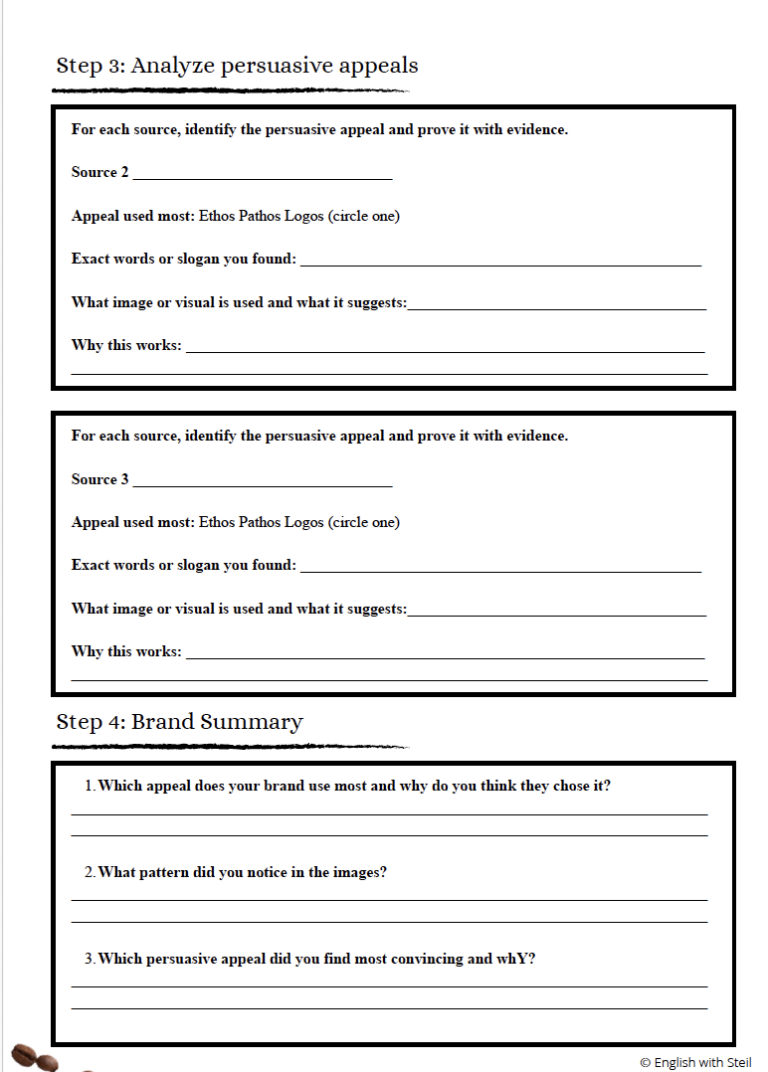
Coffee ads, fast food campaigns, sneaker brands, beauty products, and social media marketing all work well because they are built around image, emotion, identity, and audience. Students can quickly spot how companies are trying to build trust, create desire, or convince people to buy in.
A few things you can ask students to notice:
How does the brand build credibility?
What emotions is the ad trying to create?
What specific words, visuals, or claims appeal to logic?
Who seems to be the target audience?
What makes the product feel trendy, luxurious, exciting, or necessary?
This kind of ad analysis gives students a strong foundation before they move into creating their own persuasive pieces.
Turn rhetorical appeals into a creative challenge
One of my favorite ways to teach rhetoric is through a design challenge. Give students a role, a product, and a target audience, then ask them to build a campaign using ethos, pathos, and logos.
This is where the magic happens.
When students have to make choices as creators, they begin to understand persuasion at a much deeper level. They are no longer just identifying rhetorical appeals in someone else’s ad. They are deciding how to use them on purpose.
For example, students might:
invent a new snack or drink
create a campaign for a school event
design a product for teens
launch a new clothing brand
pitch a new app or service
create a public awareness campaign around an issue
Once they have a concept, ask them to explain:
how they will build trust with their audience
what emotions they want the audience to feel
what logical reasons they will give people to buy or support the product
That reflection piece is so important because it moves the project beyond “fun” and into real rhetorical thinking.
Use gallery walks to build observation skills
Before asking students to create their own persuasive products, I love using a gallery walk. This gives them the chance to slow down, observe, and practice analysis in a more active format.
You can post examples of print ads, social media promotions, menu boards, slogans, influencer campaigns, or brand visuals around the room. Then give students a note catcher that asks them to identify rhetorical appeals, persuasive language, design choices, and audience strategies.
Gallery walks work so well because students are moving, talking, and thinking at the same time. It feels more interactive than a whole class slideshow, and it gives them multiple examples to compare.
A simple tip: choose ads that are visually different from one another. Some should rely heavily on emotion, some on credibility, and some on clear facts or claims. That variety helps students notice that persuasion is not one size fits all.
Add jigsaw reading to build background knowledge
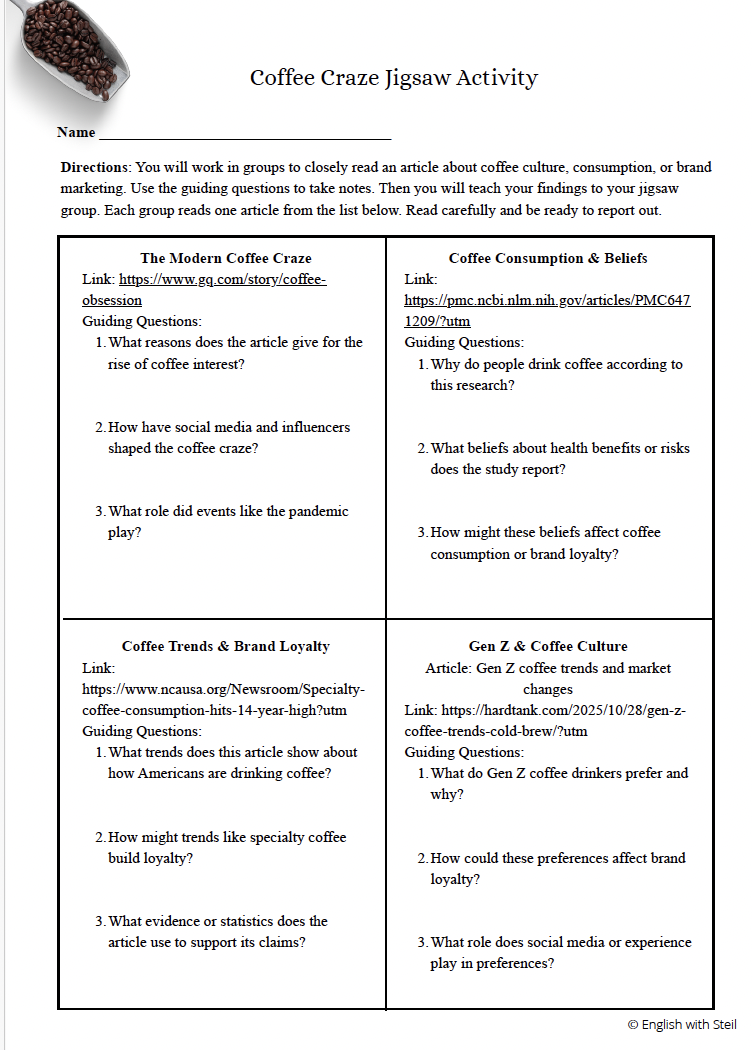
If you want students to think more deeply about why marketing works, a jigsaw can be a great addition. Short readings about consumer behavior, brand loyalty, trends, influencer culture, or advertising psychology give students more context for the persuasive choices they will later make in their own projects.
Each group can become “experts” on one topic and then teach the rest of the class. This keeps the reading more manageable and helps students collaborate while building their understanding.
I especially like this strategy when I want students to move beyond surface level responses. Instead of just saying, “This ad uses pathos because it looks cozy,” they start to understand how lifestyle branding, nostalgia, status, and identity all shape consumer choices.

Make the final product something students can pitch
One of the most engaging ways to wrap up a rhetorical appeals unit is with a short presentation or Shark Tank style pitch.
There is something about asking students to actually sell their idea that raises the energy in the room immediately. Students become more invested because they are presenting something they created, and they have a real reason to think carefully about audience, message, and strategy.
Their final pitch might include:
the name of the product
the intended audience
the brand image
the rhetorical appeals they used
a slogan or tagline
a visual advertisement or social media post
a short explanation of why their campaign would work
This kind of presentation naturally brings together writing, speaking, media literacy, and rhetorical analysis in one project.
Give students creative extension options
One of the best parts of project based learning is giving students room to extend their thinking in different ways. Once students have their main campaign idea, you can let them choose how they want to expand it.
Some fun extension options include:
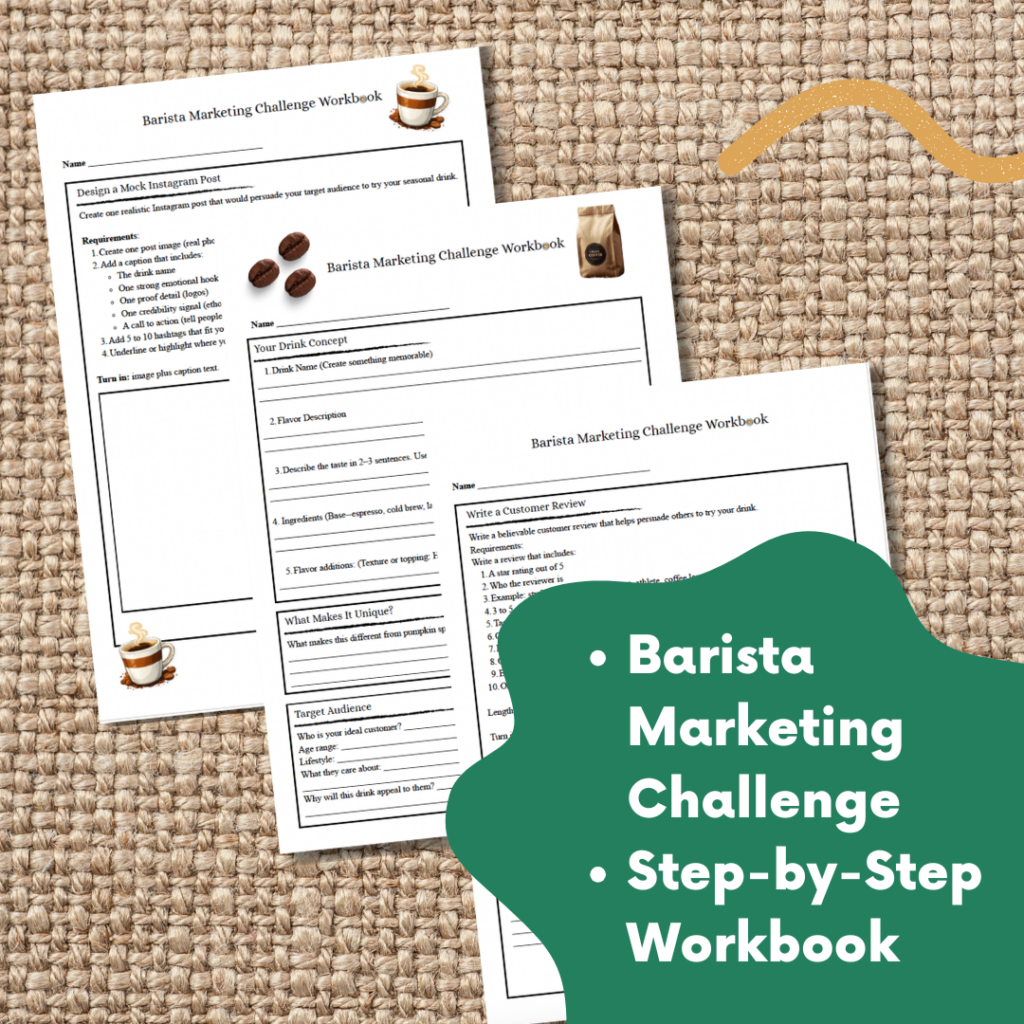
creating an Instagram post for their product
designing a menu board
writing a customer review
creating a limited edition seasonal variation
filming a quick commercial
designing a poster or flyer
writing an influencer style caption
These extensions work well because they keep students focused on persuasion, but allow for voice, creativity, and choice. That often leads to stronger engagement and more memorable final products.
Keep the focus on strategy, not just aesthetics
Whenever I do a project like this, I try to remind students that a pretty ad is not enough. The real goal is strategic thinking.
Yes, design matters. Yes, creativity matters. But the most important question is this: did they make thoughtful rhetorical choices?
As you grade or conference with students, focus on questions like:
Did they clearly understand their audience?
Did they intentionally use ethos, pathos, and logos?
Could they explain their decisions?
Did their campaign match their purpose?
Were they persuasive in a way that made sense for their product?
That is what turns a creative classroom project into strong academic work.
A classroom example that makes rhetorical appeals feel real
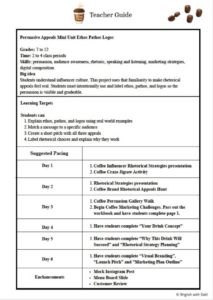
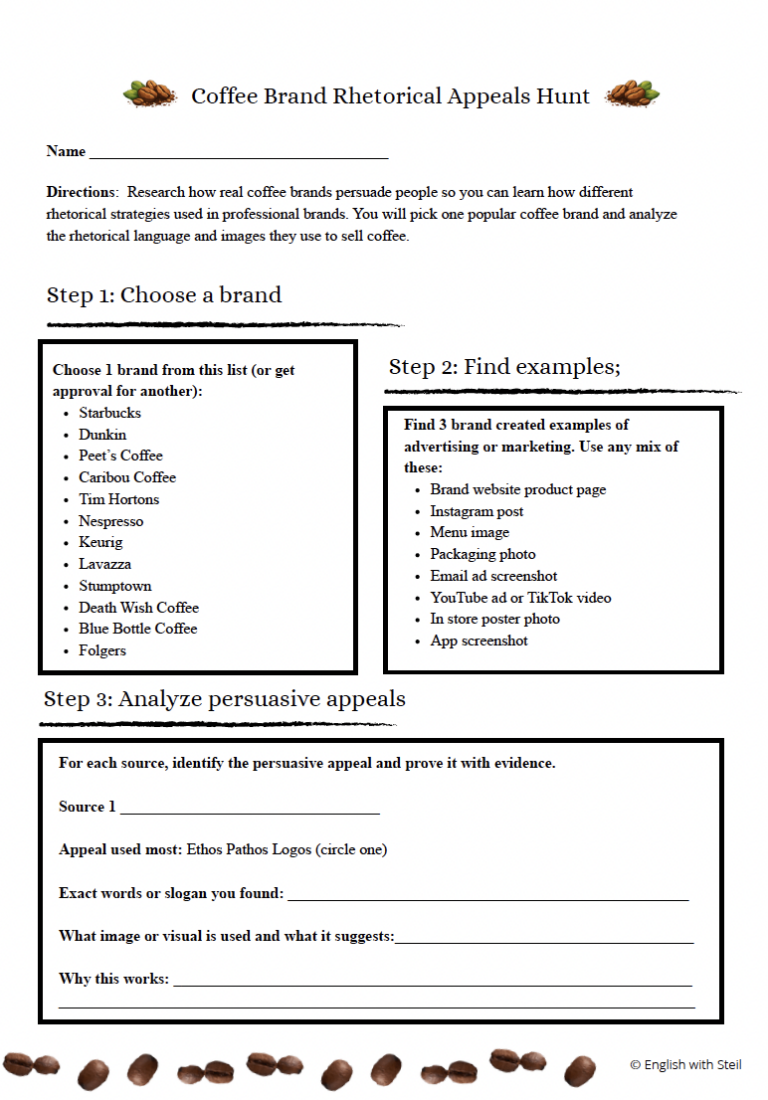
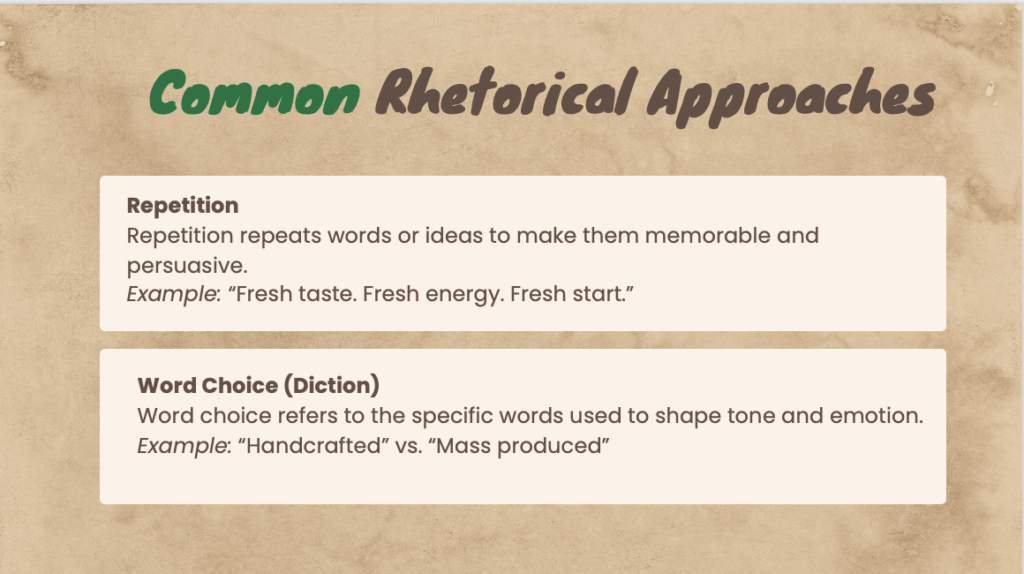
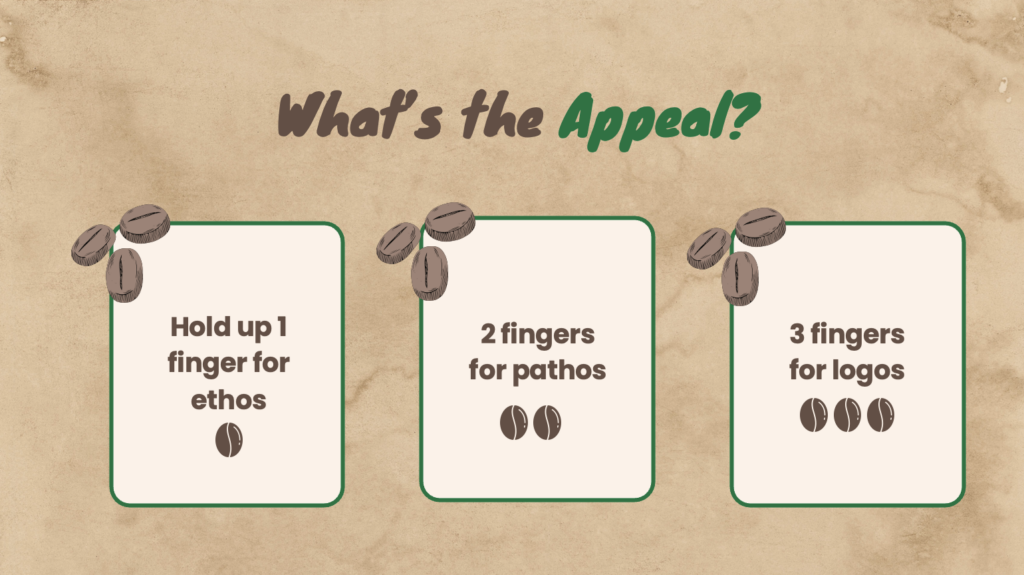
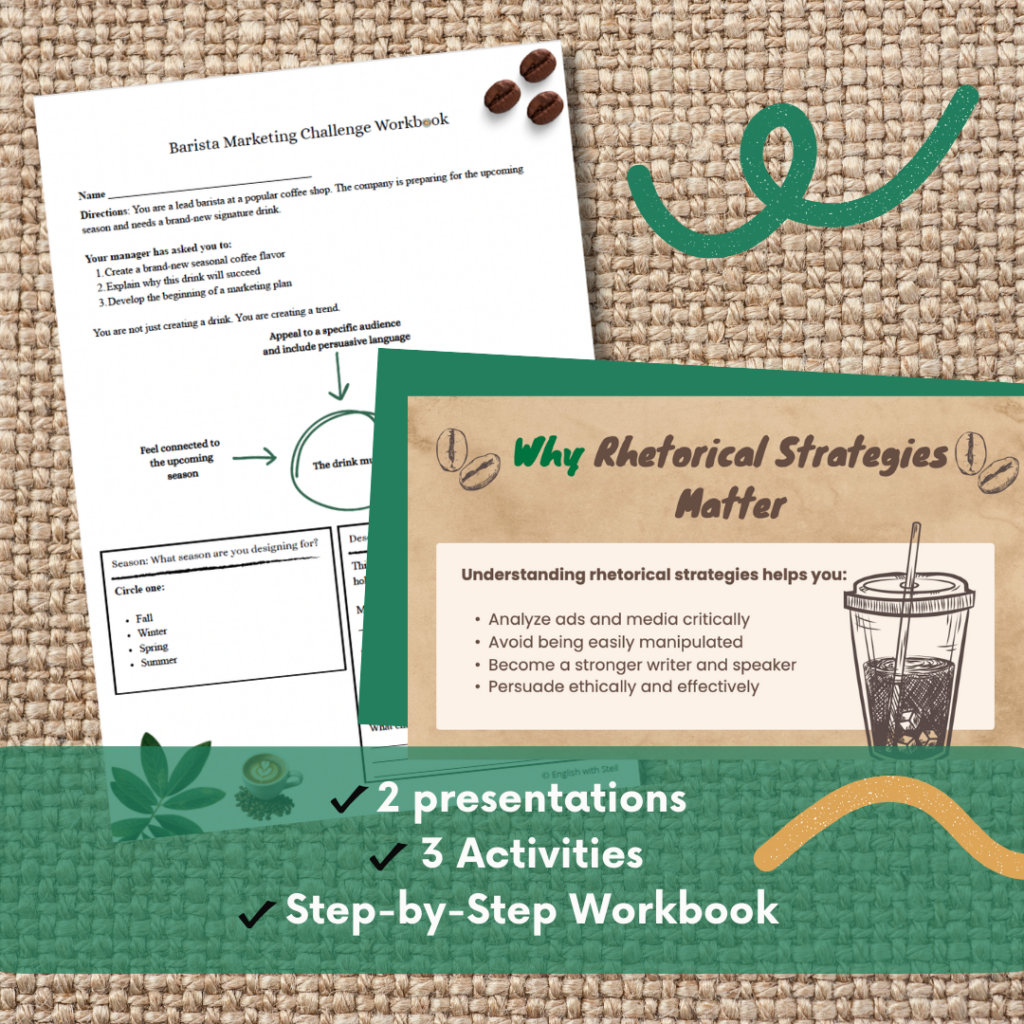
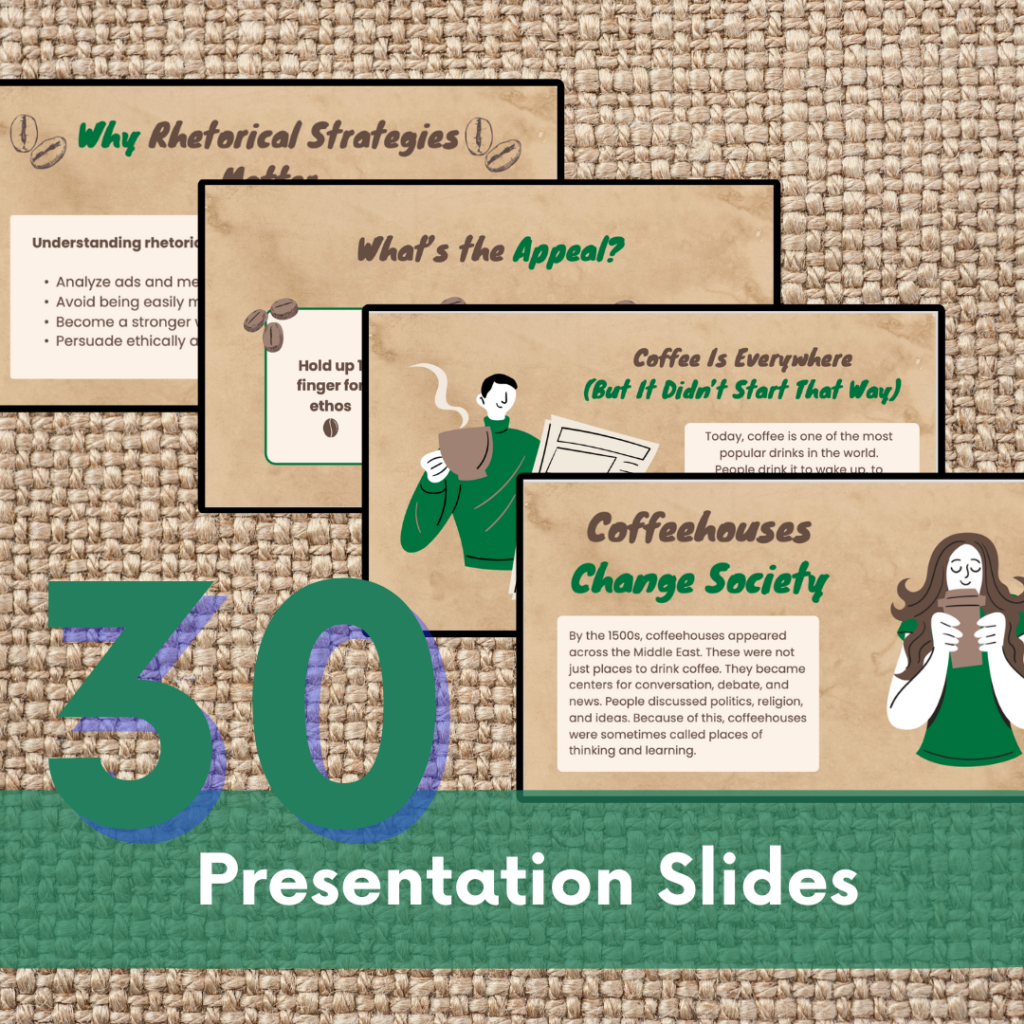
One of my favorite ways to do this is through my coffee themed rhetorical appeals unit, which turns students into baristas and marketers for a brand new seasonal drink.
In this project, students analyze real coffee ads and trends, participate in a gallery walk, complete a jigsaw reading, and then step into a role play scenario where they create and market their own drink. They build a beginning marketing plan, apply ethos, pathos, and logos, and pitch their product like an influencer.
What I love about this approach is that it gives students a clear, creative framework. The coffee theme feels fun and current, but the learning goals are still rooted in rhetorical analysis, persuasive writing, media literacy, and speaking skills.
It works well as a mini unit, a project based learning experience, or even a high energy lead in to a larger argument writing unit.
Final thoughts
Rhetorical appeals do not have to stay stuck in a lecture, notes page, or basic ad worksheet. When students get to analyze real media, create something original, and pitch their thinking, rhetoric starts to feel useful, creative, and relevant.
That is really the goal, right?
We want students to recognize persuasion in the world around them, think critically about how it works, and learn how to use those same strategies in thoughtful, purposeful ways.
If you are looking for a creative way to teach ethos, pathos, and logos, project based learning can make all the difference. And if you want a ready to go option, my coffee themed rhetorical appeals unit is designed to help students do exactly that in a way that feels engaging, interactive, and meaningful.
Check Out These Resources from My Fellow Teacher Authors
Engaging Strategies for Teaching Persuasion, Argument, and Debate by Write on With Miss G
Persuasive Techniques and Media Literacy by Nouvelle ELA
Teaching Rhetorical Analysis: So Much More Than Commercials and Appeals by Mud and Ink Teaching
The Rhetorical Analysis PAPA Square Activity by The Daring English Teacher
7 Powerful Speeches for Teaching Rhetorical Analysis in ELA by Moore English

