There is a moment in most journalism classes when students ask some version of the same question:
“Why do we have to learn this part?”
They are usually talking about history.
Dates. Old newspapers. Technology that feels irrelevant to their lives. And honestly, I get it. If journalism history is taught as a timeline to memorize, students tune out fast.
What changed everything for me was realizing that journalism history does not belong before the course. It belongs insidethe work students are already doing.
When students understand where journalism came from, they make better choices as reporters today.
A Snapshot of Journalism History
To begin, let’s outline some major milestones in the history of journalism and media:
The First Newspapers: The earliest known newspaper was the “Acta Diurna” in ancient Rome around 59 BCE. Fast forward to 1605, the first printed newspaper, “Relation aller Fürnemmen und gedenckwürdigen Historien,” was published in Germany.
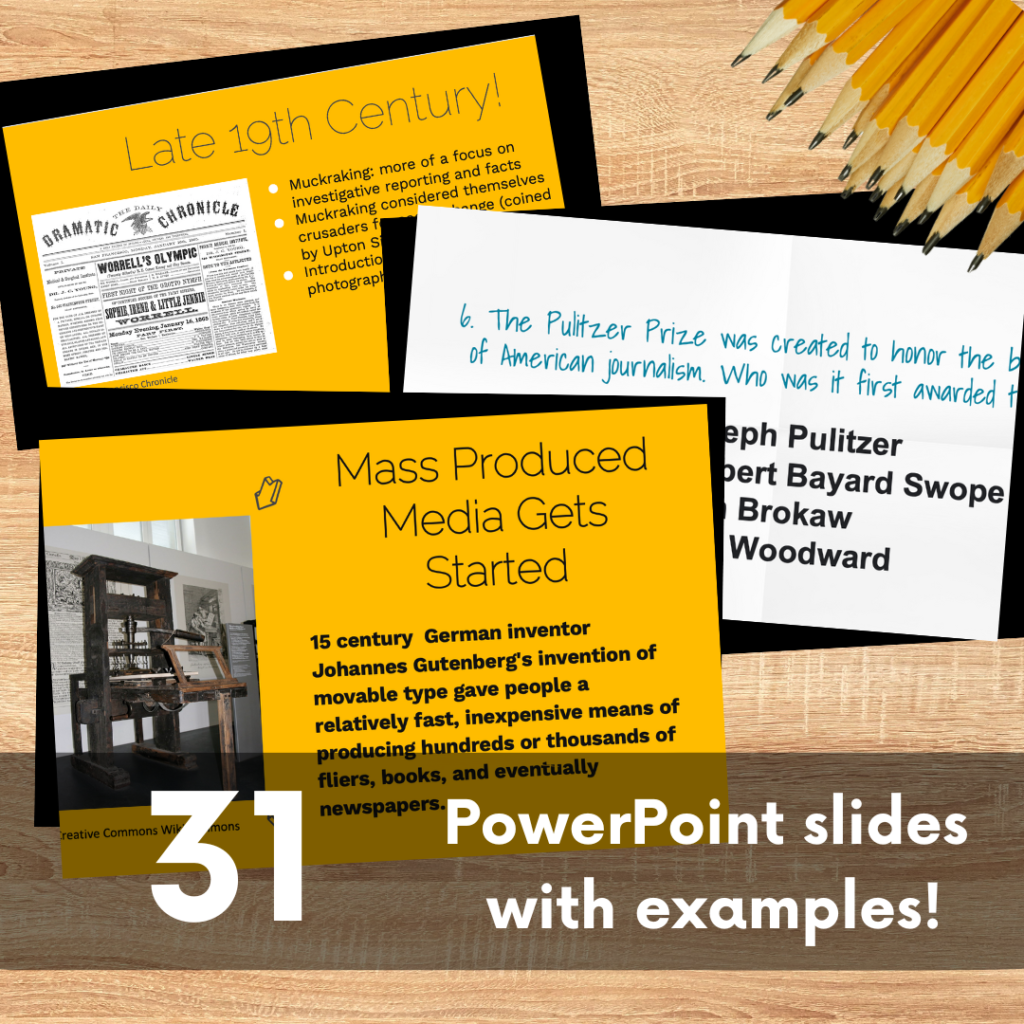
The Printing Press: In 1440, Johannes Gutenberg‘s invention revolutionized the production of books and newspapers, making them more accessible to the public.
The Penny Press: In the 1830s, newspapers like “The Sun” in New York began selling for a penny, making news accessible to the working class and significantly increasing readership.
The Golden Age of Radio: The 1920s and 1930s saw the rise of radio as a primary news source. Programs like Franklin D. Roosevelt’s “Fireside Chats” became pivotal in connecting the public with current events.
Television News: The 1950s brought TV into homes, changing how people consumed news. Iconic moments include the coverage of the Kennedy assassination in 1963 and the moon landing in 1969.
The Internet Era: The late 20th century and early 21st century saw the advent of digital news, with online platforms and social media transforming news dissemination and consumption.
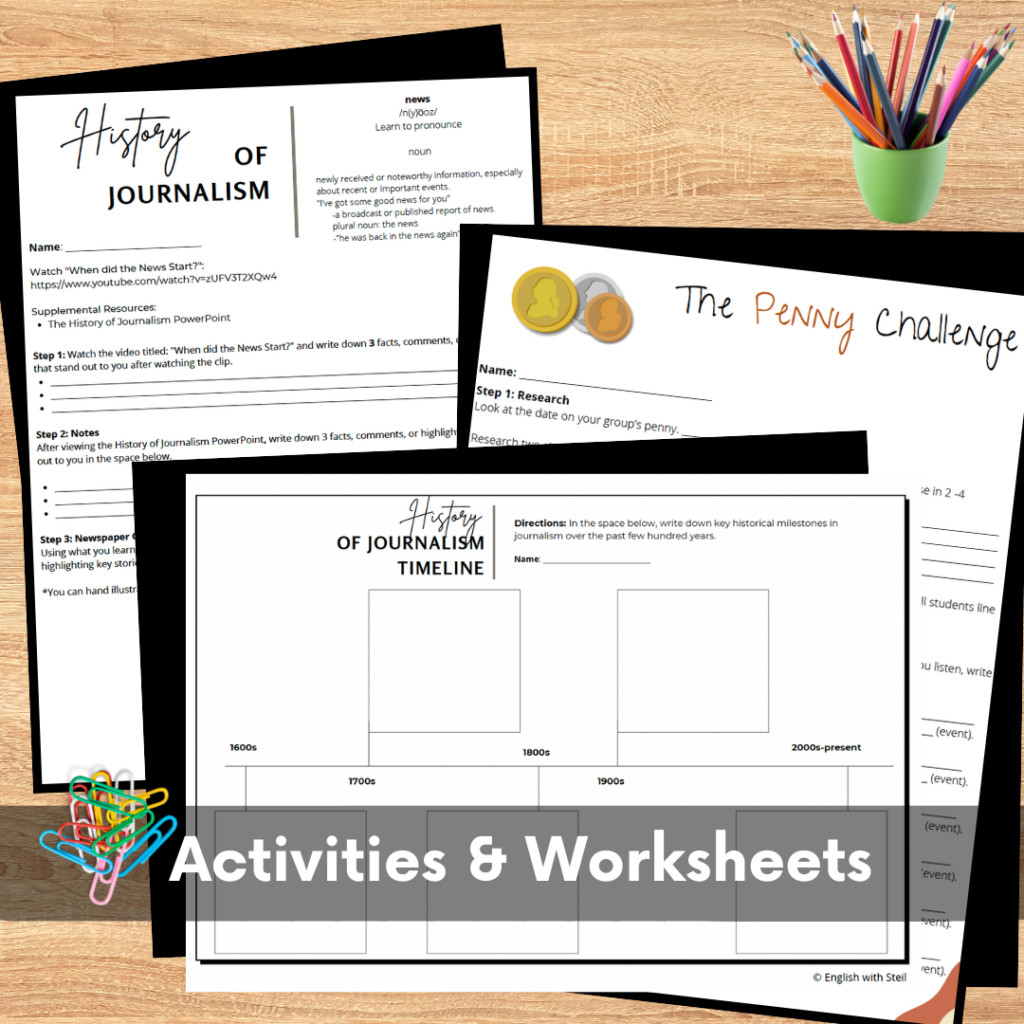
Why Journalism History Matters More Than Students Think
Students are surrounded by media, but most have never stopped to ask why it looks the way it does.
Why are headlines short?
Why do ads and news live side by side?
Why does speed sometimes beat accuracy?
Those answers live in journalism history.
Teaching history gives students context. It helps them see that today’s media landscape did not appear overnight. It evolved in response to technology, money, power, and audience.
Once students understand that, modern journalism starts to make a lot more sense.
Why I Teach Journalism History in Stations
Instead of walking students through a long slideshow, I break journalism history into stations that each highlight a turning point. This keeps students active and allows them to explore cause and effect rather than memorize dates.
Stations slow students down just enough to notice patterns.
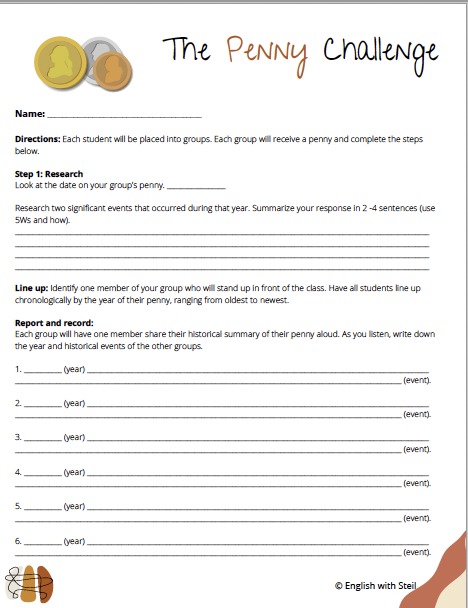
Station 1: Access and the Penny Press
This is where we start.
At the penny press station, students explore how newspapers shifted from elite audiences to the general public. We talk about cost, access, and who got to decide what counted as news.
Students quickly realize that journalism has always been tied to money and audience. This station sets the foundation for understanding advertising, circulation, and bias later in the course.
Before moving on, I often ask students to consider how accessibility shapes the media they consume today.
Station 2: Technology Changes Everything
At the printing press and production station, students explore how new technology changed who could publish and how quickly information spread.
From early printed papers to mass production, students see that journalism expands every time technology lowers barriers. This station connects naturally to conversations about social media, blogs, and digital publishing.
Students begin to see technology not as a distraction, but as a driving force.
Station 3: Radio and Television Shift the Relationship
This station focuses on radio and television and how they changed the relationship between the public and the news.
Students examine how voice, image, and immediacy shaped trust and emotion. We talk about major moments like fireside chats and televised breaking news and how they altered public expectations.
This station often sparks strong discussion about credibility and influence.
Station 4: The Internet and the Speed of News
At the digital journalism station, students examine how the internet transformed news delivery.
They analyze headlines, timelines, and breaking news alerts. We talk about speed, competition, and what gets lost when publishing becomes instant.
Students quickly connect this station to their own media habits.
Station 5: Building a Timeline That Tells a Story
Instead of a timeline filled with dates, students build one that tells a story.
At this station, students add key moments and explain why each mattered. Images, headlines, and short explanations help them see journalism history as a series of decisions rather than isolated events.
This is where the unit really clicks.
Applying History Through Creation
To make history stick, students apply what they learn.
Some create front pages from different eras, making design choices based on available technology. Others debate which medium had the greatest influence on public opinion.
These activities push students to use historical context to justify decisions, not just recall facts.
Why This Approach Works
What changes most is how students talk about modern media.
They stop seeing journalism as chaotic or random.
They recognize patterns.
They understand trade-offs.
History gives them language to explain what they see happening now.
A Note If You Want to Try This Approach
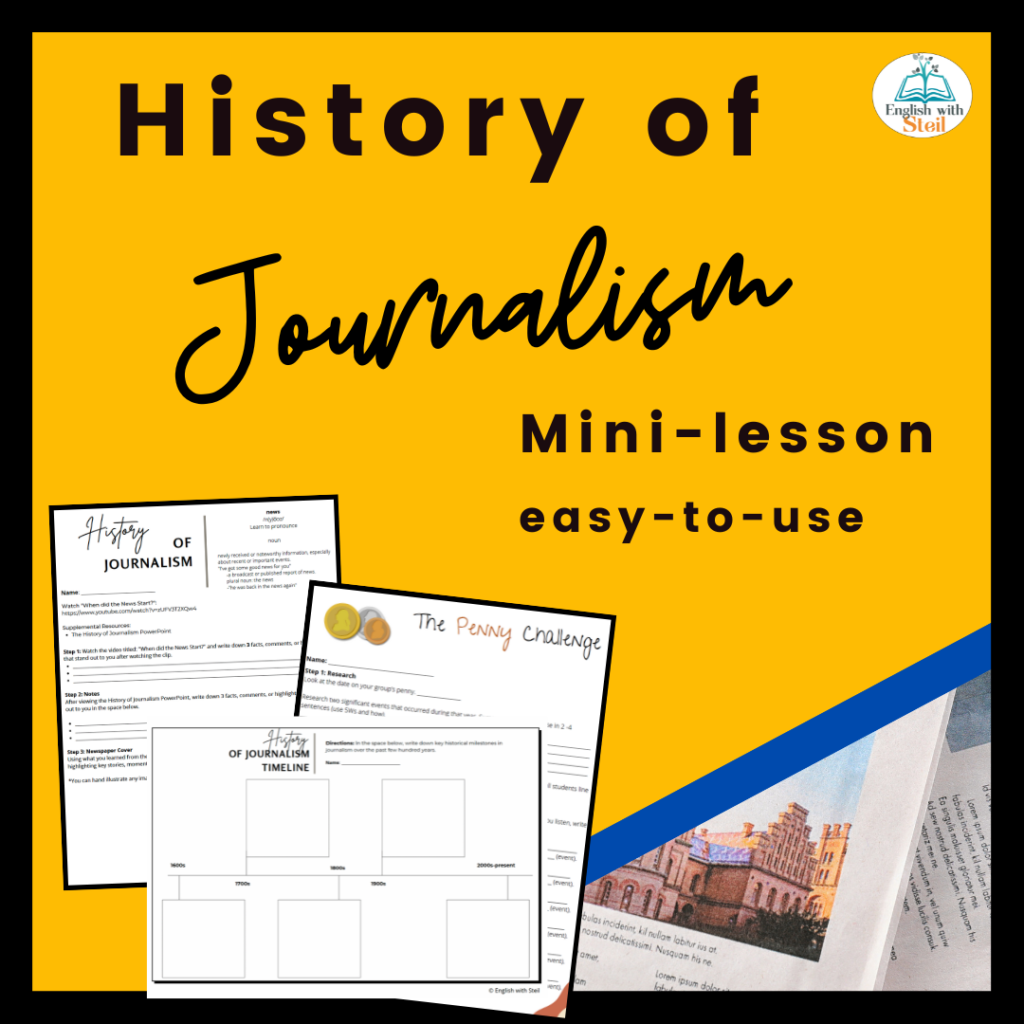
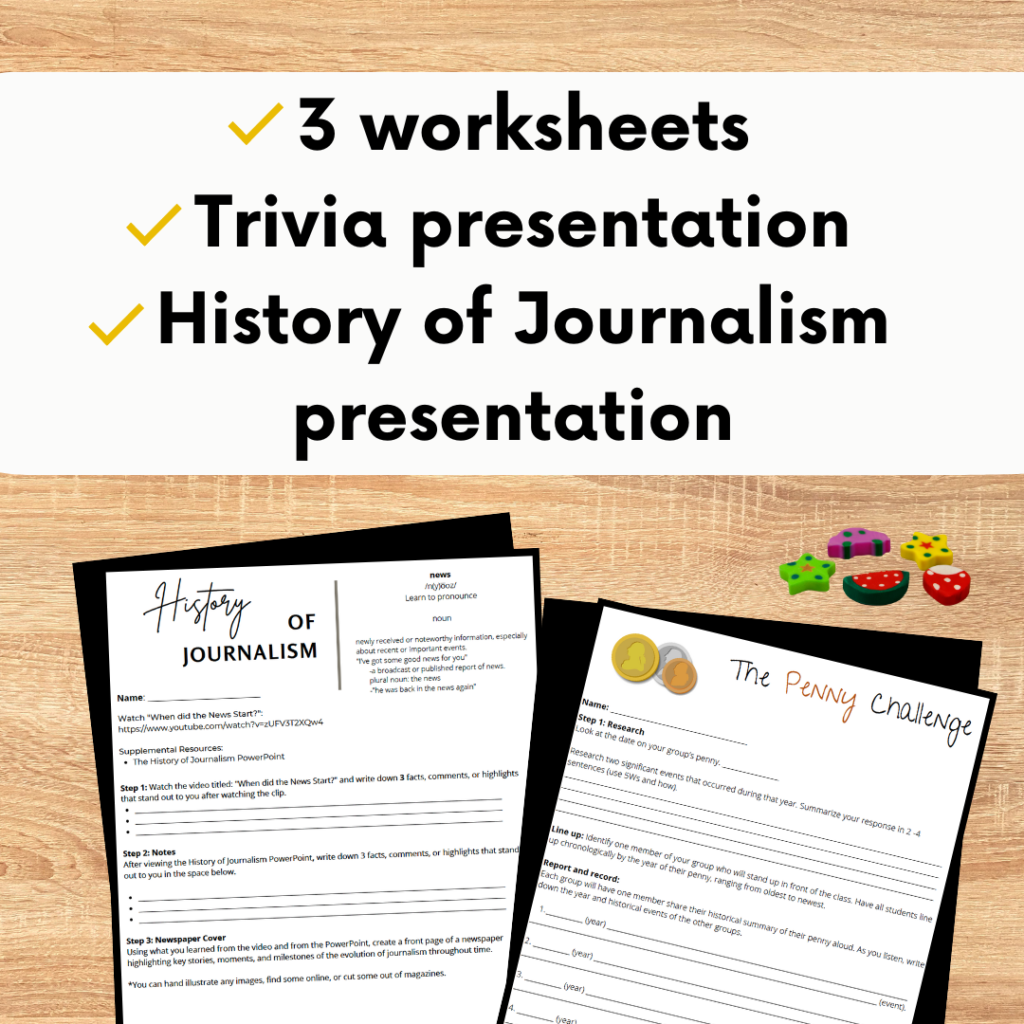
Before starting this unit, I like to begin with a simple activity that helps students experience how access, cost, and audience shape news. It opens the door to strong discussion and gives students a shared reference point before we move into stations. If you want a ready-to-use version of that introduction, I share a short penny press challenge that works well as a hook.
Building a Timeline
A physical or digital timeline can be a fantastic way for students to visualize the progression of media history. You can create a classroom timeline on a large bulletin board or use an online tool like TimelineJS. Here’s how to get started:
- Start with Dates: Mark the key milestones mentioned earlier.
- Add Descriptions: Briefly describe each event and its significance.
- Visuals: Include images, newspaper clippings, or screenshots to make the timeline more engaging.
- Student Involvement: Have students contribute by researching additional milestones or creating mini-presentations on each event.
Activities to Engage Students
Activity 1: Newspaper Project
Objective: Students will create a front page of a newspaper from a specific time period.
Instructions:
- Divide students into small groups and assign each group a different historical period (e.g., 18th century, 1920s, 1960s).
- Each group researches significant news stories from their assigned period.
- Using a template, students create a front page that includes headlines, articles, and images relevant to that time.
- Groups present their newspapers to the class, explaining their design choices and the significance of the stories they included.
Activity 2: Media Debate
Objective: Students will debate the impact of different media on society.
Instructions:
- Assign students to teams and give each team a specific medium (e.g., print, radio, TV, internet).
- Each team researches their assigned medium, focusing on its historical impact, advantages, and disadvantages.
- Hold a structured debate where each team presents their findings and argues why their medium was the most influential in shaping public opinion and society.
- After the debate, facilitate a class discussion on the evolving role of media and its future.
Final Thoughts
Journalism history does not have to feel distant or dull.
When students explore it as a series of shifts and choices, it becomes relevant. They begin to understand that journalism is shaped by people responding to the world around them.
And once students see that, they approach modern reporting with more care, context, and curiosity.
Happy teaching.
Want to Explore Journalism History and Media Context Even Further?
If you’re building out a journalism or media literacy unit, these resources from fellow teacher-authors pair well with teaching journalism history through context and inquiry. Each one offers practical, classroom-tested ideas for helping students understand media’s evolution.
Teaching the History of Journalism in ELA by Bespoke ELA
A thoughtful look at weaving journalism history into nonfiction and media analysis units.
How to Teach Media Literacy Through Current Events by Secondary Sara
A practical approach to connecting historical media shifts to modern news and digital platforms.
Teaching Nonfiction With Historical Context by Laura Randazzo
A strong reminder that historical background deepens student understanding of informational texts.
Using Real-World Media to Build Critical Thinkers by The Daring English Teacher
A great example of helping students analyze how media has changed and why it matters.